



Verschiebungen und Kontinuität im zeitgenössischen gewalttätigen Extremismus: Auf dem Weg zu einem dynamischen und entwicklungsorientierten Verständnis?

ORCID logo, & ORCID logo

Eingegangen: Juli 15, 2026. Angenommen: Juli 17, 2026. Veröffentlicht: Juli 20, 2026. https://doi.org/10.56296/aip00068 · © 2026 Die Autoren

Autorendetails

: McGill University

: McGill University

*Korrespondenz bitte an Cécile Rousseau, cecile.rousseau@mcgill.ca, 7085 Hutchison Street, Suite 204.2, Montréal (Qc) H3N 1Y9, Canada

Transparentes Peer-Review

Dieser Kommentar wurde ausschließlich redaktionell begutachtet, in Übereinstimmung mit den Richtlinien der Zeitschrift für dieses Publikationsformat.

Dies ist eine KI-generierte Übersetzung des Titels, der Zusammenfassung und der wichtigsten Erkenntnisse; der Haupttext des Artikels bleibt auf Englisch.

Zusammenfassung

Die „Salatbar der Ideologien“ hat sich als nützliche Metapher für die scheinbare Fragmentierung des zeitgenössischen gewalttätigen Extremismus etabliert. Aufbauend auf der Diskussion von Horgan und Shayler sowie der Erwiderung von Baele argumentieren wir, dass ideologische Hybridisierung und antimoderne Grievances an sich nicht neuartig sind. Vielmehr sollte die Aufmerksamkeit auf das gerichtet werden, was sich als charakteristisch erweist: die zunehmende Beteiligung von Minderjährigen und jungen Erwachsenen, die Verbreitung dystopischer Weltanschauungen und das Aufkommen nihilistischer Gewalt, die Symbole etablierter extremistischer Traditionen entlehnt, während ihr ein kohärentes politisches Projekt fehlt. Ausgehend von klinischer Erfahrung und neu entstehenden kanadischen Befunden legen wir nahe, dass die Adoleszenz durch Bewegung zwischen ideologischen Positionen gekennzeichnet ist und dass zeitgenössische Fälle besser entlang eines entwicklungsbezogenen Kontinuums verstanden werden, das kohärente ideologische Bindungen, hybride Formen von Grievances und entideologisierte nihilistische Gewalt miteinander verbindet. Wir schlagen vor, dass diese Transformationen sowohl eine generationale Sinnsuche unter Bedingungen der Ungewissheit als auch die Konvergenz populistischer Mobilisierung mit der algorithmischen Ausbeutung von Identität, Anerkennung und Zugehörigkeit widerspiegeln. Obwohl prozessorientierte Ansätze eine produktive Alternative zur Vervielfachung von Kategorien bieten, argumentieren wir, dass sie eine entwicklungsbezogene und zeitliche Perspektive einbeziehen müssen, um Prävention und Intervention zu informieren. Das Verständnis von Verläufen anstelle statischer Klassifikationen könnte einen nützlichen Rahmen für die Reaktion auf den zeitgenössischen gewalttätigen Extremismus bieten.
Editor Curated

Wichtigste Erkenntnisse

  • Der Kommentar argumentiert, dass ideologische Hybridisierung und antimoderne Grievances nicht wirklich neu sind, da kultureller Wandel stets durch Prozesse der Bricolage und der Schismogenese verlaufen ist. Was heute charakteristisch sein könnte, ist das jüngere Alter der Täter und die Verbreitung generalisierter dystopischer Sichtweisen unter Jugendlichen, einhergehend mit einem Anstieg nihilistischer Gewalt, die weder ideologischer noch politischer Natur ist.
  • Ausgehend von einer Längsschnittstudie mit 574 Schülerinnen und Schülern weiterführender Schulen in Quebec betonen die Autoren, dass sich Jugendliche über einen Zeitraum von einem Jahr signifikant zwischen ideologischen Profilen und in ihrer Zustimmung zur Verherrlichung von Gewalt bewegten. Diese Fluidität legt nahe, dass die Erkundung von Aktivismus und Gewalt als „Idiome des Protests“ während der Adoleszenz verbreitet und dynamisch ist, und sie sollte zur Vorsicht bei Detektionsbemühungen mahnen, die stark auf ideologische Marker setzen.
  • Die Autoren schlagen vor, zeitgenössische Fälle entlang eines dynamischen Kontinuums statt in festen Kategorien zu verstehen, das von kohärenten ideologischen Projekten (wie dem Neonazismus) bis hin zu Gewalt reicht, die als Selbstzweck verfolgt wird (wie das nihilistische Netzwerk „764“). Sie warnen davor, Begriffe wie „Terrorismus“ und „Extremismus“ auf jede Form spektakulärer Gewalt auszuweiten, da dies bedeutsame Unterschiede in Motiven, Organisation und politischem Zweck zu verschleiern droht.
Der Volltext wird auf Englisch fortgesetzt

Introduction

In addressing the “salad bar of ideologies” concept in depth, the paper by Horgan and Shayler (2026), together with Baele’s (2026) response, raises two timely and important questions about the current ideological landscape of violent extremism. First, what is new, if anything, in what is happening now? Second, what is useful in the multiple attempts to capture this changing reality? Do we need new concepts or categories or should we rather try to focus on underlying processes? Building on the careful conceptual and empirical review of Horgan and Shayler and on the counterpoints by Baele (2026), Cassam (2026) and Perliger (2026), this commentary proposes prolonging this much-needed conversation about the present transformations in the field of violent extremism. The views expressed here are informed by our respective perspectives as a child psychiatrist and an anthropologist, both clinician-researchers working in Montreal with young people who are attracted to or involved in extremist and nihilistic violence. Mindful of our respective positions, we believe that bringing together divergent geographical and disciplinary perspectives—and allowing for a degree of disagreement—may help us not only develop a more nuanced understanding of these ongoing shifts, but also identify possible avenues for addressing the challenges they pose.

In this commentary, we begin by agreeing with our colleagues that ideological hybridization and anti-modern grievances are not themselves new, while proposing that greater attention should be paid to what may be genuinely distinctive in the present landscape: the younger age of offenders, and the changes in youth culture, with the spread of more generalized dystopian outlooks. We also address the related emergence of a growing form of nihilistic violence, which, although it shares certain anti-modern grievances and borrows mixed symbols and references from collectivist forms of violent extremism, is neither ideological nor political in nature.

Psychology of Violent ExtremismPart of a Special IssuePsychology of Violent ExtremismThis article belongs to a curated special issue. Discover more research on this topic from the full collection.Explore the special issue →

What May Be New in the Present Ideological Landscape?

Horgan, Shayler and Baele rightly underline key elements of continuity in what is presented as the “Salad bar” change. Historically, hybridization of ideologies has always existed. In fact, present political and economical systems have incorporated many elements which were once considered radical and even extremist, and are now considered mainstream (union and minority rights for example). This ideological hybridization is, of course, not unique to violent extremism. More broadly, cultural change often proceeds through processes of bricolage, whereby individuals and groups selectively recombine symbols, narratives, and practices drawn from diverse traditions to construct new cultural forms. Likewise, polarization itself is far from a novel phenomenon. Bateson’s concept of schismogenesis reminds us that cultural differences frequently emerge through reciprocal processes of differentiation, in which groups define themselves by becoming deliberately unlike one another. These dynamics operate across multiple scales, from civilizations and political movements to communities, families, and even sibling relationships (Bateson, 1958). Furthermore, meaning making processes associated with ideologies have always co-existed with recurrent feelings of meaninglessness and absurdity which, in times of adversity, when cultural and social narratives fail to provide a sense of hope, can in themselves become a symbol of shared humanity (Das, 2011).

Questions of measurement may also shape assessments of novelty in the field. Within the same national context, for example, differences in the prevalence of hybrid ideological configurations reported among clients seen in Toronto and in Montreal (Rousseau et al., 2024) are significant. Do they reflect provincial or sociological differences, variations in referral patterns and assessment methods, or the theoretical—and potentially ideological—position of referral, in-take, and evaluation processes in defining what counts as ‘extremist’?

Turning to what may constitute a more significant shift; we agree with Baele (2026) that globalization, digitalization, and the online mobilization of ideology help explain changing ideological presentations. We argue, however, that the rapidly changing generational profile deserves greater attention. Practitioners, researchers, and policymakers have yet to fully reckon with the growing involvement of minors and young adults in violent extremism, alongside the concurrent rise of nihilistic discourses, networks, and violence (Europol, 2025). In Canada, security agencies report growing involvement of minors and young adults in terrorism-related activity, alongside the rise of nihilistic violent extremism and its links to the sexual exploitation of and by minors (Canadian Security Intelligence Service, 2026; Public Safety Canada, 2026).

To begin to circumscribe the phenomena it may be useful to first pay attention to the interaction between youth culture, attitudes fueling nihilistic and ideological beliefs and developmental characteristics. In Quebec (Canada), a recent longitudinal study of 574 high school students’ support for violent and non-violent radicalization, revealed that adolescents moved significantly across the ideological profiles and their adherence to the glorification of violence over a one-year period (Miconi et al., 2026a). Another latent class analysis on support for multiple ideologies (i.e., nationalist, xenophobic, pro-environmental, masculinist, and pro-LGBTQ2S+ ideologies) and glorification of violence, on the same dataset showed complex combinations of conservative ideologies (xenophobia and masculinism) and glorification of violence in this general population adolescent sample (Miconi et al., 2026b). Taken together these findings suggest that exploration of activism and violence as idioms of protest is both very common and dynamic during adolescence. The reported fluidity of ideological profiles should prompt caution in detection efforts. Although well intentioned, approaches that rely heavily on ideological markers risk generating false positives, encouraging profiling, and pathologizing normal adolescent exploration, intergenerational discontent, and legitimate grievances about the state of the world. These generational shifts, including the retreat from offline life into online worlds, reflect broader systemic problems that extend well beyond youth: the erosion of shared structuring narratives, growing uncertainty surrounding the climate, the economy, demographic change, and geopolitics, as well as widening economic inequalities. Yet the inadequacy of societal responses—often experienced through increased control and securitization, declining trust in institutions, and the limited credibility of counter-narratives—appears to be especially pronounced among young people.

To capture how these changes may be reshaping the ideological landscape, we propose two hypotheses. First, the concurrent rise of ideological lability and nihilism may reflect a generational search for meaning under conditions of heightened uncertainty. Young people may move back and forth between repeated attempts to make sense of the world by borrowing from diverse ideological repertoires and an embrace of meaninglessness or apocalyptic scenarios as a way of recovering agency. Second, these dynamics may reflect the convergence of two forms of exploitation. On the one hand, rising populist and ethnonationalist movements mobilize identity uncertainty, unmet needs for belonging, and the desire to be heard, seen, and recognized (Lamont, 2023). On the other, algorithmic systems, exploit the same vulnerabilities by rewarding emotionally charged content, intensifying grievance and identity conflict, and repeatedly directing users toward increasingly extreme or nihilistic material. None of these processes is entirely new, but their acceleration, interaction, and global circulation may be intensifying ideological hybridization in unprecedented ways.

In this perspective, we propose that contemporary cases are best understood not as belonging to discrete ideological or nihilistic categories, but as occupying different positions along a dynamic continuum, across which individuals may move back and forth over the course of their trajectories, as we have observed in our clinical work. At one end lie relatively coherent ideological projects, grounded in shared political, religious, or philosophical worldviews and directed toward a collective future—for example ethnonationalism, neo-Nazism, or religious extremism. Further along the continuum, collective narratives increasingly intertwine with personal grievances, identity struggles, and quests for recognition. Here, ideological commitments coexist with highly individualized motivations, often expressed through admiration for symbolic figures ranging from political martyrs to school shooters. At the opposite end lies violence that has largely shed any coherent political project, where violence itself becomes the primary source of identity, belonging, status, or stimulation, as illustrated by nihilistic online ecosystems such as 764. Importantly, these positions do not constitute separate cultural worlds. They draw upon a largely shared symbolic repertoire—memes, aesthetic codes, historical references, manifestos, and online narratives—that participants deploy with varying degrees of conviction, irony, and performativity. The same symbols may function as sincerely held beliefs for some, as identity signals for others, and as deliberately transgressive or humorous references for yet others.

The manifesto of the lone actor responsible for the recent Montreal shooting targeting Pornhub illustrates this fluidity. Although widely described in the media as reflecting “Incel ideology,” the 104-page text articulated a far more complex worldview. Beginning with a grievance about the alienation and loneliness of young men under contemporary capitalism, it developed into a broader philosophical critique characterized by profound hopelessness regarding the possibility of meaningful agency. Rather than advancing a coherent ideological programme, it assembled disparate references to Stalinism, Islamic theocracy, and the Russian neo-fascist thinker Alexander Dugin, while simultaneously rejecting organized religion and many of the very traditions from which it borrowed (Canada Centre for Community Engagement and Prevention of Violence, 2026). Such manifestos are perhaps better understood not as evidence of ideological inconsistency, but as examples of contemporary bricolage, in which heterogeneous symbolic resources are selectively assembled in the service of a deeply personal grievance and fuelled by the alienation of modernity and exploited by political movements, online subcultures, and algorithmic systems.

Cassam’s (2026) account of “extremism without ideology” reinforces the need to distinguish analytical categories without reifying them. Expanding terrorism, extremism, or ideology to encompass every form of spectacular violence risks obscuring meaningful differences in motives, organization, and political purpose. Our proposal of a dynamic continuum in which individuals may move between coherent collective projects, hybridized personal grievances, and violence pursued increasingly as an end in itself partially converges with Cassam’s distinction between ideological extremism, value extremism, and violence fixation. Cassam evokes the Rudakubana case, which for us as clinicians tragically illustrates the limitations of fixed categories and the absence of a developmental perspective. Despite repeated failed referrals to the Prevent programme, this vulnerable adolescent—with autism and a history of intergenerational trauma—did not receive sustained, wraparound intervention as his behavioural and ideological changes unfolded between ages 13 and 17, ultimately culminating in lethal violence.

Perliger’s (2026) warning about the erosion of conceptual clarity is an important call for rigour and interdisciplinary scholarship in the social sciences. However, the claim that this incoherence is merely artifactual is quite surprising from a clinical perspective. Recognizing that the degree of chaos actually mobilized can be deeply unsettling, we will have to understand how it may affect all of us, scholars and practitioners, and sometimes generates divisions which are not strictly theoretical nor empirical.

What Could Be Useful to Approach Those Changes?

To a certain extent, the “salad bar” concept functions as a useful heuristic: although broad and relatively non-specific, it acknowledges an important transformation at a time when empirical evidence remains limited. Converging with practitioners (Rousseau et al., 2024), Horgan and Shayler (2026) propose rather to question the usefulness of multiplicity of categories and theories and focus on understanding processes of hybridization. They propose to classify ideologies as mixing or migrating, divergent vs convergent, at a particular point in time. This model could be useful to represent the apparent paradoxes in ideological profiles and to capture their evolution in light of a personal trajectory and of the collective hybridization of signifiers (at the family, community and generational levels). Distinguishing personal and familial dynamics from external influences is difficult, as these forces are constantly interacting (Rousseau et al., 2026).

If identifying processes is undoubtedly the way forward, translating this approach into effective intervention or prevention requires the introduction of a temporal perspective. An analysis of trajectory leading to Violent Extremism and Nihilistic Violent Extremism in young people could support our attempt to better understand the processes underlying the present transformations (Bersani & Doherty, 2018; Moffitt, 1993). Among the factors identified in classical criminological studies as shaping trajectories, maturation consistently points to the central importance of developmental processes. Indeed, if the developmental gap between an 18-year-old and a 30-year-old is considerable, it is even greater over two- to three-year intervals during adolescence. While moving the focal lens toward dynamics, it is urgent to pay much more attention to the centrality of developmental factors and to their fluidity to avoid applying an adult frame of understanding (recycling of our categories- doing more of the same) to the new generation of adolescent offenders (Rousseau et al., 2025). Online actors have understood how to interest and retain adolescents’ attention and push them toward action (as was previously the case for child soldiers recruited by governments or paramilitary groups). Intersectoral coordination is therefore urgently needed to address difficult questions: What, if any, deterrent value is gained by trying minors as adults? And how useful is it to apply the category of terrorism to forms of violence that are primarily nihilistic rather than political? Moving beyond the horror elicited by these forms of violence, we also need to question the increasing politization of our field categories (terrorism, extremism), and delineate the moral, ethical but also pragmatic challenges that we are confronting.

Taking stock of these changes, we believe the field should move beyond the search for the right categories and instead ask what these different movements reveal about broader developmental and global trends, and about threats as they unfold at local and individual levels. While collecting the much-needed empirical evidence in real time in different intervention and general population settings from an interdisciplinary perspective, we may use our divergences as indicators of systemic complexity.

Conflicts of Interest

The authors declare no completing interests.

Author Contributions

C.R. and S.V. jointly conceptualized the commentary. Both authors contributed to the literature review, interpretation of the issues discussed, and drafting of the manuscript. Both authors critically revised the manuscript and approved the final version for submission.

Readers of this article also read
Commentary

The erosion of conceptual clarity in the study of political violence

by Arie Perliger Cited by 2
Commentary

The end of ideological violence

by Clark McCauley
Research Article

System-disillusioned youth radicalize: The role of political alienation in the formation of political radicalism

by Marta Miklikowska & Tomasz Besta
Perspective

Why the ‘salad bar of ideologies’ does not help us understand contemporary violent extremism

by John Horgan & Morgan Shayler Cited by 4
Commentary

Extremism without ideology

by Quassim Cassam Cited by 1
Commentary

Why the ‘salad bar’ might actually help extremism research – A reply to Horgan and Shayler

by Stephane Baele Cited by 1
Research Article

Superior social cognitive abilities in childhood are associated with better reward-seeking strategies in adolescence: evidence for a Social-Motivational Flexibility Model

by Dimitris I. Tsomokos & Eirini Flouri Cited by 3
Research Article

Facing a dark future: Young people’s future anxiety and political attitudes in the UK and Greece

by Olaf Borghi, Melina Niraki, Ermioni Seremeta, Kaat Smets, & Manos Tsakiris Cited by 1
Editor Curated

Frequently Asked Questions

  • Why do the authors emphasize the age of offenders?

    Rousseau & Veissière (2026) argue that the rapidly changing generational profile deserves far greater attention than it currently receives. They point to security agency reports of growing involvement of minors and young adults in terrorism-related activity, alongside the rise of nihilistic violent extremism. The authors stress that developmental factors are central:

    1. The gap between an 18-year-old and a 30-year-old is considerable.
    2. The gap is even greater over just two- to three-year intervals during adolescence.

    They warn against applying an ‘adult frame of understanding’ to a new generation of adolescent offenders, since doing so risks pathologizing normal adolescent exploration and generating false positives in detection efforts.

  • What is nihilistic violence, and how does it differ from ideological extremism?

    According to Rousseau & Veissière (2026), nihilistic violence borrows mixed symbols and references from collectivist forms of violent extremism but is neither ideological nor political in nature. Instead of serving a coherent collective future, violence itself becomes the primary source of identity, belonging, status, or stimulation, as illustrated by online ecosystems such as the ‘764’ network. The authors place this at one end of a dynamic continuum, opposite relatively coherent ideological projects like ethnonationalism or religious extremism. They note this rise of nihilism may reflect a generational search for meaning under heightened uncertainty, where young people embrace meaninglessness or apocalyptic scenarios as a way of recovering a sense of agency.

  • How does the paper interpret the Montreal Pornhub shooter's manifesto?

    Rousseau & Veissière (2026) use the 104-page manifesto of the Montreal shooter, widely described in media as reflecting ‘Incel ideology,’ to illustrate ideological fluidity. They argue the text actually articulated a far more complex worldview, beginning with a grievance about the loneliness of young men under capitalism and developing into a broader philosophical critique of hopelessness. Rather than advancing a coherent programme, it assembled disparate references to Stalinism, Islamic theocracy, and the neo-fascist thinker Alexander Dugin, while rejecting organized religion. The authors suggest such manifestos are best understood not as evidence of ideological inconsistency, but as examples of contemporary bricolage serving a deeply personal grievance.

  • What do the authors recommend for prevention and intervention?

    Rousseau & Veissière (2026) argue that identifying processes, rather than fixed categories, is the way forward, but that this must be paired with a temporal, developmental perspective drawn from criminological trajectory studies. They stress that online actors have learned how to capture and retain adolescents’ attention and push them toward action, making urgent intersectoral coordination necessary. The authors raise difficult questions, such as the deterrent value of trying minors as adults and the usefulness of applying the terrorism label to primarily nihilistic violence. Citing the Rudakubana case as a tragic example, they highlight the need for sustained, wraparound intervention for vulnerable adolescents, warning against the increasing politicization of field categories like ‘terrorism’ and ‘extremism.’

References

Baele, S. (2026). Why the ‘salad bar’ might actually help extremism research – A reply to Horgan and Shayler. advances.in/psychology, 1, e359159. https://doi.org/10.56296/aip00060

Bateson, G. (1958). Naven: A survey of the problems suggested by a composite picture of the culture of a New Guinea tribe drawn from three points of view. Stanford University Press.  

Bersani, B. E., & Doherty, E. E. (2018). Desistance from offending in the twenty-first century. Annual Review of Criminology, 1, 311-334. https://doi.org/10.1146/annurev-criminol-032317-092112

Canada Centre for Community Engagement and Prevention of Violence. (2026). Montreal June 22nd manifesto assessment: A violence prevention brief by the Canada Centre.

Canadian Security Intelligence Service. (2026). CSIS public report 2025.

Cassam, Q. (2026). Extremism without ideology. advances.in/psychology, 1(e945134). https://doi.org/10.56296/aip00062

Das, V. (2011). The act of witnessing: violence, poisonous knowledge and subjectivity. In Violence and Subjectivity (pp. 9-41). University of California Press.

Europol. (2025). Intelligence Notification: Violent online communities threaten children. https://www.europol.europa.eu/media-press/newsroom/news/intelligence-notification-violent-online-communities-threaten-children

Horgan, J., & Shayler, M. (2026). Why the ‘salad bar of ideologies’ does not help us understand contemporary violent extremism. advances.in/psychology, 1, e607682. https://doi.org/10.56296/aip00057

Lamont, M. (2023). Seeing others: How recognition works—And how it can heal a divided world. Simon and Schuster.

Miconi, D., Zambelli, M., Mounchingam, A. N., & Rousseau, C. (2026a). Away from violence: A latent transition analysis on support for violent and non‐violent radicalization among adolescents. Journal of Child Psychology and Psychiatry. https://doi.org/10.1111/jcpp.70142

Miconi, D., Zambelli, M., Mounchingam, A. N., & Rousseau, C. (2026b). Hybrid ideologies and glorification of violence during adolescence: Links to support for violent and nonviolent radicalization. Journal of Research on Adolescence. https://doi.org/10.1111/jora.70203

Moffitt, T. E. (1993). Adolescence-limited and life-course-persistent antisocial behavior: a developmental taxonomy. Psychological review, 100(4), 674. https://doi.org/10.1037/0033-295X.100.4.674

Perliger, A. (2026). The erosion of conceptual clarity in the study of political violence. advances.in/psychology, 1(e824472). https://doi.org/10.56296/aip00059

Public Safety Canada. (2026). The OCSE/violent extremism nexus in Canada. In Public Safety Canada webinar series 2026: Combatting online child sexual exploitation. https://www.publicsafety.gc.ca/cnt/cntrng-crm/chld-sxl-xplttn-ntrnt/wbnr/wbnr-2026-en.aspx

Rousseau, C., Johnson-Lafleur, J., Ngov, C., Savard, C., & Veissière, S. (2024). Hybrid Ideologies in Clinical Settings. Perspectives on Terrorism, 18(3), 51-68. https://doi.org/10.19165/2024.4965

Rousseau, C., Miconi, D., & Desmarais, C. (2026). Addressing Nihilism and the Glorification of Violence in Adolescents in Clinical Settings. Journal of the American Academy of Child & Adolescent Psychiatry. https://doi.org/10.1016/j.jaac.2026.05.011

Rousseau, C., Miconi, D., Ngov, C., & Hassan, G. (2025). Ideological and Nihilistic Violence in Adolescents Referred to a Specialized Clinic for Violent Extremism. Canadian Journal of Criminology and Criminal Justice, 67(2), 30-48. https://doi.org/10.3138/cjccj-2024-0057

Previous Post
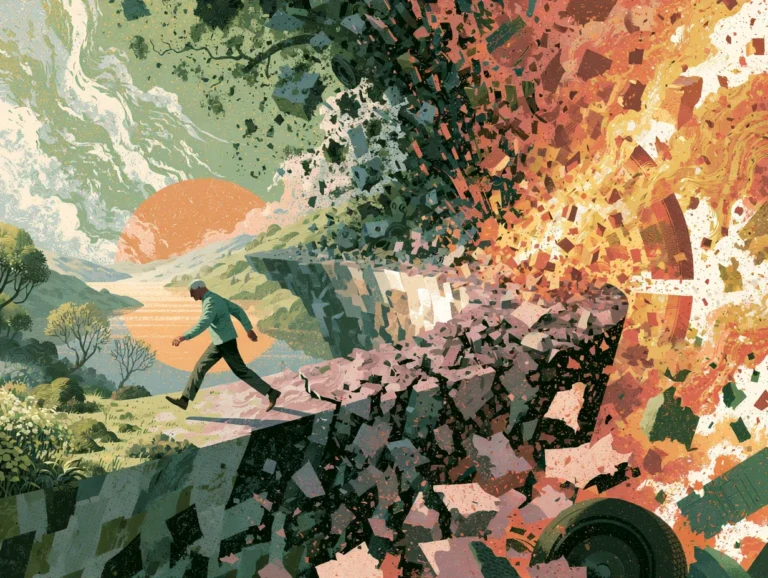
A conceptual illustration showing a lone figure in a green shirt walking along a crumbling stone path that disintegrates into scattered fragments and fiery orange chaos on the right. The left depicts a serene green landscape with a setting sun, rolling hills, and trees, symbolizing the fragmentation of ideological frameworks and the collapse of defined structures into disordered violent extremism.

The end of ideological violence