



Deadly persuasion: A multilevel analysis of leader influence tactics and lethality in violent extremist organizations

ORCID logo, ORCID logo, ORCID logo, &

Received: December 15, 2025. Accepted: July 22, 2026. Published: August 3, 2026. https://doi.org/10.56296/aip00069 · © 2026 The Author(s)

Author Details

: NCITE, University of Nebraska at Omaha

: NCITE, University of Nebraska at Omaha

: NCITE, University of Nebraska at Omaha

: NCITE, University of Nebraska at Omaha

*Please address correspondence to Mackenzie Harms, [email protected], Mackenzie Harms, National Counterterrorism Innovation, Technology, and Education Center, 6825 Pine St STE 352, Omaha, NE 68106, United States

Transparent Peer Review

The current article passed three rounds of peer review. The anonymous review report can be found here.

Citation

Harms, M., Bruens, A., Jones, J., & Ligon, G. (2026). Deadly persuasion: A multilevel analysis of leader influence tactics and lethality in violent extremist organizations. advances.in/psychology, 1, e165880. https://doi.org/10.56296/aip00069

Harms, Mackenzie, et al. "Deadly persuasion: A multilevel analysis of leader influence tactics and lethality in violent extremist organizations." advances.in/psychology, vol. 1, no. 1, 2026, e165880. https://doi.org/10.56296/aip00069.

Harms, Mackenzie, Alex Bruens, Justin Jones, and Gina Ligon. 2026. "Deadly persuasion: A multilevel analysis of leader influence tactics and lethality in violent extremist organizations." advances.in/psychology 1 (1): e165880. https://doi.org/10.56296/aip00069.

Harms M, Bruens A, Jones J, Ligon G. Deadly persuasion: A multilevel analysis of leader influence tactics and lethality in violent extremist organizations. advances.in/psychology. 2026;1(1):e165880. doi:10.56296/aip00069.

Harms, M. et al. (2026) 'Deadly persuasion: A multilevel analysis of leader influence tactics and lethality in violent extremist organizations', advances.in/psychology, 1(1), e165880. Available at: https://doi.org/10.56296/aip00069.

Abstract

Research on violent extremist organizations (VEOs) has largely treated lethality as a feature of individual attacks or as an aggregate organizational outcome, leaving an open question as to how lethal performance changes across a leader’s tenure. The multilevel methods needed to examine that question remain uncommon in the study of VEOs. We address this gap by applying two models of outstanding organizational leadership—charismatic-ideological-pragmatic influence and personalized-versus-socialized power orientation—to a sample of 68 VEO leaders and 645 leader-year observations. Using a multilevel longitudinal analysis, we examine whether leaders’ influence tactics and power orientations explain changes in lethal performance of the organization over the course of their tenure. Results indicate that lethality increased as leader tenure lengthened, but neither influence style nor power orientation independently accounted for lethality. Instead, the two operated jointly: among charismatic leaders, those with a personalized power orientation led far deadlier organizations than those with a socialized orientation, whereas among pragmatic leaders the pattern reversed. Thus, neither power orientation was uniformly more dangerous; the outcomes driven by those styles depended on the influence style of the leader. These findings suggest that VEOs may represent an uncommon context in which personalized leadership can outperform the socialized orientation typically associated with effective organizational leadership, but only under certain influence conditions. The results also point to the value of incorporating leadership theories into assessments of VEO threat and leadership-decapitation strategies, and underscore the value in applying advanced statistical modeling to gain better insight into VEO behavior.
Editor Curated

Key Takeaways

  • Neither leadership influence style (charismatic, ideological, or pragmatic) nor power orientation (personalized vs. socialized), when considered on its own, was statistically significantly associated with a violent extremist organization's lethality. Instead, the two dimensions mattered most in combination: the key interaction between power orientation and influence style was reliable (b = 1.45, IRR = 4.26, p = .008), meaning the effect of power orientation depended on the influence style through which it was expressed.
  • The direction of the pattern crossed rather than being uniform. Among charismatic leaders, personalized power was linked to far higher predicted annual lethality than socialized power (about 65.65 vs. 5.28 deaths; ratio = 12.44, p = .025). Among pragmatic leaders the reverse held, with socialized leaders showing the highest lethality of any group and personalized leaders the lowest (66.77 vs. 1.92; ratio = 34.85, p = .011). The ideological contrast pointed the same way as pragmatic but was not statistically significant (p = .417).
  • Lethality tended to escalate over a leader's tenure, with roughly a 50% increase in expected annual deaths per one-unit step on the log-time scale (b = 0.41, IRR = 1.50, p = .004). However, this rising trajectory was not statistically significantly moderated by either power orientation or influence style, suggesting leadership configuration shapes an organization's overall level of lethal effectiveness more than the rate at which it grows over time.

Introduction

Violent extremist organizations (VEOs) – those that use violence to achieve ideological goals – remain one of the most persistent global threats. Research on VEO lethality has often treated lethal violence as a property of individual attacks or as an aggregate organizational attribute, leaving less attention to how deadliness varies within organizations across a leader’s tenure. At the center of many of these organizations are leaders who possess a unique ability to attract followers and influence them to engage in violence to further their organizational goals, often at the followers’ personal expense (Ligon et al., 2026). Highly lethal attacks can attract greater publicity, signal organizational strength and capability, and disseminate an ideological message to audiences beyond the immediate target (Hunter et al., 2017; Ligon et al., 2015). Yet VEO lethality is also constrained by countermeasures, shifts in popular support, and fluctuations in organizational resources, suggesting that annual lethality may vary substantially within the same organization and under the same leader. Because those shifts occur across nested levels, multilevel analysis is especially useful but remains underused in academic examinations of violent extremist behavior (Obaidi et al., 2025).

To address this gap, the present study draws on organizational leadership models that explain why leaders with different influence styles and power orientations may produce different organizational outcomes across time. Organizational psychologists have found that individual differences in leader influence style account for outcomes such as sustainability of performance (Mumford et al., 2008), follower creativity (Watts et al., 2023), and ability to start mass movements (Mumford, Strange, et al., 2006). In this study, influence style refers to a leader’s overarching charismatic, ideological, or pragmatic pathway to leadership; influence tactics refer to the specific rhetorical and problem-framing behaviors through which that pathway is expressed; and power orientation refers to whether the leader directs influence toward personal authority or a broader collective mission. Using an historiometric methodology (Crayne & Hunter, 2018; Simonton, 1990, 1998) and a longitudinal multilevel analysis, we examine how charismatic-ideological-pragmatic (CIP) influence style, power orientation, and their interaction are associated with VEO lethality across leader tenure.

Psychology of Violent ExtremismPart of a Special IssuePsychology of Violent ExtremismThis article belongs to a curated special issue. Discover more research on this topic from the full collection.Explore the special issue →

Operationalizing Performance in Veos

One critical issue in organizational research is how to quantify organizational outcomes such as performance within an organization. Performance can be measured for (a) single events or actions, to determine effectiveness, (b) specific periods of time, to assess change, or (c) long periods of time, to assess aggregate performance. For example, aggregating performance over time has been used when researchers are interested in average performance, rather than fluctuations and variability in performance (Waldman et al., 2001). Conversely, examining changes in performance across time has been used to assess organizational sustainability (Do & Mai, 2021). In the context of VEOs, lethality is among the most common and widely used measures of organizational performance because it reflects both destructive capacity and strategic signaling (Asal & Rethemeyer, 2008, 2019). Engaging in lethal violence is often an indicator of organizational capabilities, which VEOs leverage to form alliances, gain resources, garner credibility with other organizations, attract new members, reduce local competition, and attract media coverage (Alakoc et al., 2023; Asal et al., 2015; Horowitz & Potter, 2014; Ligon et al., 2013), all of which are critical performance indicators for VEOs.

Beyond indicating capabilities, VEO leaders use lethal attacks strategically to influence external perceptions of the organization and inspire followers to demonstrate their commitment to other members and the overall mission through additional violence (Jasko & LaFree, 2020). Scholars have identified multiple leader-driven factors associated with organizational lethality, including a leader’s communicated ideology, acquisition of tactics and weapons, operational security practices, diversification of fundraising, and alliances with other groups (Asal et al., 2015; Doctor et al., 2024; Freeman et al., 2024; Horowitz & Potter, 2014; Levy, 2023; Logan et al., 2023).

Despite the focus on lethality as a measure of VEO performance at the attack and organizational levels, relatively little research has examined within-group variance in lethality across a leader’s tenure. Assessing the time-based variability in performance offers a unique perspective on terrorist activity because it reflects the sustained performance of the organization, rather than the performance of any individual act or event. The sustainability of lethality over time may be a particularly useful way to evaluate the performance of VEO leaders, as opposed to aggregating lethality or looking at individual attacks.

Leadership in Violent Extremist Organizations

Although VEOs are comprised of collective actors, leaders of VEOs exercise disproportionate influence on organizational outcomes by defining grievances, legitimizing violence, mobilizing followers, and shaping the external reputation of the organization through lethal attacks. This level of influence makes the study of VEO leaders well suited to what Simonton (1999) described as significant samples, referring to a population of subjects who are representative of exceptional, eminent individuals who have achieved historical significance, rather than representative of the average person. VEO leaders are among a category of significance samples that can be difficult to study using methodologies that require direct access to participants (e.g., psychometric assessments, surveys). Thus, leadership models that are framed to understand outstanding leaders (sometimes referred to in the literature as “eminent leaders”) and grounded in historiometric methodologies have been used to study eminent leaders like VEO leaders (Hannah et al., 2014; Mumford & Fried, 2014; Simonton, 1984).

Central to models of outstanding leadership is the capacity for influence. While this level of influence is often examined as a positive force, leaders like Usama bin Laden illustrate that leader influence can also be a destructive force (Freeman, 2014; Howell & Avolio, 1992). Whether they exercise influence as a positive or destructive force, eminent leaders tend to have outsized impact during times of social crisis or environmental instability (Hunt et al., 1999), which are also contexts in which violent extremism may emerge or escalate (Hafez & Mullins, 2015; Kunst & Obaidi, 2020). Thus, models of outstanding organizational leadership are well-suited to the study of VEO leaders given the extreme scale and reach of their influence on organizational outcomes. In the present study, the term outstanding leadership identifies the theoretical tradition from which the leadership frameworks—charismatic-ideological-pragmatic (CIP) leadership and power-orientation—are drawn.

Charismatic-ideological-pragmatic Influence Style

Models of charismatic leadership and transformational leaders have identified characteristics that are common across effective leaders, emphasizing their use of vision, influence on followers, and outcomes associated with effective leadership (Bass, 1985; House & Podsakoff, 1994). Complementary to these theories, models of outstanding or eminent leadership disaggregate the outcomes associated with effective leaders to examine the differences among outstanding leaders, rather than the similarities (Mumford, 2006; Simonton, 1986). These models have been applied to a range of eminent leaders, including Nobel Prize winners (Lebuda & Karwowski, 2024), American presidents (Deluga, 1998), and notable creative figures (Simonton, 2014). One such model, the charismatic-ideological-pragmatic (CIP) framework, suggests that outstanding leaders create impact through one of three influence styles: charismatic, ideological, or pragmatic (Hunter & Lovelace, 2020, 2022; Hunter et al., 2025; Mumford & Van Doorn, 2001; Strange & Mumford, 2002). The CIP model integrates key characteristics of effective leaders emphasized in theories of charismatic and transformational leadership (e.g., articulation of vision, emphasis on driving change, capacity to influence others), though it approaches those characteristics from the perspective of leader cognition rather than leader-follower interaction (Lovelace et al., 2019).

The CIP model is useful for the present study because influence style remains relatively stable across a leader’s tenure, allowing it to be examined as a leader-level characteristic in time-based models (Bedell-Avers et al., 2006, 2008; Ligon et al., 2008; Mumford et al., 2009; Mumford, Scott, & Hunter, 2006; Strange & Mumford, 2002, 2005). Influence tactics refer to the observable rhetorical, imagery, and problem-framing behaviors that express a leader’s underlying CIP influence style. Empirical testing of the CIP model has validated the observable factors that differentiate the three influence styles (Bedell-Avers et al., 2008; Crayne & Medeiros, 2021; Griffith et al., 2015; Hunter et al., 2011; Ligon et al., 2008; Mumford, Bedell, & Scott, 2006).

Using an equifinality framework, Hunter and colleagues have demonstrated that differences between charismatic, ideological, and pragmatic influence styles are most evident through several key dimensions, including the temporal framework used to promote their vision, the nature of the outcomes they seek, how they frame problems, and the themes and imagery they invoke in their speeches (Hunter et al., 2011; Lovelace et al., 2019). These differences influence the way in which a leader attracts and motivates followers and the contexts in which they are most effective at driving change. For instance, charismatic leaders are effective at quickly attracting followers through inspirational speeches, compelling rhetoric, and by fostering a sense of shared identity (Bedell-Avers et al., 2006). Charismatic influence tactics are most evident through emotional appeals to followers, a future-oriented vision, and a focus on the potential for desirable outcomes, which can foster extreme loyalty among followers but alienate non-followers (Mumford, Gaddis, et al., 2006).

Ideological leaders use past-oriented stories to convey their vision for a more just society via a return to traditional norms and customs (Hunter & Lovelace, 2022). Ideological leaders are characterized by their use of supernatural themes of “light and dark” and “good and evil” when conveying pathways for followers, especially by highlighting historical injustices. Leaders who employ ideological influence tactics often foster strong ingroup-outgroup dynamics that may be related to how viable enacting violence to achieve a vision can be (Post et al., 2002). Conversely, pragmatic influence tactics focus on practical, rational appeals that target current problems, rather than using emotional or imagery-laden visions to achieve fuzzy yet positive future state or idealized memory of the past (Mumford & Van Doorn, 2001). Pragmatic influence tactics focus on solving tangible problems for followers and adapt easily to changing audiences and grievances. While charismatic tactics often focus on the positive outcomes that will be realized for followers, and ideological tactics warn of negative outcomes of non-compliance, pragmatic tactics use of mix of both potential positive and negative outcomes associated with their vision for an organization (Ligon et al., 2008; Lovelace et al., 2019). When examining outstanding leaders, those who primarily employ pragmatic tactics are often more successful at achieving long-term goals and are perceived to be more competent (Yammarino & Mumford, 2012).

Power Orientation

While the CIP framework distinguishes leaders according to how they influence change, their power orientation distinguishes what motivates a leader to drive change (Yammarino et al., 2013). Theories of radicalism and extremism like the significance quest theory (Kruglanski et al., 2014, 2018, 2022) emphasize this motivational element of extremism, positing that violent extremism results from motivational imbalance and a desire for significance that takes precedence over other needs, supported by a violence-justifying narrative and sympathetic network. The power orientation of a VEO leader may determine how their pursuit of significance manifests, either through a need for personal authority and centrality to the mission (personalized orientation) or through sacrifice to a collective mission (socialized orientation) (House & Howell, 1992; McClelland, 1970).

Personalized leaders frame problems in a way that enhances their power and authority over the group and emphasizes external threats, while socialized leaders frame problems in a way that transcends their personal role in the mission while enhancing the collective (McClelland, 1970). Personalized leaders attribute organizational success to their authority, emphasizing their centrality to the organization and its mission (Ligon et al., 2008). As such, they tend to diminish the contributions of others and often convey that followers are merely dependent extensions of the leader. Conversely, socialized leaders frame the organization and its success as superseding their own power and convey their role as part of the larger mission (Yammarino & Mumford, 2012), maintaining strong influence over the organization because they inspire followers through sacrifice for the mission (Ligon et al., 2008).

Personalized and socialized leaders often differ in terms of the level of control they maintain. For instance, personalized leaders often hold greater power and influence over their followers via fear of punishment, while socialized leaders amass more radicalized and loyal followers, though they may not have the level of control and authority as their personalized counterparts (Howell & Shamir, 2005; Ligon et al., 2018; Yammarino et al., 2013). When considering the type of outcomes leaders are more effective at influencing, personalized leaders are more inclined towards outcomes that may involve harm and socialized leaders are inclined towards good outcomes (Strange & Mumford, 2005), though both types of leaders have demonstrated capacity to influence destructive performance (Ligon et al., 2018).

Prior VEO research supports the broader premise that leader characteristics can shape organizational performance, although most studies have not modeled lethality across leader tenure. For instance, Logan and colleagues (2025) found that the frequency of attacks increased as a leader’s tenure over the organization increased. Groups led by experienced leaders were more likely to attack soft targets, including pedestrian-dense targets, while groups operating under the leadership of the founder were less likely to conduct attacks on hard targets and conducted fewer attacks overall. Doctor and colleagues (2024) found that terrorist groups were more lethal when their leader had combat experience prior to their tenure, though this was not examined for change over time. When considering the malevolent innovation of VEOs as a measure of performance, groups led by personalized leaders conducted more destructive and complex attacks, while groups led by socialized leaders conducted more sophisticated attacks and engaged in more diverse tactics (Ligon et al., 2018).

Integrating Cip Influence Style and Power Orientation

Considering CIP influence style and power orientation separately clarifies two different aspects of VEO leadership, but the central theoretical issue in this study is how they combine. CIP influence style describes the pathway through which a leader attracts attention, frames problems, and motivates action, whereas power orientation describes whether that pathway is used to elevate the leader or the collective mission. In VEOs, this combination should matter because lethality depends not only on whether followers are motivated to use violence, but also on how the leader legitimates, coordinates, and sustains that violence over time. The same influence style may therefore produce different lethal trajectories when paired with different power orientations.

For charismatic leaders, emotional and future-oriented appeals may mobilize followers quickly, but personalized charisma can make lethal action a demonstration of loyalty to the leader, whereas socialized charisma may bind followers to a collective mission that outlasts any single leader. For ideological leaders, past-oriented grievance narratives may intensify perceptions of threat and injustice, but personalized ideological influence can center the leader as the “avenger” of the cause, whereas socialized ideological influence can make violence appear to serve tradition, group purity, or sacred duty. For pragmatic leaders, problem-focused appeals may make violence conditional on tactical usefulness, but personalized pragmatism can emphasize attacks that preserve authority, whereas socialized pragmatism can emphasize attacks that advance organizational learning and mission success. Table 1 provides a conceptual matrix summarizing how CIP influence styles are theorized to interact with power orientation.

Table 1
Conceptual Matrix of CIP Influence Style by Power Orientation

CIP influence style

Personalized
power orientation

Socialized
power orientation

Charismatic

Leader uses emotionally charged, future-oriented appeals to center personal authority and portray violence as proof of loyalty to the leader; lethality may escalate when high-impact attacks reinforce the leader’s dominance.

Leader uses emotionally charged, future-oriented appeals to bind followers to a shared identity and collective cause; lethality may be sustained through sacrifice for the mission, but less tied to the leader’s personal glorification.

Ideological

Leader uses past-oriented grievance narratives to cast the leader as guardian or avenger of a threatened tradition; lethality may increase when violence becomes a personal mandate to punish outgroups.

Leader uses past-oriented grievance narratives to subordinate self-interest to tradition, group purity, or sacred duty; lethality may be sustained by strong ingroup-outgroup boundaries and martyrdom norms.

Pragmatic

Leader uses practical, problem-focused tactics to preserve personal control and demonstrate competence; lethality may be used selectively when attacks solve operational problems or display authority.

Leader uses practical, problem-focused tactics to advance the group mission; lethality may follow from adaptive learning, target selection, and tactical experimentation when violence is judged useful.

Present Study and Research Question

The present study brings these components together by applying CIP influence style and power orientation to VEO lethality over time. Using an historiometric methodology and longitudinal multilevel analysis, we examine 68 VEO leaders and 645 leader-year observations. This approach treats annual lethality as a time-varying outcome that can change within a leader’s tenure while also allowing leader-level characteristics to explain differences between leaders. Because prior theory identifies reasons why CIP influence style and power orientation should combine but does not provide sufficiently precise directional expectations for all six combinations in VEO settings, the analysis is exploratory rather than hypothesis-testing. Thus, we consider the following research question:

Research Question: How do differences among VEO leaders’ influence style and power orientation impact lethal performance across their tenure?

Method

Overview

The leaders examined in this study were coded as part of a multi-year research initiative—the Leadership of the Extreme and Dangerous for Innovative Results (LEADIR) project—examining and comparing organizational and leadership characteristics of violent and non-violent ideological organizations. The study used an historiometric methodology which applies systematic coding of archival data to assess populations (e.g., U.S. Presidents, world leaders) that may be difficult to study (Crayne & Hunter, 2018; Simonton, 1990). Historiometry has been widely used in fields such as personality, organizational psychology, and social psychology to assess eminent leaders during relevant periods of peak performance (e.g., Deluga, 1998; O’Connor et al., 1995) and is particularly useful to examine performance longitudinally (Crayne & Hunter, 2018).

Data Collection and Coding Strategy

Historical records were gathered from academic and government terrorism databases (e.g., the Big Allied and Dangerous Lethality database, the Mapping Militants Project), peer-reviewed scholarly work, primary source material from the VEOs (e.g., propaganda, social media, speeches, videos), and other publicly available records (e.g., news stories, government records). Data were gathered systematically following the same hierarchy of resources for all leaders in the sample, and source material were evaluated for credibility, considering both the internal validity (e.g., quality of the source) and external validity (e.g., generalizability) of the source. Repositories of source material were maintained to allow for periodic checks for consistency across raters during the coding phase of the research (additional detail about the data gathering methodology can be found in the research note by Ligon et al., 2025).

The sample of leaders were drawn from a parent study that included a sample of both non-violent and violent ideological organizations stratified in accordance with criteria established by Mumford (2006) to be balanced across ideology, organizational structure, and geographic context (see additional detail about the sample in Ligon, Derrick, and Harms, 2018). Applying a stratified sampling procedure ensured the comparison between violent and non-violent organizations reflected a range of cases rather than being concentrated by a specific type of organization. This approach mitigates challenges with limited variance often seen in significant samples by preserving heterogeneity in the sample and strengthening the ability to detect meaningful differences among cases (Brewer, 1999; Crayne & Hunter, 2018; Zhao, 2021).

While the parent research down selected the sample of VEOs to match the sample of non-violent organizations across strata, the research question in this study only applies to leaders of violent organizations and thus the full sample of VEOs were included. This is important for two reasons. First, the focus of this research is on leaders rather than organizations, and thus perfect balance across organizational features was not a necessary control condition for the study of leadership. Second, hierarchical linear modeling requires a larger sample to have sufficient statistical power to detect effects. This allowed us to analyze leaders from a sample of VEOs that was representative of a range of ideology, structure, and geography, but not restricted by it.

The criteria for inclusion were: (1) the organization’s proscribed mission is belief-based, (2) the organization engaged in violence to achieve this mission, and (3) the leader’s tenure in the organization occurred after 1970 and before 2020. This time period was selected because lethality was calculated using incident-level data in the Global Terrorism Database to ensure a common source (START, 2022). The GTD attributes an incident to a specific group only when that attribution appears in the source material. Consequently, attacks carried out by individuals who were ideologically inspired by, but not organizationally connected to, an organization (e.g., lone-actor violence) do not contribute to that organization’s lethality unless source material explicitly attributes the incident to the organization. Lethality as operationalized here therefore reflects violence attributed to the organization itself rather than to the broader movement it may inspire.

Leadership Coding

A psychometrically-validated coding scheme was used establishing stringent criteria, operational definitions, and benchmark rating scales for leadership variables in accordance with prior research validating the CIP leadership frameworks (Hunter et al., 2011; Mumford, 2006; Mumford et al., 2007; Yammarino et al., 2013) and leader power orientation (O’Connor et al., 1995). Coding was completed by a team of Industrial and Organizational Psychologists trained in leadership and psychometric theories. Raters underwent 40 hours of training on the historiometric method and the leadership models applied in this research to establish a shared mental model. Next, raters independently evaluated ten leaders using source materials gathered from a prior study (Mumford, 2006) based on whether they judged them to use charismatic, ideological, or pragmatic influence and whether they exhibited personalized or socialized power orientation. Raters met to discuss their evaluation using a modified version of the consensual assessment technique (Amabile, 1982). Once they reached consensus on each leader, their judgments were validated against the ratings from the original study to ensure alignment on the application of the coding framework. Raters then followed the same process to evaluate twelve leaders from the present study, before proceeding with coding the full sample.

Coding was completed in two waves. One set of raters coded the full sample on power orientation, then by CIP influence style. The second set of raters went in the reverse order. In total, all leaders in the sample were evaluated independently by three coders following criteria validated in prior research for both power orientation (O’Connor et al., 1995) and CIP influence style (Mumford, 2006). Application of these criteria resulted in a high level of interrater agreement among the three judges about their assignments of a leader to one of three CIP influence styles (kappa = .80) and one of two power orientations (kappa = .81).

In cases where the judges disagreed in their assignments to a category, raters met to discuss their assignments following a modified version of Amabile’s (1982) consensual assessment technique. In the event where consensus could not be reached, the leader was dropped from the candidate list. This resulted in two leaders being dropped from the sample. This point is of some importance for two reasons. First, by dropping cases where there was disagreement, the sampling plan efficiently prohibited examination of mixed-type leaders. Second, it became unattainable for the present effort to say much about alternative leadership styles outside the charismatic, ideological, and pragmatic influence mechanisms and power orientation.

Independent Variables (level 2)

Charismatic-ideological-pragmatic Influence

Judges were asked to classify leaders’ primary influence style as charismatic, ideological, or pragmatic. Leaders were evaluated on the key dimensions underlying charismatic, ideological, and pragmatic leadership styles validated in prior research (Hunter et al., 2011; Ligon et al., 2008; Mumford, 2006), including the time frame orientation (i.e., the temporal reference point that is used to frame problems and define goals), the nature of outcomes sought (i.e., the type of goals or outcomes that are emphasized), and emotions (i.e., displaying and using emotions as influence tactics). Leaders were assigned an influence style based on these criteria. For instance, charismatic leaders tend to use future oriented framing, seek positive outcomes, use positive emotions in their appeals, and frame their vision toward the masses. Ideological leaders tend to use past oriented framing, seek transcendent outcomes, and use negative emotions in their appeals. Pragmatic leaders tend to frame problems around the present, seek malleable outcomes, and use rational appeals to a smaller group of elites.

Power Orientation

To classify leaders with respect to orientation, socialized versus personalized, the criteria suggested by O’Connor et al. (1995) were applied, including benchmarks for object beliefs (i.e., viewing others as instruments to achieve goals while failing to recognize their individuality), need for power (i.e., using tactics such as threats, promise of reward, or persuasion to convert others to own’s own ideals), and self-regulation (i.e., degree to which the leader was honest about their negative attributes). Specifically, upon reviewing 10–20 pages of summary material obtained from historical texts, and scholarly biographies describing these leaders’ visions and problem-solving strategies, raters used benchmarked scales to assess a leader’s power orientation. A leader was categorized as socialized if they tend to prioritize goals that benefit followers and society, deemphasize their personal role in and authority over the movement, and position followers as central to the collective mission. A leader was categorized as personalized if they tend to prioritize goals that benefit their own authority, position themselves as central to the movement, and deemphasize the importance and individuality of followers to the mission.

Nested Variables (level 1)

Time

Time is coded in one-year increments representing a leader’s tenure overseeing or acting as a figurehead of their organization, starting at 0 and increasing one unit for each additional year of tenure.

Lethality

Lethality is measured as the aggregate number of confirmed deaths associated with activities and attacks attributed to an organization in a given year of a leader’s tenure using incident-level data in the Global Terrorism Database (START, 2022).

Sample

The final sample consisted of 68 leaders of VEOs that included both western (n = 31) and non-western (n = 36) cultures, and a range of ideological beliefs, including Islamic (n = 24) and ethnonationalist (n = 23). The leaders were distributed across the six PS x CIP cells as follows: socialized charismatic (n = 15), socialized ideological (n = 9), socialized pragmatic (n = 12), personalized charismatic (n = 9), personalized ideological (n = 16), and personalized pragmatic (n = 7). Table 2 includes descriptive statistics for all leaders and leader-tenure years across the six cells of the CIPxPS design.

Table 2
Descriptive Statistics for Leaders and Tenure-Years Across the CIPxPS Design

Power Orientation

Influence Style

Leaders (k)

Leader-Tenure Years (n)

Mean Time-Points per Leader

Socialized

Charismatic

15

145

9.7

Socialized

Ideological

9

105

11.7

Socialized

Pragmatic

12

102

8.5

Personalized

Charismatic

9

77

8.6

Personalized

Ideological

16

151

9.4

Personalized

Pragmatic

7

65

9.3

Total

68

645

9.5

Research Design and Analyses

To examine within-organization change in lethality across time as a function of leader characteristics, we estimated a generalized linear mixed models (GLMMs) using the glmmTMB package in R (Brooks et al., 2017). Lethality was modeled with a negative-binomial distribution and log link. Lethality counts were severely overdispersed (variance/mean ratio ≈ 3,558; Cameron–Trivedi dispersion estimate ≈ 2,022, p = .003) and motivated a negative-binomial specification (Stroup et al., 2024). Diagnostic comparison of observed and model-predicted zeros indicated adequate fit at the lower tail (ratio = 0.87); we did not pursue a zero-inflated specification, as the sampling frame restricts observations to leaders during their period of active operation.

The data are structured as repeated annual observations of lethality (level 1) nested within leaders (level 2). We confirmed that the use of a multilevel approach was statistically warranted in two ways. First, we conducted an analysis of the proportion of variance accounted for between versus within organizations. The adjusted intraclass correlation from an unconditional negative-binomial random-intercept model indicated that 88% of the variance in lethality lies between organizations which is well above the suggested 5% cutoff for analyzing data using OLS regression (Bliese, 2000; Heck et al., 2013). Second, a likelihood-ratio test comparing the unconditional GLMM to a single-level negative-binomial regression with the same fixed-effect structure decisively rejected the no-random-effects specification, χ²(1) = 493.78, p < .001, indicating that between-organization variance was statistically distinguishable from zero.

A first-order autoregressive covariance matrix was applied at level 1 to account for the correlation between subsequent repeated measurements of lethality across time. The AR(1) residual covariance structure was retained against a random-intercept-only baseline by likelihood-ratio test, χ²(2) = 38.27, p < .001, with the estimated within-organization residual correlation at adjacent timepoints at ρ ≈ .97. Time was operationalized as the number of years since the start of a leader’s tenure, and four functional forms were compared via AIC: linear, quadratic, cubic, and logarithmic. Among the three that converged, the log specification achieved the lowest AIC and the linear specification was within ΔAIC < 3. The log transformation was retained both for parsimony and because it imposes a more theoretically defensible diminishing-returns shape on within-organization escalation. With this transformation, a one-unit increase in log(time + 1) corresponds to multiplying chronological time by e ≈ 2.7.

The two categorical Level-2 predictors—power orientation and CIP influence—were entered using effect (sum-to-zero) coding. Under this contrast scheme, the model intercept reflects the grand mean of log lethality at the mean of log(time + 1), and each level’s coefficient reflects its deviation from that grand mean rather than a contrast against an arbitrarily chosen reference category. Effect coding yields more interpretable main effects in the presence of interactions and is the appropriate scheme when one’s research questions concern average effects rather than pairwise comparisons against a reference group.

Models were estimated by maximum likelihood. We followed a structured model-building strategy, fitting each of four models separately and comparing them using AIC, BIC, and likelihood-ratio tests (LRTs): M0: time-only baseline (random intercept and AR1 only); M1: PS × log(time); M2: CIP × log(time); M3: PS, CIP, log(time), and all two-way interactions among them. Effect sizes are reported as incidence rate ratios (IRRs)—exponentiated regression coefficients. An IRR of 1.50, for example, indicates a 50% increase in expected annual lethality associated with the predictor in question, holding other predictors constant. Values above 1 indicate higher lethality, values below 1 indicate lower lethality, and the multiplicative reference is the grand mean (under effect coding) or a specified comparison cell. Predicted cell means and confidence intervals were computed using the emmeans package, evaluated at the sample mean of log(time + 1) (corresponding to roughly 4 years into a leader’s tenure), and back-transformed to the response scale. To characterize the simple effect of power orientation at each level of influence style, pairwise PS contrasts within each CIP level were computed directly from the primary two-way model with the emmeans package, evaluated at the sample mean of log(time + 1). Testing these simple effects on the full model, rather than in separate models fit to CIP subsamples, preserves the dispersion and AR(1) structure estimated from all 68 leaders. Contrasts are tested on the log scale with asymptotic z tests, as Satterthwaite and Kenward–Roger degree-of-freedom approximations are not available for glmmTMB fits.

We assessed the sensitivity of the focal interaction to influential cases by refitting the primary model with each leader excluded in turn (leave-one-out). Simulation-based minimum detectable effect analysis indicated that the design supported approximately 80% power for two-way log-IRRs of 0.21 (IRR ≈ 1.23) or larger; the observed PS × CIP effect (log-IRR = 1.45) sits well above this threshold. As additional evidence of model fit, marginal and conditional R² were computed for each model with the Nakagawa approach implemented in the performance package (Lüdecke et al., 2021). Marginal R² reflects variance attributable to the fixed effects; conditional R² additionally incorporates stable between-organization differences captured by the random intercept.

Results

Descriptive and Model-selection Results

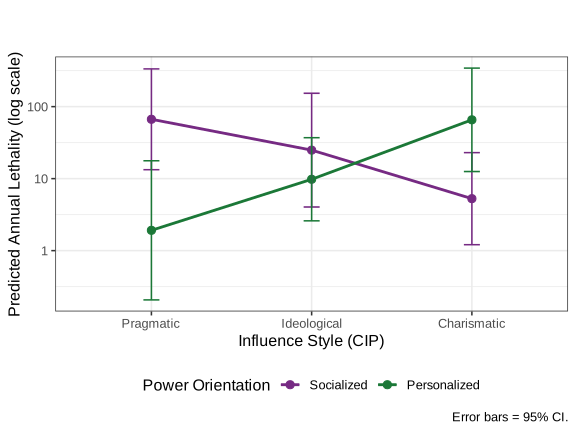
Table 3 presents AIC, BIC, and degrees of freedom for the four candidate models. The time-only model (M0) achieved the numerically lowest AIC, although the difference between M0 and the two-way model M3 was modest (ΔAIC = 2.17). We therefore retained the two-way model (M3) as the primary inferential model. Marginal R² was .08, .13, .15, and .34 for M0 through M3, respectively; conditional R² was .08, .13, .16, and .80. Fixed effects in the primary model thus accounted for roughly one third of the variance in annual lethality, rising to approximately 80% when stable between-organization differences are included. The full coefficient table for M3 is reported in Table 4; predicted cell means at the mean of log(time + 1), with 95% confidence intervals, are displayed in Figure 1.

Table 3
Model Comparison Across Five Candidate GLMMs Predicting Annual Lethality

Model

df

AIC

BIC

ΔAIC

Description

M0

6

5640.10

5666.92

0.00

Time-only baseline

M1

9

5645.53

5685.75

5.42

PS × log(time)

M2

11

5646.88

5696.04

6.77

CIP × log(time)

M3

15

5642.27

5709.31

2.17

All main effects + 2-way interactions

Note. All models are negative-binomial GLMMs with random intercept for organization and an AR(1) structure on within-organization residuals. M3 is the primary inferential model.

Within-organization Growth in Lethality Over Time

Across all models, log(time + 1) was positively associated with annual lethality. In the primary model (M3), the coefficient for log(time + 1) was reliable, b = 0.41, SE = 0.14, z = 2.88, p = .004, IRR = 1.50, 95% CI [1.14, 1.98]. Holding leader characteristics at the grand mean, this corresponds to an approximately 50% increase in expected annual lethality for each one-unit step on the log time scale. In other words, organizations tended to escalate in lethality across a leader’s tenure rather than remain stable, and this growth pattern was not appreciably moderated by leader power orientation (log[time] × PS interaction was non-significant) or by influence style (log[time] × CIP interactions were non-significant; the contrast for charismatic leaders was marginal at p = .081).

Influence Style and Power Orientation

Neither the PS-only model (M1) nor the CIP-only model (M2) revealed reliable main effects of leader characteristics on lethality. In M1, the personalized vs. socialized contrast yielded IRR = 1.38, 95% CI [0.60, 3.15], p = .451; the corresponding interaction with log(time + 1) was also non-significant, IRR = 0.94, p = .667. In M2, neither CIP main-effect contrast differed reliably from the grand mean (Charismatic vs. mean: IRR = 0.74, p = .620; Pragmatic vs. mean: IRR = 0.84, p = .755), and the CIP × log(time) interactions were non-significant. On their own, neither dimension of leadership accounted for variance in lethality.

For the two-way model, the coefficient of primary substantive interest is the PS × CIP contrast—that is, the interaction of power orientation with the charismatic versus grand mean contrast (b = 1.45, SE = 0.54, z = 2.67, IRR = 4.26, 95% CI [1.47, 12.36], p = .008). Translated into the response metric, predicted annual lethality at the sample mean of log(time + 1) (≈4 years into a leader’s tenure) is highly heterogeneous across the six PS × CIP cells (Figure 1). Simple PS contrasts computed from the full model located this interaction in two of the three influence styles. Within charismatic leaders, the personalized cell showed substantially elevated lethality relative to the socialized cell (predicted M = 65.65 vs. 5.28), and this simple contrast was reliable (personalized/socialized ratio = 12.44, z = 2.24, p = .025). Within pragmatic leaders the pattern reversed: socialized pragmatic leaders showed the highest predicted lethality of any cell and personalized pragmatic leaders the lowest (M = 66.77 vs. 1.92; socialized/personalized ratio = 34.85, z = 2.54, p = .011). Within ideological leaders, the socialized advantage was directionally consistent but not statistically reliable (M = 24.89 vs. 9.80; ratio = 2.54, z = 0.81, p = .417). Because these are planned contrasts, we report unadjusted p values; under the more conservative Holm correction across the three-contrast family the pragmatic effect remains reliable (adjusted p = .033) while the charismatic effect falls at the conventional threshold (adjusted p = .050). The pattern is one of crossing rather than ordinal moderation: there is no single power orientation that is uniformly more or less lethal; rather, the direction and reliability of the PS effect depend on the influence style with which it co-occurs.

Table 4
Fixed Effects from the Two-Way Model (M3) Predicting Annual Lethality

Fixed Effect

b

SE

IRR

95% CI

p

Intercept

2.05

0.42

7.74

[3.39, 17.66]

< .001

log(Time + 1)

0.41

0.14

1.50

[1.14, 1.98]

.004

PS (Personalized vs. grand mean)

0.49

0.42

1.63

[0.72, 3.69]

.239

CIP1 (Charismatic vs. grand mean)

−0.85

0.61

0.43

[0.13, 1.42]

.166

CIP2 (Pragmatic vs. grand mean)

0.27

0.55

1.31

[0.44, 3.84]

.628

log(Time) × PS

−0.10

0.14

0.90

[0.69, 1.19]

.466

log(Time) × CIP1 (Charismatic)

0.36

0.21

1.43

[0.96, 2.14]

.081

log(Time) × CIP2 (Pragmatic)

−0.13

0.19

0.87

[0.60, 1.28]

.489

PS × CIP1 (Charismatic)

1.45

0.54

4.26

[1.47, 12.36]

.008

PS × CIP2 (Pragmatic)

0.14

0.47

1.15

[0.46, 2.89]

.765

Note.  K = 68 leaders, N = 645 tenure-years. Categorical predictors entered with effect (sum-to-zero) coding; coefficients reflect deviations from the grand mean. PS = power orientation; positive PS coefficient indicates higher lethality for personalized than socialized leaders. CIP1 = charismatic vs. grand mean; CIP2 = pragmatic vs. grand mean (the ideological-vs.-mean contrast is implied as the negation of the sum of the two reported contrasts). IRR = incidence rate ratio. Random effects: σ²(intercept) = 2.09; σ²(slope on log time) ≈ 0; ρ(AR1) = .97; dispersion = 0.72.

Figure 1
Predicted Annual Lethality by Power Orientation and Influence Style at the Sample Mean of log(time + 1)

Predicted Annual Lethality by Power Orientation and Influence Style at the Sample Mean of log(time + 1)

Note. Population-averaged predicted means (points) with 95% confidence intervals (error bars) from the primary two-way model (M3), evaluated at the sample mean of log(time + 1) (approximately 4 years into a leader’s tenure) and back-transformed to the response scale; the y-axis is log-scaled.

Robustness Checks

Because group ideology is plausibly correlated with both leader selection and lethality, we re-estimated the primary model controlling two binary ideology indicators: whether the group was Islamic in orientation and whether its rhetoric was characterized by strong out-group othering. Adding the ideology indicators improved fit, LRT χ²(2) = 11.38, p = .003. The improvement was driven almost entirely by Islamic ideology, which was strongly associated with elevated lethality, b = 2.96, SE = 0.86, z = 3.46, p < .001 (predicted annual lethality ≈ 100 vs. ≈ 5 for non-Islamic groups, averaged across PS and CIP); the othering indicator did not contribute reliably (p = .719). Critically, the focal PS × CIP interaction remained directionally consistent with ideology controlled, b = 1.19, SE = 0.69, IRR = 3.30, p= .081; the attenuation toward marginal significance is consistent with the substantially smaller analytic subsample. To examine whether influence-style effects differed by ideological context, we added one moderation block at a time to the controls-included model. Neither the CIP × othering block, LRT χ²(2) = 1.45, p = .485, nor the CIP × Islamic block, LRT χ²(2) = 2.97, p = .226, improved fit, providing no reliable evidence that the influence-style effects identified in the main analysis are moderated by these markers of ideological context.

Discussion

This study advances our understanding of violent extremism by applying theories of organizational leadership and multi-level modeling to understand characteristics of VEO leaders that influence variability in VEO lethality over time. Our research applied two leadership models used to study eminent leaders: charismatic-ideological-pragmatic (CIP) influence style and power orientation. We tested the cross-level interaction between CIP influence and power orientation (level 2) and time (level 1) on VEO lethality during a leader’s tenure. The tests of the main effects suggested that neither power orientation nor CIP influence style, considered independently, was reliably associated with lethality. These null effects indicate that no leadership style was uniformly more lethal when averaged across the other leadership dimension. This should not be interpreted to mean that leader characteristics are irrelevant. Rather, the pattern observed in the interaction suggests that averaging across influence styles obscures meaningful differences: personalized power was associated with greater lethality among charismatic leaders, whereas socialized power was associated with greater lethality among pragmatic leaders. Thus, the consequences of power orientation appear to depend on the influence style through which that orientation is expressed.

The temporal findings also warrant separate attention. Lethality increased over the course of a leader’s tenure, but this trajectory was not reliably moderated by either power orientation or CIP influence style. In other words, the leadership configurations examined here appear to explain differences in a VEO’s general level of lethal effectiveness more than differences in the rate or shape of change over time. This is a substantively important distinction, suggesting that some combinations of influence style and power orientation may position organizations at persistently higher or lower levels of lethality, while the broader tendency for lethality to rise with tenure operates similarly across leadership types. One possibility is that leadership configuration affects relatively stable features of organizational functioning, such as follower commitment, coordination, target selection, or the legitimacy assigned to violence, whereas temporal escalation is driven more strongly by accumulated experience, organizational learning, resources, or opportunity structures shared across groups. Because the present design is observational, these mechanisms remain interpretations to be tested rather than causal conclusions.

These findings add unique nuance to traditional leadership research: VEOs provide a context where there is some evidence that personalized leaders can be more effective than their socialized counterparts. Across numerous studies examining power orientation and performance, socialized leaders outperform personalized leaders—particularly in terms of building lasting institutions and driving social change (Ligon et al., 2008). In the present VEO sample, that pattern held for pragmatic leaders and was directionally similar for ideological leaders, but it reversed among charismatic leaders. Personalized charismatic leaders were associated with substantially greater lethality than socialized charismatic leaders, whereas socialized pragmatic leaders displayed the highest predicted lethality and personalized pragmatic leaders the lowest. The ideological contrast was smaller and not statistically reliable, so interpretations of that cell difference should remain cautious.

The distribution of leaders across cells raises an additional question. Socialized charismatic leaders and personalized ideological leaders were the two largest groups in the sample, yet both were among the less lethal configurations. This apparent mismatch may indicate that the leadership configurations most common in VEOs are not necessarily those that maximize lethality. Socialized charisma may be especially useful for recruitment, identity formation, coalition maintenance, and presenting the leader as a servant of a collective cause, even when it does not produce the highest lethal performance. Personalized ideological leadership may likewise be selected because grievance-based traditions and sacred narratives provide a ready basis for centralizing authority in a guardian or avenger, but that configuration may become rigid, internally focused, or constrained by doctrinal commitments. Pragmatic leaders may face a different selection logic: because their influence rests more on competence and problem solving than on visionary appeal, a socialized orientation may better distribute expertise, support organizational learning, and translate operational information into lethal capability. These explanations are provisional, but they underscore why prevalence within VEO leadership should not be equated with effectiveness on a single outcome such as lethality.

Implications

These findings extend empirical support for treating power orientation as a modifier of CIP influence style, particularly in the context of leadership and violence. The null main effects and crossing interaction together suggest that CIP influence style and power orientation provide more information in combination than in isolation. Charismatic, ideological, and pragmatic leaders may all be capable of high performance (Mumford et al., 2007), but the consequences of personalized versus socialized power differ according to the pathway through which leaders frame problems, communicate vision, and motivate followers. For VEO research, leadership is therefore relevant not simply as a leader-level attribute, but as a configuration of motives and influence processes associated with different levels of lethal performance.

Prior research has focused on the differences between pragmatic leaders in comparison to ideologues and charismatics, the latter two of which are visionary leadership styles. The present findings instead place pragmatic and ideological leaders on a similar side of the power-orientation pattern, while charismatic leaders display the reverse pattern. Prior research found that pragmatic and ideological leaders show related strengths in early problem-solving processes, including problem identification, information gathering, and information evaluation, whereas charismatic leaders tend to move more quickly toward idea generation and mobilization (Mumford, Bedell, & Scott, 2006). Pragmatic and ideological leaders also display similar patterns in perception management, with personalized leaders engaging in more perception management than their socialized counterparts, while the reverse has been observed for charismatic leaders.

Collectively, these patterns suggest that pragmatic and ideological leaders may devote more attention to problem framing and critical analysis, whereas charismatic leaders may move followers more quickly toward an envisioned future. In a VEO, a socialized orientation may strengthen pragmatic leaders by broadening participation in problem solving, distributing expertise, and encouraging followers to view themselves as contributors to operational success. For ideological leaders, a socialized orientation may similarly bind followers to a cause that transcends the leader. Among charismatic leaders, by contrast, personalized power may intensify the leader-centered loyalty, urgency, and emotional commitment through which charismatic influence operates, making high-impact violence a demonstration of allegiance and leader potency. These interpretations identify plausible mechanisms, but the study did not directly measure follower participation, problem-solving processes, or leader-centered loyalty.

For practitioners, the results suggest that assessments of VEO leadership should distinguish a leader’s influence style from the power orientation directing that influence. Kingpin strategies generally prioritize leaders because of their position within a malign organization (Jordan, 2009; Price, 2015), but the present findings indicate that leaders occupying comparable positions may be associated with markedly different levels of lethality. Leadership profiling may therefore help refine threat assessment and resource allocation, although these findings should not be treated as a stand-alone basis for targeting decisions and require replication before operational application.

Limitations

Despite our findings, we acknowledge several limitations of the present examination. First, though efforts were made to balance the sample using criteria that may impact lethality, the sample had fewer pragmatic leaders than either charismatic or ideological. This was unsurprising given that pragmatic influence tactics may be less prevalent in extremist organizations than the visionary tactics of charismatics or ideological strategies. It may be that more business-oriented violent organizations (e.g., terrorist groups who resemble transnational criminal organizations) would offer a more robust sample of pragmatic tactics associated with violent performance than belief-based violent organizations which are more inclined to identify a desired future state or return to a past state as a way to mobilize followers (Mumford et al., 2007). We also focused our sample on organizations that have demonstrated lethal performance. In a broader sample of VEOs and examining other metrics of performance, pragmatic leadership may be more prevalent.

Second, the influence of CIP and PS leadership on VEO performance was limited to assessing performance using lethality over time. Although lethality is among the most common metrics to assess VEO behaviors and is often a proxy for other performance indicators (e.g., capability, organizational strength), there are other ways that VEOs may choose to “perform.” For instance, Logan and colleagues (2025) found that leader tenure was related to attack frequency over time, as well as to differences in soft or hard targets. Further, some VEO leaders deemphasize the use of more lethal tactics in favor of other forms of violence or harm. For instance, attacks that are more symbolic may result in less lethality but inflict greater psychological harm. Thus, while these results offer insight into lethality over time, leadership styles may differ in terms of how they capture leader influence on other performance metrics.

Third, the observational design limits causal inference. The models identify associations between coded leader characteristics and organizational lethality, but they cannot establish that influence style or power orientation caused the observed differences. Reverse causality is plausible: leaders may adjust their rhetoric, problem framing, delegation, or displays of personal authority in response to prior operational success, escalating violence, organizational decline, or external pressure. Unmeasured factors such as group size, resources, territorial control, state repression, alliances, organizational age, or preexisting capability may also shape both leader selection and lethality. Although CIP influence style and power orientation are theorized as relatively stable leader characteristics and were coded from broad historical records, the observable influence tactics through which they are expressed may adapt over time. Robustness tests can reduce concern about specific alternative explanations, but they cannot eliminate endogeneity in an archival design. Stronger causal claims will require designs that leverage leadership transitions, within-leader changes in communication, matched comparisons, or other quasi-experimental sources of variation.

Finally, organization size remains an important contextual factor in interpreting these findings because larger organizations may possess greater personnel, logistical capacity, and operational reach with which to conduct lethal attacks. We attempted to incorporate organization size as a time-varying control; however, sufficiently complete and comparable year-by-year estimates were unavailable for a substantial portion of the sample, making the resulting analysis vulnerable to measurement error and nonrandom case loss. Accordingly, we cannot determine conclusively whether the observed leadership effects are independent of organizational size, and the findings should be interpreted with this limitation in mind. At the same time, organization size may not function solely as an exogenous control, because leaders’ influence styles may themselves affect recruitment and organizational expansion. Prior research indicates that charismatic and ideological leaders are especially likely to initiate mass movements, whereas pragmatic leaders are least likely to do so (Mumford, Strange, et al., 2006), suggesting that differences in organizational scale could represent one pathway through which leadership influences lethal capacity. Future longitudinal research should therefore collect consistent annual measures of membership and examine organization size both as a potential confound and as a mediator linking leader influence style and power orientation to organizational lethality.

Future Research and Conclusion

We advocate for research pathways to ameliorate these limitations. First, broadening the sample of VEOs would allow for research to test more complex models. Likewise, research should focus on (a) performance metrics beyond lethality, (b) organizational leaders more proximal to violent attacks, and (c) comparisons to leaders of non-ideological violent organizations (e.g., transnational criminal organizations). In regards to measures of performance, prior studies on these models found that different leadership styles are more effective than others depending on the outcome being considered. Thus, while we specifically looked at effectiveness in terms of lethality, other leadership styles may be more effective on different metrics, such as activity (incidents) over time, attack innovation, and negotiation/conflict resolution. In addition, contextual factors such as failure to achieve goals could have an impact on lethality. The extent to which some leaders may be more responsive to this than others merits additional research. In addition, research could consider VEO performance before and after a leadership change to understand how leadership transition may impact performance, particularly when the leaders have different leadership styles (e.g., ELN’s transition from Manuel Pérez to Nicolas Rodriguz Bautista) or in cases where a leader becomes martyrized (e.g., Usama bin Laden).

Extensions of this research should consider the ways in which leadership styles are conveyed to followers, and how different communication mediums influence destructive performance. For example, certain leadership styles might be more effective when communicated on video or audio versus through written text. Examining relationships between leadership styles and communication mediums may illuminate specific instances of leader-member interactions that are particularly impactful. Furthermore, leadership variables other than influence style may offer additional insight into VEOs, such as trust and adoration that followers put into leaders, the ways that leaders use praise and punishment to motivate followers, and the underlying emotional intelligence that certain destructive leaders use when promoting violent behaviors. While this study looked historically to measure trends in performance over time, future research should examine VEO leadership related to the use of emerging technology, which may inspire more innovative tactics.

Overall, this study underscores the utility of novel frameworks and methods to examine VEO leadership. The findings do not support a simple claim that one influence style or power orientation is generally more lethal. Instead, they indicate that lethality is associated with particular configurations of influence style and power orientation, while the tendency for lethality to increase across tenure appears comparatively general. This distinction offers a more precise account of leader-related variation in organized violence and establishes several testable directions for research on the mechanisms, context, and causal ordering underlying sustained violence. Additionally, the application of multilevel modeling enabled a more advanced assessment of VEO leaders and lethality during their tenure, contributing evidence that warrant further study of VEO leaders and of factors that explain differences in VEO performance over time. We are hopeful that the use of more advanced modeling techniques can result in new knowledge about drivers of outsized influence to violence among the most lethal adversaries.

Data Availability Statement

The article text includes all descriptions related to the methodology and analysis used in this research, and tables are provided reporting all statistics supporting the findings. In addition, we have provided supplementary content detailing additional analysis in response to comments from reviewers. Finally, we have uploaded the data for consideration during the review. Please contact the corresponding author with additional requests.

Conflicts of Interest

The authors declare no competing interests.

Acknowledgement

The material is based on work supported by the U.S. Department of Homeland Security under Grant Award Number 20STTPC00001 and Grant Award Number 2010-ST-061-RE0001. The views and conclusions included here are those of the authors and should not be interpreted as representing the official policies of the U.S. Department of Homeland Security.

Author Contributions

M.H. and G.L. designed the study and collected the data. J.J. analyzed the data . M.H. led the writing of the full paper draft, with some sections written by G.L. and A.B.

Supplementary Materials

The supplementary materials can be found here.

Readers of this article also read
Commentary

The end of ideological violence

by Clark McCauley
Perspective

Why the ‘salad bar of ideologies’ does not help us understand contemporary violent extremism

by John Horgan & Morgan Shayler Cited by 5
Commentary

The erosion of conceptual clarity in the study of political violence

by Arie Perliger Cited by 3
Commentary

Extremism without ideology

by Quassim Cassam Cited by 2
Commentary

Why the ‘salad bar’ might actually help extremism research – A reply to Horgan and Shayler

by Stephane Baele Cited by 2
Commentary

Shifts and continuity in contemporary violent extremism: Moving toward a dynamic and developmental understanding?

by Cécile Rousseau & Samuel Veissière
Research Article

System-disillusioned youth radicalize: The role of political alienation in the formation of political radicalism

by Marta Miklikowska & Tomasz Besta
Research Article

Partisan forgiveness of political leadership in the 2024 UK general election: Are there limits to transgression credit?

by Fanny Lalot & Dominic Abrams Cited by 1
Editor Curated

Frequently Asked Questions

  • What did this study actually investigate?

    The study by Harms et al. (2026) examined how the leaders of violent extremist organizations shape the deadliness of their groups over time. Rather than treating lethality as a fixed trait of an attack or an organization, the researchers tracked how it changed year by year within a leader’s tenure. They combined two leadership frameworks:

    1. the charismatic-ideological-pragmatic (CIP) influence style, which describes how a leader frames problems and motivates followers, and
    2. power orientation, which captures whether a leader seeks personal authority or serves a collective mission.

    Using 68 leaders and 645 leader-year observations, the analysis asked how these characteristics, and their interaction, related to annual lethality. The central goal was to understand within-organization variation in deadliness across a leader’s time in charge.

  • Why did leadership style only matter in combination?

    According to Harms et al. (2026), neither influence style nor power orientation predicted lethality on its own; both main effects were statistically non-significant. This does not mean leaders are irrelevant. Instead, averaging across dimensions hid meaningful differences that only appeared when the two were considered together. Personalized power was linked to greater lethality among charismatic leaders, while socialized power was linked to greater lethality among pragmatic leaders. In other words, the same power orientation had opposite consequences depending on the pathway through which a leader influenced followers. The interaction term was statistically reliable (p = .008), which is why the authors emphasize that these two leadership dimensions provide far more information in combination than in isolation.

  • How was the data collected and analyzed?

    The research by Harms et al. (2026) used a historiometric methodology, which applies systematic coding of archival records to study people who are difficult to survey directly, such as extremist leaders. Trained industrial-organizational psychologists coded each leader after 40 hours of training, achieving strong agreement on influence style (kappa = .80) and power orientation (kappa = .81). Lethality was measured as confirmed annual deaths attributed to each organization in the Global Terrorism Database. Because deaths were counted repeatedly within leaders, the team used generalized linear mixed models with a negative-binomial distribution. A multilevel approach was justified because 88% of the variance in lethality lay between organizations, far above the 5% cutoff for using ordinary regression.

  • Did the deadliness of groups change over a leader's tenure?

    Yes. The study by Harms et al. (2026) found that lethality generally rose the longer a leader remained in charge, with roughly a 50% increase in expected annual deaths per one-unit step on the log-time scale (IRR = 1.50, p = .004). Importantly, this upward trajectory was not statistically significantly moderated by either power orientation or influence style, meaning most leadership types escalated at broadly similar rates. The authors interpret this to mean that leadership configuration mainly sets an organization’s persistent level of lethal effectiveness, while the tendency to grow deadlier over time may be driven by shared factors such as accumulated experience, organizational learning, and resources rather than by a specific leadership profile.

  • What are the practical implications and limitations?

    Harms et al. (2026) suggest that threat assessments should separate a leader’s influence style from the power orientation directing it, because leaders in comparable positions may be tied to very different lethality levels. This could help refine strategies that prioritize removing key figures. However, the authors caution strongly against several limitations:

    1. the design is observational, so it cannot prove causation;
    2. the sample contained fewer pragmatic leaders than charismatic or ideological ones;
    3. lethality is only one measure of extremist “performance,” ignoring symbolic or psychologically harmful attacks.

    They stress that these findings require replication before being used as a stand-alone basis for operational or targeting decisions.

References

Alakoc, B. P., Werner, S., & Widmeier, M. (2023). Violent and nonviolent strategies of terrorist organizations: how do mixed strategies influence terrorist recruitment and lethality?. Studies in Conflict & Terrorism, 46(12), 2598-2621. https://doi.org/10.1080/1057610X.2021.1935706

Amabile, T. M. (1982). Social psychology of creativity: A consensual assessment technique. Journal of Personality and Social Psychology43(5), 997-1013. https://psycnet.apa.org/doi/10.1037/0022-3514.43.5.997

Asal, V., Gill, P., Rethemeyer, R. K., & Horgan, J. (2015). Killing range: Explaining lethality variance within a terrorist organization. Journal of Conflict Resolution59(3), 401-427. https://doi.org/10.1177/0022002713508927

Asal, V., & Rethemeyer, R. K. (2008). The nature of the beast: Organizational structures and the lethality of terrorist attacks. The Journal of Politics, 70, 437-449. https://doi.org/10.1017/S0022381608080419

Asal, V., & Rethemeyer, R. K. (2019). The Nature of the Beast: Organizational Structures and the Lethality of Terrorist Attacks. In Transnational Terrorism (pp. 111-124). Routledge. https://doi.org/10.4324/9781315235691-6

Bass, B. M. (1985). Leadership: Good, better, best. Organizational dynamics13(3), 26-40. https://doi.org/10.1016/0090-2616(85)90028-2

Bedell-Avers, K. E., Hunter, S. T., Angie, A., & Vert, A. (2006). A historiometric examination of Machiavellianism and a new taxonomy of leadership. Journal of Leadership & Organizational Studies12(4), 50-72. https://doi.org/10.1177/107179190601200404

Bedell-Avers, K. E., Hunter, S. T., & Mumford, M. D. (2008). Conditions of problem-solving and the performance of charismatic, ideological, and pragmatic leaders: A comparative experimental study. The Leadership Quarterly19(1), 89-106. https://doi.org/10.1016/j.leaqua.2007.12.006

Bliese, P. D. (2000). Within-group agreement, non-independence, and reliability: Implications for data aggregation and analysis. In K. J. Klein & S. W. J. Kozlowski (Eds.), Multilevel theory, research, and methods in organizations: Foundations, extensions, and new directions (pp. 349–381). Jossey-Bass. https://psycnet.apa.org/record/2000-16936-008

Brewer, K. R. W. (1999). Design‐based or prediction‐based inference? Stratified random vs stratified balanced sampling. International Statistical Review67(1), 35-47. https://doi.org/10.2307/1403564

Brooks, M. E., Kristensen, K., van Benthem, K. J., Magnusson, A., Berg, C. W., Nielsen, A., Skaug, H. J., Mächler, M., & Bolker, B. M. (2017). glmmTMB balances speed and flexibility among packages for zero-inflated generalized linear mixed models. The R Journal, 9(2), 378–400. https://doi.org/10.32614/RJ-2017-066

Crayne, M. P., & Hunter, S. T. (2018). Historiometry in organizational science: Renewed attention for an established research method. Organizational Research Methods21(1), 6-29. https://doi.org/10.1177/1094428117731879

Crayne, M. P., & Medeiros, K. E. (2021). Making sense of crisis: Charismatic, ideological, and pragmatic leadership in response to COVID-19. American Psychologist76(3), 462-474. https://doi.org/10.1037/amp0000715

Deluga, R. J. (1998). American presidential proactivity, charismatic leadership, and rated performance. The Leadership Quarterly9(3), 265-291. https://doi.org/10.1016/S1048-9843(98)90030-3

Do, T. T., & Mai, N. K. (2021). A systematic review on high performance organization. Management Research Review, 44(1), 181-208. https://doi.org/10.1108/MRR-11-2019-0495

Doctor, A. C., Hunter, S. T., & Ligon, G. S. (2024). Militant leadership and terrorism in armed conflict. Terrorism and Political Violence, 36(6), 740-756. https://doi.org/10.1080/09546553.2023.2189972

Freeman, M. (2014). A theory of terrorist leadership (and its consequences for leadership targeting). Terrorism and Political Violence26(4), 666-687. https://doi.org/10.1080/09546553.2012.751912

Freeman, M., Asal, V., & Ligon, G. (2024). The paradox of violent leaders and organizational structures. Dynamics of Asymmetric Conflict17(3), 257-274. https://doi.org/10.1080/17467586.2024.2406750

Griffith, J., Connelly, S., Thiel, C., & Johnson, G. (2015). How outstanding leaders lead with affect: An examination of charismatic, ideological, and pragmatic leaders. The Leadership Quarterly26(4), 502-517. https://doi.org/10.1016/j.leaqua.2015.03.004

Hafez, M., & Mullins, C. (2015). The radicalization puzzle: A theoretical synthesis of empirical approaches to homegrown extremism. Studies in Conflict & Terrorism, 38(11), 958–975. https://doi.org/10.1080/1057610X.2015.1051375

Hannah, S. T., Sumanth, J. J., Lester, P., & Cavarretta, F. (2014). Debunking the false dichotomoy of leadership idealism and pragmatism: Critical evaluation and support of newer genre leadership theories. Journal of Organizational Behavior, 35, 598-621. https://doi.org/10.1002/job.1931

Heck, R. H., Thomas, S. L., & Tabata, L. N. (2013). Multilevel and longitudinal modeling with IBM SPSS. Routledge. https://doi.org/10.4324/9780203701249

Horowitz, M. C., & Potter, P. B. (2014). Allying to kill: Terrorist intergroup cooperation and the consequences for lethality. Journal of Conflict Resolution58(2), 199-225. https://doi.org/10.1177/0022002712468726

House, R. J., & Howell, J. M. (1992). Personality and charismatic leadership. The Leadership Quarterly3(2), 81-108. https://doi.org/10.1016/1048-9843(92)90028-E

House, R. J., & Podsakoff, P. M. (1994). Leadership effectiveness: Past perspectives and future directions for research. In J. Greenberg (Ed.), Organizational behavior: The state of the science (pp. 45-82). Lawrence Erlbaum Associates, Inc. https://psycnet.apa.org/record/1994-98522-003

Howell, J. M., & Avolio, B. J. (1992). The ethics of charismatic leadership: Submission or liberation. Academy of Management Perspectives, 6(2), 43-54. https://doi.org/10.5465/ame.1992.4274395

Howell, J. M., & Shamir, B. (2005). The role of followers in the charismatic leadership process: Relationships and their consequences. Academy of Management Review, 30, 96–112. https://doi.org/10.5465/amr.2005.15281435

Hunt, J. G., Boal, K. B., & Dodge, G. E. (1999). The effects of visionary and crisis-responsive charisma on followers: An experimental examination of two kinds of charismatic leadership. The Leadership Quarterly, 10(3), 423-448. https://doi.org/10.1016/S1048-9843(99)00027-2

Hunter, S.T., Cushenbery, L., Thoroughgood, C., Johnson, J. E., & Ligon, G. S. (2011). First and ten leadership: A historiometric investigation of the CIP leadership model. The Leadership Quarterly, 22, 70-91. https://doi.org/10.1016/j.leaqua.2010.12.008

Hunter, S. T., & Lovelace, J. B. (2020). Extending the charismatic, ideological, and pragmatic approach to leadership: Multiple pathways to success. Routledge. https://doi.org/10.4324/9781351017152

Hunter, S. T., & Lovelace, J. B. (2022). There is more than one way to lead: The Charismatic, Ideological, and Pragmatic (CIP) theory of leadership. Cambridge University Press. https://doi.org/10.1017/9781108883795

Hunter, S. T., Lovelace, J. B., Neely Jr., B. H., & Allen, J. (2025). Multiple pathways to leadership: A revision and extension of the CIP leadership framework. Organizational Psychology Review, 15(1), 3-27. https://doi.org/10.1177/20413866241276872

Hunter, S. T., Shortland, N. D., Crayne, M. P., & Ligon, G. S. (2017). Recruitment and selection in violent extremist organizations: Exploring what industrial and organizational psychology might contribute. American Psychologist72(3), 242. https://doi.org/10.1037/amp0000089

Jasko, K., & LaFree, G. (2020). Who is more violent in extremist groups? A comparison of leaders and followers. Aggressive Behavior, 46(2), 141-150. https://doi.org/10.1002/ab.21865

Jordan, J. (2009). When heads roll: Assessing the effectiveness of leadership decapitation. Security Studies, 18(4), 719-755. https://doi.org/10.1080/09636410903369068

Kruglanski, A. W., Gelfand, M. J., Bélanger, J. J., Sheveland, A., Hetiarachchi, M., & Gunaratna, R. (2014). The psychology of radicalization and deradicalization: How significance quest impacts violent extremism. Political Psychology35, 69-93. https://doi.org/10.1111/pops.12163

Kruglanski, A., Jasko, K., Webber, D., Chernikova, M., & Molinario, E. (2018). The making of violent extremists. Review of General Psychology22(1), 107-120. https://doi.org/10.1037/gpr0000144

Kruglanski, A. W., Molinario, E., Jasko, K., Webber, D., Leander, N. P., & Pierro, A. (2022). Significance-quest theory. Perspectives on Psychological Science17(4), 1050-1071. https://doi.org/10.1177/17456916211034825

Kunst, J. R., & Obaidi, M. (2020). Understanding violent extremism in the 21st century: the (re) emerging role of relative deprivation. Current opinion in psychology35, 55-59. https://doi.org/10.1016/j.copsyc.2020.03.010

Lebuda, I., & Karwowski, M. (2024). Personality of Nobel Prize laureates: Differences across domains and relationship to public recognition. Psychology of Aesthetics, Creativity, and the Arts, 18(3), 390-402. https://doi.org/10.1037/aca0000412

Levy, I. (2023). Lethal beliefs: ideology and the lethality of terrorist organizations. Terrorism and Political Violence35(4), 811-827. https://doi.org/10.1080/09546553.2021.1977282

Ligon, G. S., Derrick, D. C., & Harms, M. (2018). Destruction through collaboration: How terrorists work together toward malevolent innovation. In R. Reiter-Palmon (Ed.), Team creativity and innovation (pp. 337–361). Oxford University Press. https://psycnet.apa.org/record/2018-02904-013

Ligon, G. S., Harms, M., & Derrick, D. C. (2015). Lethal brands: How VEOs build reputations. Journal of Strategic Security8(1-2), 27-42. https://doi.org/10.5038/1944-0472.8.1.1436

Ligon, G. S., Harms, M., Doctor, A., & Hunter, S. (2026). The Psychology of Terrorist Leadership. In C. R. McCauley, S. Moskalenko, & G. S. Ligon (Eds.), De Gruyter Handbook of the Psychology of Terrorism (pp. 186-198). De Gruyter. https://doi.org/10.1515/9783111444529-016

Ligon, G. S., Hunter, S. T., Mumford, M. D. (2008). Development of outstanding leadership: A life narrative approach. The Leadership Quarterly, 19(3), 312-334. https://doi.org/10.1016/j.leaqua.2008.03.005

Ligon, G. S., Logan, M. K., & Harms, M. (2025). Introducing the Leadership for the Extreme and Dangerous for Innovative Results (LEADIR) Dataset. Perspectives on Terrorism19(3), 105-131.

Ligon, G. S., Simi, P., Harms, M., & Harris, D. (2013). Putting the ‘O’ in VEO: what makes an organization. Dynamics of Asymmetric Conflict, 6(1), 110-134. https://doi.org/10.1080/17467586.2013.814069

Logan, M. K., Crayne, M. P., Doctor, A., & Ligon, G. S. (2025). Older and wiser: How terrorist leaders’ tenure influences tactical decisions. Terrorism and Political Violence, 1-21. https://doi.org/10.1080/09546553.2025.2574274

Logan, M. K., Damadzic, A., Medeiros, K., Ligon, G. S., & Derrick, D. C. (2023). Constraints to malevolent innovation in terrorist attacks. Psychology of Aesthetics, Creativity, and the Arts17(1), 91. https://doi.org/10.1037/aca0000385

Lovelace, J. B., Neely, B. H., Allen, J. B., & Hunter, S. T. (2019). Charismatic, ideological, & pragmatic (CIP) model of leadership: A critical review and agenda for future research. The Leadership Quarterly30(1), 96-110. https://doi.org/10.1016/j.leaqua.2018.08.001

Lüdecke, D., Ben-Shachar, M. S., Patil, I., Waggoner, P., & Makowski, D. (2021). Performance: An R package for assessment, comparison and testing of statistical models. Journal of Open Source Software, 6(60), 3139. https://doi.org/10.21105/joss.03139

McClelland, D. C. (1970). The two faces of power. Journal of international Affairs, 29-47. https://www.jstor.org/stable/24356663

Mumford, M.D. (2006). Pathways to outstanding leadership: A comparative analysis of charismatic, ideological, and pragmatic leaders. Mahwah, NJ: Lawrence. Erlbaum Associates Publishers. https://doi.org/10.4324/9780415963633

Mumford, M. D., Antes, A. L., Caughron, J. J., & Friedrich, T. L. (2008). Charismatic, ideological, and pragmatic leadership: Multi-level influences on emergence and performance. The Leadership Quarterly, 19(2), 144-160. https://doi.org/10.1016/j.leaqua.2008.01.002

Mumford, M. D., Bedell, K. E., & Scott, G. M. (2006). Developmental influences–What kind of leader are you destined to be? In M.D. Mumford (Ed.) Pathways to outstanding leadership: A comparative analysis of charismatic, ideological, and pragmatic leaders (pp. 246-267). Lawrence Erlbaum Associates. https://doi.org/10.4324/9780415963633

Mumford, M. D., Espejo, J., Hunter, S. T., Bedell-Avers, K. E., Eubanks, D. L., & Connelly, S. (2007). The sources of leader violence: A comparison of ideological and non-ideological leaders. The Leadership Quarterly18(3), 217-235. https://doi.org/10.1016/j.leaqua.2007.03.005

Mumford, M. D., & Fried, Y. (2014). Give them what they want or give them what they need? Ideology in the study of leadership. Journal of Organizational Behavior, 35, 622-634. https://doi.org/10.1002/job.1921

Mumford, M. D., Gaddis, B., Strange, J. M., & Scott, G. (2006). General method: What history remembers and predicts for outstanding leaders. In M. D. Mumford (Ed.) Pathways to outstanding leadership: A comparative analysis of charismatic, ideological, and pragmatic leaders (pp. 51-78). Lawrence Erlbaum Associates. https://doi.org/10.4324/9780415963633

Mumford, M. D., Hunter, S. T., Friedrich, T. L., & Caughron, J. J. (2009). Charismatic, ideological, and pragmatic leadership: An examination of multi-level influences on emergence and performance. In F. J. Yammarino & F. Dansereau (Eds.) Multi-level issues in organizational behavior and leadership (pp. 79-116). Emerald Group. https://doi.org/10.1108/S1475-9144(2009)0000008004

Mumford, M. D., Scott, G., & Hunter, S. T. (2006). Theory: charismatic, ideological, and pragmatic leaders: how do they lead, why do they lead, and who do they lead? In M.D. Mumford (Ed.) Pathways to outstanding leadership: A comparative analysis of charismatic, ideological, and pragmatic leaders (pp. 25-50). Lawrence Erlbaum Associates. https://doi.org/10.4324/9780415963633

Mumford, M.D., Strange, J., Gaddis, B., Licuanan, B., & Scott, G. (2006). Performance: Who masters the art of influence? Charismatic, ideological, or pragmatic leaders. In M.D. Mumford (Ed.) Pathways to outstanding leadership: A comparative analysis of charismatic, ideological, and pragmatic leaders (pp. 81-107). Lawrence Erlbaum Associates. https://doi.org/10.4324/9780415963633

Mumford, M. D., & Van Doorn, J. R. (2001). The leadership in pragmatism: Reconsidering Franklin in the age of charisma. The Leadership Quarterly, 12, 279−309. https://doi.org/10.1016/S1048-9843(01)00080-7

Obaidi, M., Bergh, R., Ozer, S., & Sindermann, C. (2025). Toward an Integrated Psychological Model of Violent Extremism. European Review of Social Psychology, 1-50. https://doi.org/10.1080/10463283.2025.2478735

O’Connor, J., Mumford, M. D., Clifton, T. C., Gessner, T. L., & Connelly, M. S. (1995). Charismatic leaders and destructiveness: An historiometric study. The Leadership Quarterly6(4), 529-555. https://doi.org/10.1016/1048-9843(95)90026-8

Post, J. M., Ruby, K. G., & Shaw, E. D. (2002). The radical group in context: An integrated framework for the analysis of group risk for terrorism. Studies of Conflict & Terrorism, 25, 73-100. https://doi.org/10.1080/105761002753502466

Price, B. (2015). Evaluating the effectiveness of leadership decapitation tactics against terrorist groups. In Targeting: The Challenges of Modern Warfare (pp.261-288). TMC Asser Press. https://doi.org/10.1007/978-94-6265-072-5_12

Simonton, D. K. (1984). Leaders as eponyms: Individual and situational determinants of ruler eminence. Journal of Personality52(1), 1-21. https://doi.org/10.1111/j.1467-6494.1984.tb00546.x

Simonton, D. K. (1986). Presidential greatness: The historical consensus and its psychological significance. Political Psychology, 7(2), 259-283. https://doi.org/10.2307/3791125

Simonton, D. K. (1990). Psychology, science, and history: An introduction to historiometry. Yale University Press. https://doi.org/10.2307/j.ctt22726rf

Simonton, D. K. (1998). Historiometric methods in social psychology. European Review of Social Psychology9(1), 267-293. https://doi.org/10.1080/14792779843000108

Simonton, D. K. (1999). Significant samples: The psychological study of eminent individuals. Psychological Methods, 4(4), 425-451. https://doi.org/10.1037/1082-989X.4.4.425

Simonton, D. K. (2014). More method in the mad-genius controversy: A historiometric study of 204 historic creators. Psychology of Aesthetics, Creativity, and the Arts8(1), 53-61. https://doi.org/10.1037/a0035367

START (2022). Global Terrorism Database 1970 – 2020. National Consortium for the Study of Terrorism and Responses to Terrorism. https://www.start.umd.edu/gtd

Strange, J. M., & Mumford, M. D. (2002). The origins of vision: Charismatic versus ideological leadership. The Leadership Quarterly, 13, 343-377. https://doi.org/10.1016/S1048-9843(02)00125-X

Strange, J. M., & Mumford, M. D. (2005). The origins of vision: Effects of reflection, models, and analysis. The Leadership Quarterly16(1), 121-148. https://doi.org/10.1016/j.leaqua.2004.07.006

Stroup, W. W., Ptukhina, M., & Garai, J. (2024). Generalized linear mixed models: modern concepts, methods and applications. Chapman and Hall/CRC. https://doi.org/10.1201/9780429092060

Waldman, D. A., Ramirez, G. G., House, R. J., & Puranam, P. (2001). Does leadership matter? CEO leadership attributes and profitability under conditions of perceived environmental uncertainty. Academy of Management Journal, 44, 134-143. https://doi.org/10.2307/3069341

Watts, L. L., Nandi, S., & Linhardt, R. M. (2023). CIP leadership theory and creativity: The benefits of aligning leader cognition with context. In R. Reiter-Palmon & S. Hunter (Eds.) Handbook of Organizational Creativity (pp. 89-106). Elsevier.
https://doi.org/10.1016/B978-0-323-91841-1.00009-9

Yammarino, F. J., & Mumford, M. D. (2012). Leadership and Organizational Politics: A Multilevel Review and Framework for Pragmatic Deals. In G. R. Ferris & D. C. Treadway (Eds.) Politics in Organizations: Theory and Research Considerations (pp. 323-359). Routledge. https://psycnet.apa.org/record/2012-03640-011

Yammarino, F. J., Mumford, M. D., Serban, A., & Shirreffs, K. (2013). Assassination and leadership: Traditional approaches and historiometric methods. The Leadership Quarterly, 24(6), 822-841. https://doi.org/10.1016/j.leaqua.2013.08.004

Zhao, K. (2021). Sample representation in the social sciences. Synthese198(10), 9097-9115. https://doi.org/10.1007/s11229-020-02621-3

Previous Post
How to find the best open access psychology journals?

What are the 5 best open access psychology journals?