



System-disillusioned youth radicalize: The role of political alienation in the formation of political radicalism

ORCID logo, & ORCID logo

Received: January 10, 2026. Accepted: July 8, 2026. Published: July 14, 2026. https://doi.org/10.56296/aip00061 · © 2026 The Author(s)

Author Details

: Department of Psychology, Linnaeus University; Institute for Globally Distributed Open Research and Education, Gothenburg

: Institute of Psychology, University of Gdansk

*Please address correspondence to Marta Miklikowska, marta.miklikowska@lnu.se, Linnaeus University, Department of Psychology, Campus Växjö, Universitetsplatsen 1 352 52 Växjö, Sweden

Transparent Peer Review

The current article passed four rounds of peer review. The anonymous review report can be found here.

Ask AI Beta

Ask a question about this article — the answer is generated from the article’s own text only.

AI-generated from this article’s text, without human review · may contain errors — verify against the article · not medical, psychological, or professional advice · Terms

Abstract

Political radicalism poses a major societal challenge, yet little is known about how it develops. Political alienation, that is, political distrust, powerlessness, and dissatisfaction with the functioning of the political system and its institutions, has been theorized to increase the risk of radical political behavior, but its role has rarely been examined longitudinally. Using five-wave panel data from Swedish adolescents (N = 892; 51.1% female), this study investigated how political distrust, powerlessness, and dissatisfaction relate to radical political behaviors from ages 13 to 17. Results showed that within-person increases in political distrust, powerlessness, and dissatisfaction were associated with concurrent increases in radical political behaviors. At the between-person level, adolescents with higher average levels of political distrust, powerlessness and dissatisfaction also exhibited higher levels of radicalism across adolescence. The effects of political alienation on radicalism were more pronounced among boys than girls. For political dissatisfaction, reciprocal relationships were observed with radicalisation in a cross-lagged panel model. The findings suggest that adolescents’ experiences of political distrust, powerlessness, and dissatisfaction with the functioning of the political system are associated with the likelihood of radicalism across developmentally critical periods. The findings underscore the importance of political institutions that are responsive, fair, trustworthy, and inclusive in counteracting youth radicalization.
Editor Curated

Key Takeaways

  • Across a five-year study of Swedish youth (ages 13 to 17), political alienation—measured as political distrust, powerlessness, and dissatisfaction—was significantly linked to radical political behavior at both the within-person and between-person levels. When adolescents felt more alienated than usual, they engaged in more radical behavior at the same time, with political distrust explaining the largest share of variance (19%), followed by dissatisfaction (15%) and powerlessness (14%).
  • The link between alienation and radicalism was consistently stronger for boys than girls. Gender significantly moderated the effects of distrust (B = 0.08, p = .001), powerlessness (B = 0.07, p = .024), and dissatisfaction (B = 0.07, p = .001).
  • Personal experiences mattered more than group climate: classroom-level alienation did not statistically significantly predict youth radicalism.
  • Political dissatisfaction showed a reciprocal over-time dynamic in a Random Intercept Cross Lagged Panel Model, where dissatisfaction and radicalism reinforced one another, while distrust and powerlessness were largely concurrent rather than predictive of later change.

Political Alienation and the Development of Political Radicalism in Adolescence

Trends of increasing political radicalism worldwide (Institute for Economics and Peace, 2024) have been identified as a major threat to security and democracy by the United Nations and the European Union (European Union, 2020; United Nations, 2015). Beyond these security concerns, radicalism also poses a broader societal challenge by undermining social cohesion. Political radicalism is disproportionately concentrated among youth: individuals involved are often under the age of 20, and the onset of radicalization is occurring at increasingly younger ages (European Commission, 2025; Rostami et al., 2018). Violent forms of radicalism are also predominantly perpetrated by young men, with emerging evidence suggesting that gendered pathways into radicalization begin during adolescence (Miklikowska et al., 2022; Schröder et al., 2022). Thus, greater research attention to youth, particularly male adolescents, is urgently needed.

Adolescence is a critical developmental period for the formation of political identities and behaviors (Erikson, 1968; Flanagan & Gallay, 2014; Krosnick & Duane, 1989; Sears & Levy, 2003), including radical beliefs and actions (Barracosa & Cherney, 2025; Beelmann, 2020; 2026; Carlsson et al., 2020). However, the drivers of youth political radicalism remain insufficiently understood. Existing research focuses largely on adults, relies heavily on cross-sectional designs, and uses attitudinal rather than behavioral measures. Moreover, relatively few studies examine political experiences, such as political alienation, as antecedents of radicalization (Campelo et al., 2018; Jahnke et al., 2021; Vergani et al., 2018).

Psychology of Violent ExtremismPart of a Special IssuePsychology of Violent ExtremismThis article belongs to a curated special issue. Discover more research on this topic from the full collection.Explore the special issue →

Yet, recent decades have seen a global rise in political alienation, characterized by political powerlessness, dissatisfaction, and perceptions that elected officials cannot be trusted and do not care about citizens’ views (Pew Research Center, 2024; Public Agenda, 2022; Valgarðsson et al., 2025). These trends are particularly pronounced among young people, who increasingly report feeling disconnected from political systems and lacking meaningful influence within them (Deželan, 2023; Gallup, 2023; Henn et al., 2005). For example, 68% of Swedish youth born between 1996 and 2010 believe society is heading in the wrong direction and report declining political interest (Christensen, 2024). Such discontent may translate into support for radical forms of political engagement: 47% of UK youth endorse revolutionary societal change (Channel 4 & Craft, 2024), and 55% of individuals aged 18-34 globally approve of tactics such as violence, property damage, or misinformation as tools for change (Edelman Trust Barometer, 2025).

The present study seeks to address these gaps by building on political grievance and alienation perspectives as well as Significance Quest Theory, which converge in highlighting how experiences of political alienation, that is political distrust, feelings of powerlessness, and dissatisfaction with political processes, can motivate radicalism. Within these frameworks, we examine how political alienation contributes to the development of youth political radicalism, focusing on the longitudinal effects of political distrust, powerlessness, and dissatisfaction over a five-year period among Swedish youth.

The Need for Significance and Political Grievance As Drivers of Radicalism

Radical political behavior refers to actions that challenge societal norms regarding both appropriate political goals and acceptable means of pursuing them (Kruglanski et al., 2018). Political radicalism is understood as a continuum of political action that varies in both goals and means. At one end are normative, conventional, mainstream and institutionally endorsed behaviors, including voting or signing a petition; at the other are violent, extreme actions, including terrorism. Between these endpoints lie various forms of non-normative political behavior that challenge prevailing political norms, rules, or authorities, often through illegal or confrontational means such as unauthorized demonstrations, property damage, or clashes with political opponents or the police. What unites these behaviors is not necessarily their level of violence, but their rejection of established boundaries regarding how political change should be pursued. Many radical actors advocate systemic change, seeking to disrupt and replace existing political, economic, social, and cultural structures and norms (McCauley & Moskalenko, 2008). While these various forms of radical political behaviors may be related, they are not equivalent. The present study focuses on non-normative political behavior, which may represent a precursor or correlate of violent radicalization but should not be interpreted as synonymous with it.

Political radicalism has been theorized to be driven by the frustration of unmet psychological needs, which can motivate individuals to adopt ideologies and behaviors that deviate from societal norms (Echelmeyer et al., 2023). According to Significance Quest Theory (SQT), one of the most fundamental psychological needs is the need for significance, that is, to be respected, valued, to have dignity, and to matter to others (Kruglanski et al., 2014, 2022). Experiences of being disregarded, devalued, or wronged, whether politically, socially or personally, can frustrate this need, foster a sense of insignificance, and, in turn, drive individuals to adopt radical ideologies or behaviors as means to regain significance. Participation in radical political actions may enhance a sense of agency and value. While research has offered empirical support for SQT (Jasko et al., 2019; Miklikowska et al., 2022; Webber et al., 2018), prior work has focused primarily on social and personal sources of significance loss, with less attention to political experiences, particularly during adolescence.

Grievance-based and alienation perspectives offer a complementary lens by emphasizing dissatisfaction with political institutions, perceived injustice, and lack of voice as key drivers of radicalization (Ajil, 2022; McCauley & Moskalenko, 2011; Ratelle & Souleimanov, 2017; Rydgren, 2007), including during adolescence (Beelmann, 2020; 2026). These perspectives highlight how perceptions of unfair treatment, exclusion from decision-making processes, and institutional unresponsiveness can generate grievances toward the political system. Such grievances, in turn, are reflected in individuals’ broader orientations toward politics, including political alienation, that is distrust toward institutions, feelings of powerlessness, and dissatisfaction with how the system operates (Finifter, 1970; Olsen, 1969; Schwartz, 1976; Seeman, 1959). When conventional political channels are perceived as ineffective, these orientations may increase the appeal of alternative or even violent forms of political action (Van Buuren & De Graaf, 2014).

Integrating these theoretical approaches, grievance-based and alienation perspectives identify the structural and institutional sources of discontent, while Significance Quest Theory provides a motivational account of how experiences of discontent may translate into action by undermining individuals’ sense of significance.

The Role of Political Alienation in Radicalization

Political alienation is often defined as a sense of having no meaningful role, voice, or influence in the conventional political process (Finifter, 1970; Olsen, 1969; Schwartz, 1976; Seeman, 1959). It is conceptualized here as a multidimensional construct comprising related but distinct components: political distrust, powerlessness, and dissatisfaction. Political distrust reflects a lack of confidence in political institutions and actors; powerlessness captures the perceived inability to influence political processes; and dissatisfaction refers to negative evaluations of how the political system performs. These dimensions represent distinct yet complementary ways in which individuals may experience estrangement from the political system and do not need to be simultaneously present.

From the grievance perspectives, political alienation can be understood as reflecting how individuals experience systemic injustice, exclusion, and lack of voice within the political system. It captures the subjective manifestation of political grievances, translating structural and institutional conditions into individual-level perceptions. From the perspective of Significance Quest Theory, such experiences may signal a diminished sense of personal significance. When prescriptively prosocial political institutions, such as government agencies, elected officials, or other public authorities, are experienced as inaccessible, dishonest, unreliable, or unfair, individuals may come to view their beliefs and actions as inconsequential within the existing political system. This can foster a perception that they do not matter and motivate seeking alternative avenues to restore a sense of significance.

Research on adults provides support for the relevance of the three dimensions of political alienation in radicalization. Experiences of disregard, indignation, or unfair treatment by political institutions and public authorities have been linked to decreases of political trust (Bennett et al., 2013; Fairbrother et al., 2022), higher powerlessness (Soss, 1999), and lower legitimacy beliefs (Sunshine & Tyler, 2003; Tyler & Huo, 2002). In turn, political distrust has been associated with greater acceptance of violence and illegal political behaviors (Marien & Hooghe, 2011; Villagran, 2025), as well as with engagement in illegal activities (Jackson et al., 2012; Tyler, 2006) and radical political behaviors (OECD, 2021). Similarly, political dissatisfaction has been linked to non-normative political participation (van Stekelenburg & Klandermans, 2013) and disengagement from conventional participation, such as voting (McKay et al., 2021; Olsen, 1969; Southwell, 2003; Southwell & Everest, 1998). In addition, political powerlessness has been related to protest voting as a means of expressing opposition to political elites (Horton & Thompson, 1962), anti-establishment attitudes (Gest et al., 2017), and greater approval of violence as a necessary means of achieving justice (Ransford, 1968). However, experimental manipulation of political powerlessness has been found to increase the legitimation of existing authorities (van der Toorn et al., 2014). This apparent contradiction suggests that powerlessness may give rise to two adaptive coping responses to significance loss: one characterized by opposition and non-normative action, and another characterized by system justification, where individuals legitimize the status quo to restore meaning (Jost, 2020).

Adolescence As a Critical Formative Period for Alienation and Radicalization

The radicalizing potential of experiences of political distrust, powerlessness, or dissatisfaction may be particularly pronounced during adolescence. Political socialization and developmental theories identify adolescence as a critical period for the formation of political identity and behaviors, during which political orientations are especially malleable and sensitive to contextual influences (Erikson, 1968; Krosnick & Duane, 1989). Consistent with this heightened malleability, adolescents’ approval of radical political action fluctuates more substantially over time than adults’, whose approval tends to be relatively stable (Rink & Sharma, 2016; Weber, 2018). Adolescence is also a period in which individuals learn to navigate authority, institutions, and social hierarchies, actively constructing beliefs about how power operates and whether authorities are legitimate and responsive (Flanagan & Gallay, 2014; Flanagan & Tucker, 1999). Negative encounters with political institutions or public authorities during this formative phase may undermine emerging beliefs about political legitimacy and efficacy, possibly leading to an enduring sense of alienation (Citrin et al., 1975; Dermody et al., 2010; Fox, 2015; Neundorf & Smets, 2017). Moreover, ongoing development of cognitive control and emotional regulation during adolescence is associated with increased risk-taking and heightened emotional responses to frustration or perceived injustice (Casey & Caudle, 2013; Silvers et al., 2012), factors that have been found to be related to higher engagement in activities that seek to challenge existing political structures (e.g., protesting) (Oosterhoff & Wray-Lake, 2020). In line with this developmental vulnerability, adolescents have been shown to express higher approval of radical political action than adults (Watts, 1999). Together, this combination of developmental malleability, early encounters with political systems, and heightened reactivity suggests that negative political experiences in adolescence may have enduring consequences, potentially increasing vulnerability to radical alternatives (Barracosa & Cherney, 2025; Beelmann, 2020; Beelmann, 2026; Carlsson et al., 2020).

Empirical research on the relationship between political alienation and various forms and stages of radicalism among youth remains limited but offers important insights. A cross-sectional study of Dahl et al. (2017) found a positive link between political alienation and radical activism among youth in the UK, although this was not observed in seven other EU countries. Other studies have linked specific facets of alienation, particularly low institutional trust, to more radical forms of political participation among adults (Dekker et al., 1997) and to more favorable attitudes toward radical activism among youth over time (Šerek et al., 2018). Political dissatisfaction has been linked to a higher likelihood of law-breaking behavior (Abdelzadeh et al., 2015), and a meta-analytic review reported small but significant associations between dissatisfaction with political actors, police, and institutions and radical outcomes (Jahnke et al., 2021). Political distrust has also been associated with youth engagement in radical environmental activism (Cologna et al., 2021). In contrast, political alienation has shown only weak or inconsistent associations with normative political disengagement, such as non-voting (Dahl et al., 2017) and has been found to be unrelated to normative civic engagement among ethnic minority youth (Hope & Jagers, 2014). The perceptions of institutional discrimination or victimization have shown positive associations among ethnic minority youth (Hope & Jagers, 2014; Oosterhoff & Wray-Lake, 2020; see also Pinedo et al., 2024).

In sum, although political alienation may motivate radical forms of political expression, its role in radicalization remains underexplored, particularly during adolescence, a critical period for radicalization, and from a longitudinal perspective. Longitudinal designs offer a unique opportunity to examine the dynamic associations between alienation and radicalism over time. They also allow for the simultaneous investigation of individual- and contextual-level processes, capturing how both personal political experiences and exposure to climates of shared disillusionment in immediate social environments (e.g., classrooms) may contribute to radical political behavior. In the present study, we focus on non-normative political behaviors that challenge legal or institutional boundaries, which we conceptualize as occupying an intermediate position on a continuum ranging from conventional participation to violent extremism.

The Present Study

The present five-wave panel study seeks to advance understanding of youth political radicalism by investigating the role of political alienation in radical behavior across adolescence and by separating within- from between-person and between-classroom processes. We hypothesized that during years in which adolescents experienced higher political alienation than their own average, they would contemporaneously engage in more radical political behaviors than usual (effects on the within-person level). We further hypothesized that adolescents with higher overall levels of political alienation would exhibit higher overall levels of radicalism and a slower decline in radicalism over time compared to peers with lower alienation (effects on the between-person level). Finally, we tested the role of a classroom climate of political alienation (effects on the between-classroom level). Higher classroom-level alienation may be associated with greater individual radicalism through the normalization and reinforcement of shared grievances. However, radicalization may be driven primarily by direct personal experiences of alienation, such that only personally felt institutional disregard activates radical behavior (i.e., you care when it happens to you).

Method

Data and Participants

This study is part of a broader research initiative on youth development, conducted within the Political Socialization Program. The project explores a broad range of political and social attitudes and behaviors, along with contextual influences. The data collection was overseen by professors Erik Amnå, Mats Ekström, Margaret Kerr, and Håkan Stattin, with financial support from Riksbankens Jubileumsfond. Ethical approval was obtained from the Regional Ethical Review Board in Uppsala (Dnr 2010/115). Data were gathered annually between 2010 and 2014 in Sweden’s seventh-largest city, which closely reflects national averages in terms of income levels, unemployment rates, and ethnic diversity (Statistiska Centralbyrån, 2016). Ten schools were selected from neighbourhoods characterized by varying ethnic and socioeconomic compositions. Each participating class received a 100 EUR incentive. Data collection took place during ordinary school hours, in the presence of trained research assistants. Adolescents were informed about the voluntary nature of their participation, the confidentiality of their responses, and the content of the survey. Parents received questionnaires via mail, with a response rate of 65%. Approximately 3.8% of parents declined consent for their child’s involvement.

The initial sample included 946 adolescents (Mage at T1 = 13.41 years, SD = 0.53, 50.7% Female) from diverse migration and socioeconomic backgrounds (M = 3.01, SD = 0.80 for perceived financial situation of the family). Within the sample, 27.1% had a non-Nordic immigrant background (defined as having at least one parent born outside the Nordic region) and 71.5% identified as having Nordic background. Among those with non-Nordic immigrant background, 71.0% had at least one parent born outside of Europe (non-European immigrant background). Participants were clustered in 38 classrooms, which remained stable between T1 and T3. Three of these classrooms had fewer than eight participants (N = 12). They were removed to minimize potential biases in individual and class-level data. Adolescents who switched classrooms once (N = 31) were categorized based on where they spent most of their time, whereas those who switched classrooms twice (N = 42) were removed from the analyses. By T4, students transitioned to new schools, joining various new classrooms alongside peers from outside the original sample. The final dataset included 892 adolescents (51.1% female) in 35 classrooms, which falls within the range commonly used in applied multilevel research (e.g., Maas & Hox, 2005). Adolescents were 13-14 years old at T1 (M = 13.41, SD = 0.52) and 17–18 years old at T5 (M = 17.32, SD = 0.47). Attrition analysis indicated no major systematic differences between participants who remained in the study and those who dropped out and a measurement invariance analysis supported metric invariance based on changes in approximate fit indices (Putnick & Bornstein, 2017), suggesting that the construct was measured consistently across time. The supplementary materials detail dropout and measurement invariance analyses. The number of units at the highest level in the current manuscript was N = 35, which exceeds commonly cited recommendations for three-level models (e.g., N = 30; Kreft & de Leeuw, 1998).

Measures

Radical Political Behaviors

At every wave, youth reported the frequency of their engagement in radical political behaviors over the preceding 12 months using five items rated on a three-point Likert scale (1 = No, 2 = Once or twice, 3 = Yes, several times): “Painted political messages or graffiti on walls”, “Taken part in an illegal action/demonstration or occupation”, ”Taken part in a political event where property was destroyed”, “Taken part in a political event where there was a confrontation with political opponents or the police”, and “Broken the law on political grounds”. A scale score was computed by averaging the five items. Similar items have been used before to tap political radicalism (e.g., Moskalenko & McCauley, 2009), including in adolescent samples (Mirazchiyski & Mirazchiyski, 2025; Pfundmair, Paulus, & Wagner, 2021) . The internal reliabilities at T1-T5 were good: .93, .93, .84, .82, and .89.

Political Alienation

Political Distrust. At every measurement occasion, youth reported on how much trust they have towards six authorities in the political system: the courts, the police, the parliament, political parties, the government, and the EU by rating them on a four-point Likert scale (from 1 = A lot of trust to 4 = No trust at all). A scale score was computed by averaging the six items. Similar items have been used to tap political distrust (Bertsou, 2019; European Social Survey, 2002; OECD, 2021; Valgarðsson et al., 2025). The internal reliabilities were good: .91, .92, .92, .90, and .90 for T1-T5, respectively. Political Powerlessness. At every measurement occasion, youth indicated their political powerlessness by rating three items: “Ordinary people lack the opportunity to affect political decisions” (reversed), “Those in power in our society lack interest in how people like me have it in life” (reversed), and “Those in power make decisions without finding out what people like me think” (reversed) on a four-point Likert scale (from 1 = Applies perfectly to 4 = Doesn’t apply at all). A scale score was computed by averaging the three items. Similar items have been used to tap political powerlessness (Horton & Thompson, 1962; Public Agenda, 2022; Ransford, 1968). The internal reliabilities were acceptable-to-good: .71, .75, .78, .79, and .81 for T1-T5, respectively. Political Dissatisfaction. At all time-points adolescents reported on how satisfied they are with the way in which the sitting government in Sweden is handling its tasks on a four-point Likert scale (ranging from 1 = Very satisfied to 4 = Not satisfied at all). Similar items have been used to tap political dissatisfaction (European Social Survey, 2002)

Control Variables

Gender was coded such that 1 indicated female and 2 indicated male. Immigrant background was coded with 1 for youth with immigrant background (i.e. with at least one parent born outside of Nordic countries) and 0 for youth with no immigrant background (i.e, both parents born in Nordic countries). This definition distinguishes between youth with and without a non-Nordic immigrant background, reflecting meaningful differences in migration histories and social integration in Sweden. As robustness checks, we also considered a non-Swedish immigrant background (i.e, at least one parent born outside of Sweden) and non-European immigrant background (i.e., at least one parent born outside of Europe) (see Supplementary Materials). SES. Parents provided information on their household monthly income using a seven-point scale (1 = 1-10,000 SEK to 7 = above 60,001 SEK; M = 5.06, SD = 1.49), as well as their highest level of education on a five-point scale (1 = less than 9 years of education to 5 = university college/university; M = 4.31, SD = 0.87). Parental responses were available for 60% of youth. Perceived financial situation of the family. Adolescents rated one item “What are your family finances like?” on a four-point scale from 1 = “My parents always complain that they don’t have enough money” to 4 = “My parents never complain about being short of money” (M = 3.01, SD = 0.78).

Initial Analyses

Correlations, means, and standard deviations between study variables are reported in Table 1. Correlations between the study and control variables are presented in supplementary materials. Adolescents’ political alienation (distrust, powerlessness, dissatisfaction) was positively, although weakly, related to their radical behavior measured concurrently and across time.

Table 1
Means, Standard Deviations, and Correlations Between Variables.

VariableMSD1234567891011121314151617181920
1. Political Radicalism T11.110.34         
2. Political Radicalism T21.080.31.14***        
3. Political Radicalism T31.040.18.12**.19***       
4. Political Radicalism T41.030.15.14***.14***.40***      
5. Political Radicalism T51.040.18.10**.10*.32***.51***     
6. Powerlessness T11.520.60.060.050.010.02-0.03    
7. Powerlessness T22.430.58-0.020.030.060.06-0.01.21***   
8. Powerlessness T32.460.620.050.030.060.02-0.03.15***.28***  
9. Powerlessness T42.40.6300.01.10*.09*0.07.18***.18***.33*** 
10. Powerlessness T52.410.620.0200.10*0.05.09*.18***.25***.38***
11. Distrust T12.690.72.12**.10*.12**0.030.15***.13**.16***.22***0.07         
12. Distrust T22.560.71.11**.13**.11**.08*0.04.08*.14***.18***.20***.14**.55***        
13. Distrust T32.360.70.05.08*.10**.19***.13**.13**.13**.20***.24***.20***.40***.51***       
14. Distrust T42.250.64.12**0.07.12**.22***.10*.10*.09*.16***.32***.19***.34***.43***.57***      
15. Distrust T52.380.63.13**0.07.11**.19***.15***-0.01.15**.14**.21***.25***.30***.38***.48***. 56***     
16. Dissatisfaction T12.140.610.050.06.09*-0.010.06.11**0.06.12**.12**.12**.32***.22***.21***.19***.10*    
17. Dissatisfaction T22.110.67.12**.15***.11**0.04.11*.14***.11**.17***.18***.17***.28***.42***.41***.36***.26***.30***   
18. Dissatisfaction T32.170.72-0.03.09*.15***.20***.10*.09*.14***.16***.20***.19***.22***.36***.54***.43***.34***.25***.52***  
19. Dissatisfaction T42.140.680.000.06.13**.17***.09*0.08.13**.18***.30***.24***.17***.25***.38***.54***.37***.25***.42***.45*** 
20. Dissatisfaction T52.390.740.000.05.08*.16***.15***0.05.11*.13**.20***.25***.09*.14**.23***.27***.43***.14**.31***.36***.41***

A series of t-tests revealed that reported higher powerlessness than girls at T1, t(796) = 2.38, p = .018, mean difference = 0.07, 95% CI [0.013, 0.137]. They also reported higher distrust at T3, t(669.44) = 2.34, p = .020, mean difference = 0.12, 95% CI [0.020, 0.228]. Boys also reported higher dissatisfaction than girls at T2, t(648.04) = 2.00, p = .046, mean difference = 0.10, 95% CI [0.002, 0.203], T3, t(642.77) = 2.61, p = .009, mean difference = 0.14, 95% CI [0.036, 0.254], and T4, t(520.17) = 2.04, p = .042, mean difference = 0.11, 95% CI [0.004, 0.220]. Regarding radicalism, boys reported higher levels of radicalism than girls at T1, t(612.58) = 4.38, p < .001, mean difference = 0.11, 95% CI [0.059, 0.154], T3, t(347.36) = 5.15, p < .001, mean difference = 0.07, 95% CI [0.046, 0.104], T4, t(304.42) = 3.91, p < .001, mean difference = 0.05, 95% CI [0.027, 0.080], and T5, t(444.82) = 2.65, p = .008, mean difference = 0.04, 95% CI [0.011, 0.072].

Non-Nordic immigrant youth reported significantly higher powerlessness than youth without a non-Nordic immigrant background at T5, t(610) = 2.24, p = .025, mean difference = 0.12, 95% CI [0.014, 0.218]. They also reported higher distrust at T2, t(732) = 2.68, p = .008, mean difference = 0.16, 95% CI [0.044, 0.284], T3, t(247.87) = 2.05, p = .041, mean difference = 0.14, 95% CI [0.005, 0.270], and T5, t(203.31) = 2.88, p = .004, mean difference = 0.19, 95% CI [0.060, 0.319]. There were no significant differences in dissatisfaction. Regarding radicalism, non-Nordic immigrant youth showed higher levels than youth without a non-Nordic immigrant background at T1, t(278.24) = 3.10, p = .002, mean difference = 0.10, 95% CI [0.036, 0.160], T2, t(225.76) = 3.52, p = .001, mean difference = 0.12, 95% CI [0.051, 0.182]. The supplementary materials detail results for alternative operationalizations of immigrant background.

Main Analyses

We used Mplus 8 (Muthén & Muthén, 1998-2018) and multilevel modelling to examine whether political alienation predicted changes in youth political radicalism both within individuals and between individuals over time. Within-person effects capture the relationship between fluctuations in alienation across the five waves (i.e., deviations from own average alienation score) and fluctuations in political radical behavior (i.e., deviations from own average radicalism score) across the same waves. These effects show if periods of heightened experiences of alienation were associated with higher-than-usual radical behaviors for the same individual.

In contrast, between-person effects refer to interpersonal differences, assessing how youth with different levels of political alienation vary in their engagement in radical political behavior. To control for individual differences in baseline levels, time-invariant predictors were adjusted for the overall sample average across all five time points (i.e., grand-mean centered) and time-varying predictors were adjusted for each individual’s mean across the five time points (i.e., person-mean centered).

Initially, average change was modelled across three consecutive models. Model 1 specified a random intercept that decomposed variance in youth radicalism into within-person, between-person, and between-classroom components. Model 2 incorporated fixed linear and quadratic slopes representing the average trajectory over time. Given that adolescence is characterized by rapid and potentially non-linear developmental changes, we examine both linear and quadratic time trends to capture potential acceleration or deceleration in the development of political alienation and radicalism over time. Model 3 added a random slope to account for variability in change across individuals and classrooms. Subsequently, predictors of the random intercepts and slopes were added (i.e. political alienation at the between- and within-person levels) (Model 4A-C). Deviance test (Δ-2LL) and AIC criterion were used to assess the nested models. Kreft and de Leeuw (1998) suggest that the model with lower deviance and AIC is the better-fitting model.

Results

A random-intercept model (Model 1) was estimated to examine trajectories of youth radical political activism over time. Intraclass correlations showed that 22% of the variance was between adolescents and 0.5% between classrooms, with the remainder at the within-person level. Including linear and quadratic fixed effects in Model 2 improved model fit (Δ-2LL = 46.11 (2), p < .001; ΔAIC = 42.11). The negative linear (B = -0.04, 95% CI [-0.06, -0.03], p = .001) and positive quadratic (B = 0.01, 95% CI [0.00, 0.01], p = .004) terms indicated a modest decline followed by stabilization. Allowing the linear slope to vary across individuals in Model 3 further improved model fit (Δ-2LL = 185.26 (1), p < .001; ΔAIC = 254.84), although variance in slopes at the between-person level was negligible (σ² = 0.00, 95% CI [0.00, 0.00], p = .001). No significant classroom-level slope variation was detected (B = 0.00, 95% CI [0.00, 0.00], p = .176) and this parameter was constrained to zero. Detailed results are presented in Table 2. In the next steps (Models 4A-C), political distrust, powerlessness, and dissatisfaction were added as predictors of youth radical political activism at the within-person and between-person levels.

Table 2
Models to Account for the Level and Change in Adolescents’ Political Radicalism.

Model

Alienation Effect Models

Fit

LL (df)

Change

-2LL (df)

L1

Within

Person 

L2

Between Person

L3

Between Classroom

Variance


Model 1

Unconditional

-173.26 (4)

AIC=354.53

.053 L1 .015 L2

Total:

.068


Model 2

Fixed Linear and
Quadratic

Slope L1

-150.21 (6)

AIC=312.42


 46.1 (2)

p = .001

Blin =
-0.043

p = .001

Bqd =
0.007

p = .004

.053 L1

.015 L2

.000 L3

Total:

.068


Model 3 Random Linear Slope L2

-57.58 (7)

AIC=129.17

185.26 (1)

p = .001

Bqd =
-0.003

p = .001

.047 L1

.053 L2

.000 L3

Total:

.100


Model 4A

Distrust

at L1, L2, L3

146.98 (11)

AIC= -271.96

178.79 (4)

p = .001

Bqd =
-0.002

p = .007

B = 0.033

p = .001

BLevel = 0.079

p = .001

BSlope = -0.007

p = .245

BLevel =

0.005

p = .878


.044 L1

.037 L2

.000 L3

Total: .081

Model 4B

Powerlessness

at L1, L2, L3

84.07 (10)

AIC= -148.13

53.06 (3)

p = .001

Bqd =
-0.003

p = .001

B = 0.022

p = .009

BLevel = 0.035

p = .022

BSlope =
@0

BLevel = 0.088

p = .171

.045 L1

.041 L2

.000 L3

Total: .086

Model 4C

Dissatisfactionat L1, L2, L3

139.58 (11)

AIC= -257.15

163.98 (4)

p = .001

Bqd = -0.003

p = .001

B = 0.019

p = .018

BLevel = 0.050

p = .013

BSlope = 0.003

p = .692

BLevel =

0.024

p = .620

.043 L1

.042 L2

.000 L3

Total:

.085

Political Distrust As Predictor of Youth Radicalism

Model 4A included political distrust as a predictor of within-person change, the between-person random intercept and slope, and the between-classroom random intercept. This significantly improved model fit compared to the model without predictors (Δ-2LL = 178.79 (4), p < .001; ΔAIC = 401.13).

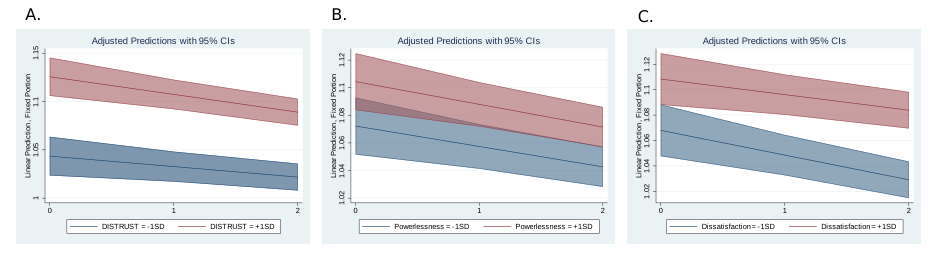
At the within-person level, higher-than-usual distrust was associated with higher levels of radicalism (B = 0.03, p = .001, 95% CI [0.020, 0.047]), indicating that adolescents reported more radical behavior during periods of elevated distrust.

At the between-person level, adolescents with higher average distrust also reported higher levels of radicalism (B = 0.08, 95% CI [0.049, 0.108], p = .001). There were no effects of distrust on the slope of radicalism (B = -0.01, 95% CI [-0.017, 0.003], p = .245). Overall, distrust accounted for 19% of the variance in radicalism. At the between-classroom level, no significant association was found (B = 0.00, 95% CI [-0.048, 0.058], p = .878). See Figure 1A for illustration.

Figure 1
The effects of political distrust (A), powerlessness (B), and dissatisfaction (C) on the level of political radicalism across adolescence (i.e., from age 13 to 17). The figures present adjusted predictions (marginal effects) with 95% confidence intervals at one standard deviations.

The effects of political distrust (A), powerlessness (B), and dissatisfaction (C) on the level of political radicalism across adolescence (i.e., from age 13 to 17). The figures present adjusted predictions (marginal effects) with 95% confidence intervals at one standard deviations.

To supplement these multilevel analyses, we examined the direction and timing of within-person associations by estimating a random-intercept cross-lagged panel model (RI-CLPM; Hamaker et al., 2015) (see Supplementary Materials for the model specification). The results of this model told a similar story to multilevel analyses. At the between-person level, distrust and radicalism were significantly correlated (r = .35, p = .001), indicating that adolescents who reported higher distrust across the five waves also reported more radicalism. The within-person associations were small and primarily concurrent, with a significant within-time association at T1 (r = .02, p = .047) and correlated changes between distrust and radicalism (r = .02, p = .047 at T1; r = .05, p = .045 and r = .06, p = .044 at T2–T4) but no significant lagged effects, indicating that within-person increases in distrust coincided with simultaneous increases in radicalism.

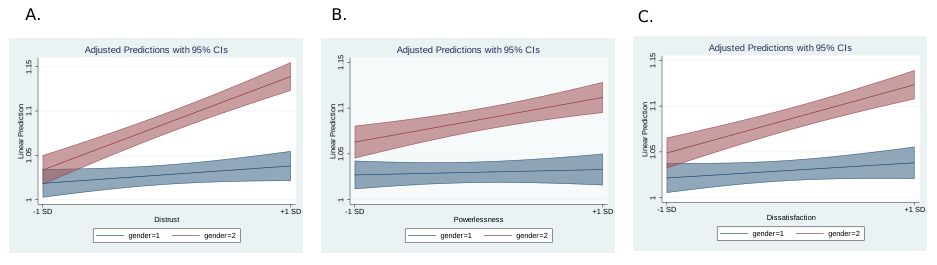
The effects of distrust did not change substantially when controlling for parental education, household income, and youth perceived financial situation of the family, which had no significant effects (B = -.0.00, 95% CI [-0.010, -0.004], p = .878; B = -0.00, 95% CI [-0.009, 0.003], p = .405; B = 0.00, 95% CI [-0.006, 0.016], p = .456, respectively). Moderation by immigrant background and gender was also examined. A model including a freely estimated path from the interaction between distrust and immigrant background to youth political radicalism did not significantly differ from a model in which this path was fixed to zero (Δ−2LL(1) = 0.26, p = .613, ΔAIC = 1.74), indicating that the effect of distrust was not different for non-Nordic immigrant youth and youth without a non-Nordic immigrant background. The main effect of immigrant background was not significant (B = 0.01, [-0.004, 0.035], p = .182). The results were substantially the same for alternative operationalizations of immigrant background (see Supplementary Materials). However, gender moderated the effects of distrust (Δ-2LL = 20.142 (1), p < .001; ΔAIC = 18.14). A significant interaction between distrust and gender was found for the level of radicalism (B = 0.08, 95% CI [0.052, 0.113], p = .001), indicating that the effect of distrust was stronger among boys. The main effect of gender was also significant (B = 0.04, 95% CI [0.027, 0.059], p = .001), with boys exhibiting higher levels of radicalism than girls (see Figure 2A).

Overall, higher-than-usual levels of political distrust within individuals were associated with increases in radicalism. Adolescents who reported more distrust than their peers also reported higher levels of political radicalism. No significant classroom-level effects were observed.

Figure 2
The effects of political distrust (A), powerlessness (B), and dissatisfaction (C) on the level of political radicalism depending on the gender (1 = Female, 2 = Male). The figures present adjusted predictions with 95% confidence intervals at one standard deviations.

The effects of political distrust (A), powerlessness (B), and dissatisfaction (C) on the level of political radicalism depending on the gender (1 = Female, 2 = Male). The figures present adjusted predictions with 95% confidence intervals at one standard deviations.

Political Powerlessness As Predictor of Youth Radicalism

Model 4B included political powerlessness as a predictor of within-person change, the between-person random intercept and slope, and the between-classroom random intercept. This significantly improved model fit compared to the model without predictors (Δ-2LL = 53.06 (3), p < .001; ΔAIC = 275.40).

At the within-person level, higher-than-usual powerlessness was associated with higher levels of radicalism (B = 0.02, p = .009, 95% CI [0.008, 0.035]), indicating that adolescents reported more radical behavior during periods of elevated powerlessness.

At the between-person level, powerlessness was not associated with differences in the slope of radicalism (B = -0.00, 95% CI [-0.020–0.013], p = .754). When this non-significant effect was constrained to zero, powerlessness significantly predicted the level of radicalism (B = 0.03, 95% CI [0.010, 0.061], p = .022). Constraining the slope did not significantly affect model fit (Δ-2LL = 0.10, p = .752) and did not alter other parameter estimates. Overall, powerlessness accounted for 14% of the variance in radicalism. At the between-classroom level, powerlessness did not significantly predict radicalism (B = 0.09, 95% CI [-0.018, 0.195], p = .171). See Figure 1B for illustration.

The random-intercept cross-lagged panel model told a similar story to multilevel analyses also for political powerlessness (see Supplementary Materials). Powerlessness and radicalism were correlated at the between-person level (r = .16, p = .047), whereas the within-person estimates were only borderline: a within-time association at T1 (r = .02, p = .056) and correlated changes across T2–T5 (r = .03, p = .055; r = .05, p = .054; r = .06, p = .055; r = .05, p = .054), again with no significant lagged effects. Within-person increases in powerlessness were therefore weakly and concurrently linked to increases in radicalism.

The effects of powerlessness did not change substantially when controlling for the non-significant effect of parental education (B = -0.00, 95% CI [-0.018, 0.195], p = .384). Controlling for the non-significant effect of household income (B = -0.00, 95% CI [-0.012, 0.000], p = 126) rendered the effect of powerlessness on the level of radicalism non-significant (B = 0.03, 95% CI [-0.003, 0.058], p = .132), likely reflecting a loss of power due to reduced sample size when including this control variable or shared variance between household income and powerlessness. Model controlling for youth perceived financial situation of the family did not converge. Moderation by immigrant background and gender was also examined. A model including a freely estimated path from the interaction between powerlessness and immigrant background to youth political radicalism did not significantly differ from a model in which this path was fixed to zero (Δ−2LL(1) = 0.03, p = .872; ΔAIC = 1.97), indicating that the effect of powerlessness did not differ between non-Nordic immigrant youth and youth without a non-Nordic immigrant background. The main effect of immigrant background was not significant (B = 0.02, 95% CI [0.001, 0.041], p = .080). The results were substantially the same for alternative operationalizations of immigrant background (see Supplementary Materials). However, gender moderated the effects of powerlessness (Δ-2LL = 119.12 (2), p < .001; ΔAIC = 115.12). A significant interaction between powerlessness and gender was found for the level of radicalism (B = 0.07, 95% CI [0.019-0.120], p = .024), indicating that the association between powerlessness and radicalism was stronger among boys (see Figure 2B). The main effect of gender was also significant (B = 0.05, 95% CI [0.031, 0.064], p = .001), with boys reporting higher levels of radicalism than girls.

Overall, higher-than-usual levels of political powerlessness within individuals were associated with increases in radicalism. Adolescents who reported greater powerlessness than their peers also reported higher levels of political radicalism. No significant classroom-level effects were observed.

Political Dissatisfaction As Predictor of Youth Radicalism

Model 4C included political dissatisfaction as a predictor of within-person change, the between-person random intercept and slope, and the between-classroom random intercept. This significantly improved model fit compared to the model without predictors (Δ-2LL = 163.98 (4), p < .001; ΔAIC = 386.33).

At the within-person level, higher-than-usual dissatisfaction was associated with higher levels of radicalism (B = 0.02, 95% CI [0.006, 0.032], p = .018), indicating that adolescents reported more radical behavior during periods of elevated dissatisfaction.

At the between-person level, higher average dissatisfaction predicted higher levels of radicalism (B = 0.05, 95% CI [0.017, 0.083], p = .013). Dissatisfaction was not associated with differences in the slope of radicalism (B = 0.00, 95% CI [-0.009, 0.014], p = .692). Overall, dissatisfaction accounted for 15% of the variance in radicalism. The association between dissatisfaction and youth political radicalism is illustrated in Figure 1C. At the between-classroom level, dissatisfaction did not significantly predict radicalism (B = 0.02, 95% CI [-0.055, 0.102], p = .620).

For political dissatisfaction, the random-intercept cross-lagged panel model showed that dissatisfaction and radicalism were correlated at the between-person level (r = .15, p = .051), and the within-person associations were the strongest of the three dimensions, with a within-time association at T1 (r = .07, p = .001) and correlated changes across T2–T5 (r = .07, p = .001; r = .13, p = .001; r = .17, p = .001; r = .13, p = .001) (see Supplementary Materials). Unlike distrust and powerlessness, dissatisfaction also showed reciprocal lagged effects: dissatisfaction predicted subsequent radicalism from T3 to T4 (B = .27, p = .001), and radicalism predicted subsequent dissatisfaction from T1 to T2, T2 to T3, T3 to T4, and T4 to T5 (B = .11, p = .002; B = .09, p = .002; B = .05, p = .003; B = .03, p = .003). Thus, beyond concurrent covariation, elevated dissatisfaction and radicalism reinforced one another over time.

The effects of dissatisfaction on the level of youth political radicalism did not change substantially when controlling for parental education and household income, which had no significant effects (B = -0.00, 95% CI [-0.011, 0.007], p = .672; B = -0.00, 95% CI [-0.011, 0.001], p = .170). Controlling for the non-significant effect of youth perceived financial situation of the family (B = 0.00, 95% CI [-0.006, 0.016], p = .453) rendered the effect of dissatisfaction on the level of radicalism non-significant (B = .03, 95% CI [-0.003, 0.066], p = .135), likely reflecting shared variance between perceived financial situation of the family and dissatisfaction. Moderation by immigrant background and gender was also examined. A model including a freely estimated path from the interaction between dissatisfaction and immigrant background to youth political radicalism did not significantly differ from a model in which this path was fixed to zero (Δ−2LL(1) = 1.80, p = .179, ΔAIC = 0.20), indicating that the effect of dissatisfaction did not differ between non-Nordic immigrant youth and youth without a non-Nordic immigrant background. The main effect of immigrant background was significant (B = 0.02, 95% CI [0.004, 0.043], p = .044). The results were substantially the same for alternative operationalizations of immigrant background (see Supplementary Materials). Gender moderated the effects of dissatisfaction (Δ-2LL = 13.758 (1), p < .001; ΔAIC = 11.75). A significant interaction between dissatisfaction and gender was found for the level of radicalism (B = 0.07, 95% CI [0.041, 0.108], p = .001), indicating that the association between dissatisfaction and radicalism was stronger among boys (see Figure 2C). The main effect of gender was also significant (B = 0.04, 95% CI [0.023, 0.055], p = .001), with boys reporting higher levels of radicalism than girls.

Overall, higher-than-usual levels of political dissatisfaction within individuals were associated with increases in radicalism. Adolescents who reported greater dissatisfaction than their peers also reported higher levels of political radicalism. No significant classroom-level effects were observed.

Discussion

Using a longitudinal multilevel approach, this study investigated how political alienation, comprising political distrust, powerlessness, and dissatisfaction, contributes to the development of radical political activism from ages 13 to 17. Although prior research has suggested that adolescence may be a critical period for radicalization and that frustrations with the political system or negative political experiences can contribute to radicalization (Campelo et al., 2018; Emmelkamp et al., 2020; Jahnke et al., 2021; Vergani et al., 2018), research directly linking political alienation to radical behaviors across the adolescent years is scarce. By disentangling within-person, between-person, and classroom-level processes over five years, the current study offers insights into how political alienation contributes to youth radicalization during this formative developmental period.

The present findings can be interpreted through the joint lens of grievance-based, alienation, and motivational perspectives. From a grievance-based (Ajil, 2022; McCauley & Moskalenko, 2011; Ratelle & Souleimanov, 2017; Rydgren, 2007) and political alienation standpoint (Finifter, 1970; Olsen, 1969; Schwartz, 1976; Seeman, 1959), political distrust, powerlessness, and dissatisfaction reflect perceived injustices and lack of responsiveness within the political system, which may prompt individuals to challenge existing structures, including in adolescence (Beelmann, 2020; 2026). At the same time, consistent with Significance Quest Theory (Kruglanski et al., 2014, 2022), experiences of political distrust, powerlessness, and dissatisfaction may signal to adolescents that their views are disregarded by the representatives of the political system, that they lack agency within the political system, and that political authorities are unresponsive to people like them. These experiences undermine youth’s sense of significance, a core need to matter, be respected, and to have influence within one’s social and political community. Interpreting the findings through these complementary perspectives allows for a more nuanced understanding of the observed associations: political alienation may constitute a form of grievance that both creates opposition to the system and undermines youth’s sense of significance, thereby increasing the appeal of radical political engagement that promises system change and significance restoration.

Political Alienation and Youth Radicalism

The current results demonstrated that youth political radicalism was associated with political alienation, operationalized as political distrust, powerlessness, and dissatisfaction, at both the within- and between-person levels. At the within-person level, deviations from individuals’ own mean levels of alienation across waves were positively associated with corresponding deviations in radicalism. Thus, when adolescents experienced higher-than-usual levels of distrust, powerlessness, or dissatisfaction, they concurrently exhibited higher levels of political radicalism. This finding suggests that political alienation functions as a dynamic risk factor, such that periods of heightened political frustration are accompanied by temporarily greater engagement in radical political action. These results underscore the importance of viewing radicalization not only as an outcome of long-standing dispositions, but also as a process that fluctuates in response to changing political experiences.

The cross-lagged analyses indicated that these within-person links were largely concurrent, such that within-person increases in political alienation coincided with simultaneous increases in radicalism. This pattern was strongest for political dissatisfaction, more modest for political distrust, and only marginal for political powerlessness. For distrust and powerlessness, no lagged effects emerged, suggesting that changes in these dimensions did not systematically forecast later changes in radicalism, or the reverse. For dissatisfaction, however, there was evidence of a reciprocal dynamic, with elevated dissatisfaction and radicalism each predicting subsequent increases in the other.

A positive association between political alienation and radicalism was also observed at the between-person level, with alienation significantly associated with differences in radicalism between adolescents. In particular, adolescents who, on average across waves, reported higher levels of political distrust, powerlessness, or dissatisfaction than their peers exhibited consistently higher levels of radicalism. Political distrust accounted for the largest share of the previously unexplained variance in radicalism, whereas powerlessness accounted for the smallest. Although political alienation was not associated with differences in rates of change in radicalism over time, it structured enduring differences in radicalism levels across adolescence. This pattern suggests an early divergence in political trajectories that remains stable rather than widening across adolescence, highlighting the long-term implications of chronic political alienation. Binary logistic regressions using a dichotomized measure of radical behavior showed that political dissatisfaction and distrust were consistently associated with a higher likelihood of radical behavior across waves, whereas associations with powerlessness were weaker and less consistent (see Supplementary Analyses).

During adolescence, a developmental period characterized by heightened malleability, emotional reactivity, and early encounters with the political system (Casey & Caudle, 2013; Erikson, 1968; Flanagan & Gallay, 2014; Flanagan & Tucker, 1999; Krosnick & Duane, 1989; Sears & Levy, 2003; Silvers et al., 2012), personal experiences or perceptions of others being treated unfairly by prescriptively prosocial institutions (e.g., elected officials, civil servants, courts, police) may be particularly consequential for political trust, agency, and satisfaction, potentially leading to a development of political alienation (Citrin et al., 1975; Dermody et al., 2010; Fox, 2015; Neundorf & Smets, 2017). When political alienation arises during this formative period, it might be especially likely to increase receptivity to radical ideologies or behaviors (Barracosa & Cherney, 2025; Beelmann, 2020; 2026; Carlsson et al., 2020). The current findings align with previous research linking various dimensions of political alienation to radical political action among youth (Abdelzadeh et al., 2015; Cologna et al., 2021; Dahl et al., 2017; Dekker et al, 1997; Jahnke et al., 2021; Šerek et al., 2018), and extend this work by demonstrating that these associations, despite modest effect sizes, operate both dynamically within individuals and persistently between individuals across adolescence.

In contrast to the individual-level effects, classroom-level political alienation did not predict youth radicalism. Adolescents in classrooms characterized by higher average distrust, powerlessness, or dissatisfaction were not more radical than those in less politically alienated classrooms. This finding suggests that personal experiences of political alienation, rather than mere exposure to a shared climate of political disillusionment, are more likely to be associated with radical political behavior. From a motivational perspective, this pattern aligns with theories emphasizing that social norms are most influential when they interact with personally salient grievances (Kruglanski et al., 2014, 2022) and other proximal radicalization processes in adolescence (Beelmann, 2020; 2026). This finding warrants cautious interpretation. Between-classroom variance in political alienation was limited, which may have constrained the ability to detect contextual effects. Future research in more heterogeneous educational or political contexts is needed to determine whether shared sense of political alienation amplifies radicalism.

Moderating Roles of Gender and Immigrant Background

The effects of political alienation on radicalism were more pronounced among boys than girls. Boys also reported higher overall levels of radicalism, distrust, powerlessness, and dissatisfaction. One possible explanation is that political disillusionment may be processed differently by males and females, with boys more likely to externalize frustration through oppositional or radical behaviors, whereas girls may respond with more internalizing reactions (Jang, 2007). Consistent with this, prior research has shown that illegal political activism is more closely linked to personal frustrations among males than females (Gavray et al., 2012). However, this explanation remains speculative, and future research should further examine gendered pathways linking alienation to political behavior (Schröder et al., 2022). Taken together, these findings suggest that political alienation constitutes a particularly salient risk factor for radicalization among boys. From a policy perspective, this highlights the importance of interventions that focus on politically alienated boys and provide them with meaningful political involvement that restores trust and sense of recognition.

In contrast, the associations between political alienation and radicalism did not differ by non-Nordic immigrant background, indicating that alienation predicted radical behavior robustly and similarly among youth with and without immigrant background. Alternative operationalizations of immigrant background (non-Swedish and non-European) produced patterns largely comparable to the main analyses, although moderation effects remained mostly non-significant, except for a weaker association between dissatisfaction and radicalism among non-European immigrant youth. Nevertheless, immigrant youth reported higher levels of political distrust and powerlessness, suggesting differential exposure to alienating political experiences (Pauwels & De Waele, 2014). This is consistent with previous research, showing ethnic minority students to be less trusting of elected officials and their responsiveness to ordinary people (Flanagan & Gallay, 2008). These disparities may reflect structural inequalities or differential treatment by institutions. Indeed, prior research shows that individuals with immigrant backgrounds, and particularly with non-European immigrant backgrounds, are more likely to experience inequitable treatment by public authorities, governmental officials, and schools (Adman & Jansson, 2017; Ahmed & Hammarstedt, 2019; Hinnerich et al., 2015), which may contribute to heightened political alienation in this group. This underscores the importance of counteracting differential treatment by public authorities as a means of preventing the accumulation of political alienation experiences that may increase vulnerability to radicalization.

Strengths and Limitations

Key strengths of this study include its longitudinal design, its distinction between within-person, between-person, and between-classroom processes, and its focus on adolescence, a crucial yet relatively neglected developmental period in radicalization research. It also emphasizes the role of political experiences, such as disillusionment with the political system, in radicalization. By integrating developmental psychology with political factors, the study advances understanding of how political experiences shape youth radicalism.

Nevertheless, limitations should be acknowledged. Although the longitudinal design strengthens inference, causal conclusions cannot be drawn. Given the difficulty of experimentally examining the long-term consequences of political alienation, future studies may extend these findings by employing experimental paradigms that simulate political system functioning and capture their short-term effects on youth political radicalism. Self-reported data may be influenced by unmeasured third variables, such as mental health. Future studies might test if mental health interacts with political alienation in the course of political radicalization. Moreover, the behavioral indicators used primarily capture engagement in non-normative political activities, such as illegal demonstrations, confrontational protest, or law-breaking on political grounds, rather than clearly distinguishing ideological extremity or violent forms of radicalization. As such, the measure is best interpreted as reflecting lower-intensity or early-stage forms of radical or non-normative political engagement situated between conventional participation and violent extremism. Relatedly, given that the radical behaviors examined were radical but not violently extreme and of relatively low prevalence, it is an open question of whether alienation operates similarly across different levels of extremism. While understanding early-stage or low-frequency engagement in radical behavior during adolescence is important, as such behaviors may represent initial steps in developmental pathways toward more sustained or extreme forms of radicalization, future studies should examine whether current associations generalize to more extreme or persistent forms of radicalism. Further, because immigrant background was operationalized using the parental country of birth, the immigrant-background group may include both foreign-born youth and youth born in Sweden to foreign-born parents. The analyses therefore speak to differences between youth with and without immigrant background, but not to differences between first- and second-generation youth. Prior research suggests that individuals with immigrant backgrounds may differ in their experiences (Behtoui, 2021; Safipour et al., 2011) and attitudes toward political behavior or extremism (Obaidi et al., 2019) depending on their proximity to migration. Accordingly, our findings should be interpreted in this context. Although the attrition analyses explained a relatively modest proportion of variance in retention, this level of explained variance is not uncommon in psychological research and suggests that some systematic differences between retained participants and dropouts may have been present, which should be considered when interpreting the representativeness of the findings. Finally, this study focused on a single context characterized by comparatively high political trust (Dellmuth, 2024), which may have limited the strength of the observed effects. Nonetheless, extant studies have shown positive associations between political alienation and radicalism in countries with lower institutional trust, such as the U.S. (e.g., Horton & Thompson, 1962; Jackson et al., 2012; Ransford, 1968), suggesting that the underlying mechanisms observed here likely generalize beyond the current context.

Conclusions

This study offers unique longitudinal evidence that political alienation shapes the development of radical political activism in adolescence. Youth’s (and particularly boys’) more frequent experiences of political distrust, powerlessness, and dissatisfaction were associated with higher levels of radicalism both dynamically within individuals and persistently across adolescence. These findings underscore the importance of political institutions that are responsive, fair, and inclusive as a means of counteracting radicalism. Efforts to strengthen young people’s agency within political systems may be particularly effective in reducing susceptibility to radical political engagement.

Data Availability Statement

Data and code are available from the first author upon reasonable request. 

Supplementary Materials

The supplementary materials can be found here.

Acknowledgements

The work of M.M. on this project was supported by the grant from grants from the Riksbankens Jubileumsfond [P20-0599] and the Swedish Research Council (2023-05833). This study was made possible by access to data from the Political Socialization Program, a longitudinal research program at YeS (Youth & Society) at Örebro University, Sweden. Responsible for the planning, implementation, and financing of the collection of data were professors Erik Amnå, Mats Ekström, Margaret Kerr and Håkan Stattin. The data collection was supported by grants from Riksbankens Jubileumsfond.

Author Contributions

M.M. conceptualized the study, analyzed the data, interpreted the results, and drafted the introduction, methods, and discussion sections. T.B. provided critical revisions.

Abdelzadeh, A., Özdemir, M., & van Zalk, M. (2015). Dissatisfied citizens: An asset to or a liability on the democratic functioning of society? Scandinavian Political Studies, 38, 410–436. https://doi.org/10.1111/1467-9477.12051

Adman, P., & Jansson, H. (2017). A field experiment on ethnic discrimination among local Swedish public officials. Local Government Studies, 43(1), 44–63. https://doi.org/10.1080/03003930.2016.1244052

Ahmed, A., & Hammarstedt, M. (2019). Ethnic discrimination in contacts with public authorities: A correspondence test among Swedish municipalities. Applied Economics Letters, 27(17), 1391–1394. https://doi.org/10.1080/13504851.2019.1683141

Ajil, A. (2022). Politico-ideological violence: Zooming in on grievances. European Journal of Criminology, 19(2), 304–321. https://doi.org/10.1177/1477370819896223

Barracosa, S., & Cherney, A. (2025). An integrated model for youth radicalisation: examining the impact of life-course and situational factors. Behavioral Sciences of Terrorism and Political Aggression, 1–22. https://doi.org/10.1080/19434472.2025.2554777

Beelmann, A. (2020). A social-developmental model of radicalization: A systematic integration of existing theories and empirical research. International Journal of Conflict and Violence, 14, 1–14. https://doi.org/10.4119/ijcv-3778

Beelmann, A. (2026). Adolescence and young adulthood as a vulnerable developmental period for radicalization. De Gruyter Handbook of the Psychology of Terrorism, edited by Clark R. McCauley, Sophia Moskalenko and Gina Scott Ligon, De Gruyter, pp. 267-280. https://doi.org/10.1515/9783111444529-023

Behtoui, A. (2021). Constructions of self-identification: children of immigrants in Sweden. Identities, 28(3), 341–360. https://doi.org/10.1080/1070289X.2019.1658396

Bennett, E. A., Cordner, A., Klein, P. T., Savell, S., & Baiocchi, G. (2013). Disavowing politics: Civic engagement in an era of political scepticism. American Journal of Sociology, 119(2), 518–548. https://doi.org/10.1086/674006

Bertsou, E. (2019). Political distrust and its discontents: Exploring the meaning, expression and significance of political distrust. Societies, 9(4), 72. https://doi.org/10.3390/soc9040072

Campelo, N., Oppetit, A., Neau, F., Cohen, D., & Bronsard, G. (2018). Who are the European youths willing to engage in radicalisation? A multidisciplinary review of their psychological and social profiles. European Psychiatry, 52, 1–14. http://doi.org/10.1016/j.eurpsy.2018.03.001

Carlsson, C., Rostami, A., Mondani, H., Sturup, J., Sarnecki, J., & Edling, C. (2020). A life-course analysis of engagement in violent extremist groups. The British Journal of Criminology, 60(1), 74–92. https://doi.org/10.1093/bjc/azz048

Casey, B. J., & Caudle, K. (2013). The teenage brain: Self-control. Current Directions in Psychological Science, 22(2), 82–87. https://doi.org/10.1177/0963721413480170

Channel 4, & Craft. (2024). Gen Z: Trends, truth and trust. https://assets-corporate.channel4.com/_flysystem/s3/2025-01/Gen%20Z%20Trends%20Truth%20and%20Trust_0.pdf

Christensen, T. (2024, February 1). Rapport: Ungas intresse for samhallspolitik minskar [Report: Young people’s interest in social politics is decreasing]. SVT Nyheter. https://www.svt.se/nyheter/inrikes/rapport-ungas-intresse-for-samhallspolitik-minskar

Citrin, J., McClosky, H., Shanks, M., & Sniderman, P. (1975). Personal and political source of political alienation. British Journal of Political Science, 5(1), 1–31. https://doi.org/10.1017/S0007123400008024

Cologna, V., Hoogendoorn, G., & Brick, C. (2021). To strike or not to strike? An investigation of the determinants of strike participation at the Fridays for Future climate strikes in Switzerland. PloS One, 16(10), e0257296. https://doi.org/10.1371/journal.pone.0257296

Dahl, V., Amnå, E., Banaji, S., Landberg, M., Serek, J., Ribeiro, N., Beilmann, M., Pavlopoulos, V., & Zani, B. (2017). Apathy or alienation? Political passivity among youths across eight European Union countries. European Journal of Developmental Psychology, 15(3), 284–301. https://doi.org/10.1080/17405629.2017.1404985

Dekker, P., Koopmans, R., & van den Broek, A. (1997). Voluntary associations, social movements and individual political behaviour in Western Europe. In J. W. van Deth (Ed.). Private groups and public life: Social participation, voluntary associations and political involvement in representative democracies (pp. 224–243). Routledge.

Dellmuth, L. (2024). Regional inequalities and political trust in a global context. Journal of European Public Policy, 31(6), 1516–1535. https://doi.org/10.1080/13501763.2023.2269207

Dermody, J., Hanmer-Lloyd, S., & Scullion, R. (2010). Young people and voting behaviour: Alienated youth and (or) an interested and critical citizenry. European Journal of Marketing, 44(3/4), 421–435. https://doi.org/10.1108/03090561011020507

Dezelan, T. (2023). Young people’s participation in European democratic processes. Policy Department for Citizens’ Rights and Constitutional Affairs Directorate-General for Internal Policies. Retrieved from: https://www.europarl.europa.eu/RegData/etudes/STUD/2023/745820/IPOL_STU(2023)745820_EN.pdf

Echelmeyer, L Slootbook, A. M., & Weerman, F. (2023). The putative effect of identity on extremist radicalization: A systematic review of quantitative studies. Studies in Conflict and Terrorism. https://doi.org/10.1080/1057610X.2023.2247621

Edelman Trust Barometer. (2025). 2025 Edelman Trust Barometer. Global Report Trust and the Crisis of Grievance. https://www.edelman.com/sites/g/files/aatuss191/files/2025-01/2025%20Edelman%20Trust%20Barometer%20Global%20Report_01.23.25.pdf

Emmelkamp, J., Asscher, J., Wissink, I. B., & Stams, G. J. J. M. (2020). Risk factors for (violent) radicalization in juveniles: A multilevel metaanalysis. Aggression and Violent Behavior, 55. https://doi.org/10.1016/j.avb.2020.101489

Erikson, E. H. (1968). Identity: Youth and crisis. W.W. Norton.

European Commission. (2025). Adolescent radicalisation: It’s not just on Netflix. Retrieved from: https://ec.europa.eu/newsroom/home/items/880571/en

European Social Survey. (2002). Source questionnaire. https://www.europeansocialsurvey.org/methodology/ess-methodology/source-questionnaire

European Union. (2020). Counter-terrorism agenda for the EU. https://ec.europa.eu/commission/presscorner/detail/en/ip_20_2326

Fairbrother, M., Mewes, J., & Giordano, G.N. (2022). Can bureaucrats break trust? Testing cultural and institutional theories of trust with Chinese panel data. Socius: Sociological Research for a Dynamic World, 8. https://doi.org/10.1177/23780231221126879

Finifter, A.W. (1970). Dimensions of political alienation. The American Political Science Review, 64(2), 389–410. https://doi.org/10.2307/1953840

Flanagan, C.A, & Tucker, C. J. (1999). Adolescents’ explanations for political issues: concordance with their views of self and society. Developmental Psychology, 35(5), 1198–1209. https://doi.org/10.1037/0012-1649.35.5.1198

Flanagan, C., & Gallay, L. (2008). Adolescent development of trust (CIRCLE working paper 61). College Park, MD: Center for Information and Research on Civic Learning and Engagement.

Flanagan, C., & Gallay, E. (2014). Adolescents’ theories of the commons. In Advances in Child Development and Behavior (pp. 33–55). Elsevier. https://doi.org/10.1016/b978-0-12-800285-8.00002-9

Fox, S. (2015). Apathy, alienation and young people: The political engagement of British Millennials, [Doctoral dissertation, University of Nottingham].

Gallup. (2023). Gen Z voices lackluster trust in major U.S. institutions. https://news.gallup.com/opinion/gallup/510395/gen-voices-lackluster-trust-major-institutions.aspx

Gavray, C., Fournier, B., & Born, M. (2012). Non-conventional/illegal political participation of male and female youths. Human Affairs, 22(3), 405–418. https://doi.org/10.2478/s13374-012-0033-0

Gest, J., Reny, T., & Mayer, J. (2017). Roots of the Radical Right: Nostalgic Deprivation in the United States and Britain. Comparative Political Studies, 51(13), 1694-1719. https://doi.org/10.1177/0010414017720705

Hamaker, E. L., Kuiper, R. M., & Grasman, R. P. P. P. (2015). A critique of the cross-lagged panel model. Psychological Methods, 20(1), 102–116. https://doi.org/10.1037/a0038889

Henn, M., Weinstein, M., & Forrest, S. (2005). Uninterested youth? Young people’s attitudes towards party politics in Britain. Political Studies, 53(3), 556–578. https://doi.org/10.1111/j.1467-9248.2005.00544.x

Hinnerich, B. T., Höglin, E., & Johannesson, M. (2015). Discrimination against students with foreign backgrounds: evidence from grading in Swedish public high schools. Education Economics, 23(6), 660–676. https://doi.org/10.1080/09645292.2014.899562

Hope E., & Jagers, R. (2014). The role of sociopolitical attitudes and civic education in the civic engagement of black youth. Journal of Research on Adolescence, 24 3, 460-470. https://doi.org/10.1111/jora.12117

Horton, J. E., & Thompson, W. E. (1962). Powerlessness and political negativism: A study of defeated local referendums. American Journal of Sociology, 67(5), 485–493. https://doi.org/10.1086/223186

Institute for Economics and Peace. (2024). Global terrorism index. Institute for Economics & Peace, Sydney, November 2024. https://www.economicsandpeace.org/global-terrorism-index/

Jackson, J., Bradford, B., Hough, M., Myhill, A., Quinton, P., & Tyler, T. R. (2012). Why do people comply with the law? Legitimacy and the influence of legal institutions. The British Journal of Criminology52(6), 1051–1071. https://doi.org/10.1093/bjc/azs032

Jahnke, S., Borger, K., & Beelmann, A. (2021). Predictors of political violence outcomes among young people: A systematic review and meta-analysis. Political Psychology, 43(1), 111–129. https://doi.org/10.1111/pops.12743

Jang, S. J. (2007). Gender differences in strain, negative emotions, and coping behaviors: A general strain theory approach. Justice Quarterly, 24(3), 523–553. https://doi.org/10.1080/07418820701485486

Jasko, K., Webber, D., Kruglanski, A. W., Gelfand, M., Taufiqurrohman, M., Hettiarachchi, M., & Gunaratna, R. (2019). Social context moderates the effects of quest for significance on violent extremism. Journal of Personality and Social Psychology, 118(6), 1165–1187. https://doi.org/10.1037/pspi0000198

Jost, J. T. (2020). A theory of system justification. Harvard University Press.

Kreft, I. G. G., & de Leeuw, J. (1998). Introducing multilevel modeling. Sage Publications.

Krosnick, J. A., & Duane, F. A. (1989). Aging and susceptibility to attitude change. Journal of Personality and Social Psychology, 57(3), 416–425. https://doi.org/10.1037/0022-3514.57.3.416

Kruglanski, A. W., Gelfand, M. J., Bélanger, J., Sheveland, A., Hettiarachchi, M., & Gunaratna, R. (2014). The psychology of radicalization and deradicalization: How significance quest impacts violent extremism. Advances in Political Psychology, 35, 69-93. https://doi.org/10.1111/pops.12163

Kruglanski, A. W., Jasko, K., Webber, D., Chernikova, M., & Molinario, E. (2018). The making of violent extremists. Review of General Psychology, 22(1), 107–120. https://doi.org/10.1037/gpr0000144

Kruglanski, A. W., Molinario, E., Jasko, K., Webber, D., Leander, N. P., & Pierro, A. (2022). Significance Quest Theory. Perspectives on Psychological Science, 17(4), 1050–1071. https://doi.org/10.1177/17456916211034825

Maas, C. J. M., & Hox, J. J. (2005). Sufficient sample sizes for multilevel modeling. European Journal of Research Methods for the Behavioral and Social Sciences, 1(3), 86–92. https://doi.org/10.1027/1614-2241.1.3.86

Marien, S., & Hooghe, M. (2011). Does political trust matter? An empirical investigation into the relation between political trust and support for law compliance. European Journal of Political Research, 50(2), 267–291. https://doi.org/10.1111/j.14756765.2010.01930.x

McCauley, C., & Moskalenko, S. (2008). Mechanisms of political radicalization: Pathways toward terrorism. Terrorism and Political Violence, 20(3), 415–433. https://doi.org/10.1080/09546550802073367

McCauley, C., & Moskalenko, S. (2011). Friction: How radicalization happens to them and us. Oxford University Press.

McKay, L., Jennings, W., & Stoker, G. (2021). Political trust in the “places that don’t matter”. Frontiers in Political Science. 3:642236. https://doi.org/10.3389/fpos.2021.642236

Miklikowska, M., Jasko, K., & Kudrnac, A. (2022). The making of a radical: The role of peer harassment in youth political radicalism. Personality and Social Psychology Bulletin, 49(3), 477–492. https://doi.org/10.1177/01461672211070420

Mirazchiyski, E., & Mirazchiyski, P. V. (2025). A 14-year trend in intended illegal protest activities of 8th-grade students: Do civic knowledge and individual students’ backgrounds count? Education Sciences, 15(3), 364. https://doi.org/10.3390/educsci15030364

Moskalenko, S., & McCauley, C. (2009). Measuring political mobilization: The distinction between activism and radicalism, Terrorism and Political Violence, 21(2), 239–260. https://doi.org/10.1080/09546550902765508

Muthen, L. K., & Muthen, B. O. (1998-2018). Mplus user’s guide. 8th ed.

Neundorf, A., & Smets, K. (2017). Political socialization and the making of citizens. In Oxford Handbooks Online in Political Science. Oxford University Press. https://doi.org/10.1093/oxfordhb/9780199935307.013.98

Obaidi, M., Bergh, R., Akrami, N., & Anjum, G. (2019). Group-based relative deprivation explains endorsement of extremism among Western-born Muslims. Psychological Science, 30(4), 596–605. https://doi.org/10.1177/0956797619834879

OECD. (2021). Lack of trust in institutions and political engagement: An analysis based on the 2021 OECD Trust Survey. https://www.oecd.org/en/publications/lack-of-trust-in-institutions-and-political-engagement_83351a47-en.html

Olsen, M. E. (1969). Two categories of political alienation. Social Forces, 47(3), 288–299. https://doi.org/10.2307/2575027

Oosterhoff, B., & Wray-Lake, L. (2020). Risky politics? Associations between adolescent risk preference and political engagement. Child Development, 91, 4, e743–e761. https://doi.org/10.1111/cdev.13313

Pauwels, L., & De Waele, M. (2014). Youth involvement in politically motivated violence: Why do social integration, perceived legitimacy, and perceived discrimination matter? International Journal of Conflict and Violence, 8(1), 134–153. https://doi.org/10.4119/ijcv-3050

Pew Research Center. (2024). Americans’ deepening mistrust of institutions. https://www.pew.org/en/trend/archive/fall-2024/americans-deepening-mistrust-of-institutions

Pfundmair, M., Paulus, M., & Wagner, E. (2021). Activism and radicalism in adolescence: an empirical test on age-related differences. Psychology, Crime & Law, 27(8), 815–830. https://doi.org/10.1080/1068316X.2020.1850725

Pinedo, A., Diemer, M.A., & Frisby, M.B. (2024). Critical consciousness and youth political activism. Annual Review Developmental Psychology, 6:351-372. https://doi.org/10.1146/annurev-devpsych-010923-113449

Public Agenda. (2022). The political alienation barometer. An in-depth look at Americans who feel alienated from politics and politicians. https://publicagenda.org/wp-content/uploads/Alienation-Barometer-Report_HR_FINAL.pdf

Putnick, D.L, & Bornstein, M. H. (2017). Measurement invariance conventions and reporting: The state of the art and future directions for psychological research. Developmental Review, 41, 71-90. https://doi.org/10.1016/j.dr.2016.06.004

Ransford, H. E. (1968). Isolation, powerlessness, and violence: A study of attitudes and participation in the Watts Riot. American Journal of Sociology, 73(5), 581–591. https://doi.org/10.1086/224532

Ratelle, J. F., & Souleimanov, E. A. (2017). Retaliation in rebellion: The missing link to explaining insurgent violence in Dagestan. Terrorism and Political Violence, 29(4), 573–592. https://doi.org/10.1080/09546553.2015.1005076

Rink, A., & Sharma, K. (2016). The determinants of religious radicalization: Evidence from Kenya. Journal of Conflict Resolution, 62(6), 1–33. https://doi.org/10.1177/0022002716678986

Rostami, A., Modani, H., Carlsson, Ch., Sturup, Sarnecki, J., & Edling, C. (2018). Våldsbejakande extremism och organiserad brottslighet i Sverige. Institutet för Framtidstudier. Retrieved from: https://www.iffs.se/publikationer/iffs-rapporter/valdsbejakande-extremism-och-organiserad-brottslighet-i-sverige/

Rydgren, J. (2007). The power of the past: A contribution to a cognitive sociology of ethnic conflict. Sociological Theory, 25(3), 225–244. https://doi.org/10.1111/j.1467-9558.2007.00306.x

Safipour, J., Schopflocher, D., Higginbottom, G., & Emami, A. (2011). Feelings of social alienation: a comparison of immigrant and non‐immigrant Swedish youth. International Journal of Sociology and Social Policy, 31(7/8), 456–468. https://doi.org/10.1108/01443331111149888

SSchröder, C. P., Bruns, J., Lehmann, L., Goede, L.-R., Bliesener, T., & Tomczyk, S. (2022). Radicalization in adolescence: The identification of vulnerable groups. European Journal of Criminal Policy and Research, 28, 177-201. https://doi.org/10.1007/s10610-022-09505-x

Schwartz, D.C. (1976). Political alienation. Society, 13, 27–29. https://doi.org/10.1007/BF02694555

Sears, D. O., & Levy, S. (2003). Childhood and adult political development. In D. O. Sears, L. Huddy, & R. Jervis (Eds.), Oxford handbook of political psychology (pp. 60–109). Oxford University Press.

Seeman, M. (1959). On the meaning of alienation. American Sociological Review, 24(6), 783–791. http://doi.org/10.2307/2088565

Serek, J., Machackova, H., & Macek, P. (2018). Who crosses the norms? Predictors of the readiness for nonnormative political participation among adolescents. Journal of Adolescence, 62, 18-26. https://doi.org/10.1016/j.adolescence.2017.11.001

Silvers, J. A., McRae, K., Gabrieli, J. D., Gross, J. J., Remy, K. A., & Ochsner, K. N. (2012). Age-related differences in emotional reactivity, regulation, and rejection sensitivity in adolescence. Emotion, 12(6), 1235–1247. https://doi.org/10.1037/a0028297

Soss, J. (1999). Lessons of welfare: Policy design, political learning, and political action. The American Political Science Review, 93(2), 363–380. https://doi.org/10.2307/2585401

Southwell, L. L., & Everest, M. J. (1998). The electoral consequences of alienation: Nonvoting and protest voting in the 1992 presidential race. The Social Science Journal, 35(1), 43-51. https://doi.org/10.1016/S0362-3319(98)90058-1

Southwell, P. (2003). The politics of alienation: nonvoting and support for third-party candidates among 18–30-year-olds. The Social Science Journal, 40(1), 99–107. https://doi.org/10.1016/S0362-3319(02)00261-6.

Statistiska centralbyran. (2016). Statistical database. Retrieved May 25, 2026, from https://www.statistikdatabasen.scb.se/pxweb/en/ssd

Sunshine, J., & Tyler, T. R. (2003). The role of procedural justice and legitimacy in shaping public support for policing. Law & Society Review, 37(3), 513–548. http://www.jstor.org/stable/1555077

Tyler, T. R., & Huo, Y. J. (2002). Trust in the law: Encouraging public cooperation with the police and courts. Russell-Sage.

Tyler, T. R. (2006). Why people obey the law (2nd ed.). Princeton University Press.

United Nations. (2015). United Nations General Assembly Plan of Action to Prevent Violent Extremism. https://www.undp.org/policy-centre/governance/publications/un-sgs-plan-action-prevent-violent-extremism-secretary-generals-report

Valgarðsson, V., Jennings, W., Stoker, G., Berry, C., Bunting, H., Devine, D., Gaskell, J., Hesterman, W., Klassen, A., McKay, L., & Moss, J. (2025). A crisis of political trust? Global trends in institutional trust from 1958 to 2019. British Journal of Political Science, 55, e15. https://doi.org/10.1017/S0007123424000498

Van Buuren, J., & De Graaf, B. (2014). Hatred of the system: Menacing loners and autonomous cells in the Netherlands. Terrorism and Political Violence, 26(1), 156–184. https://doi.org/10.1080/09546553.2014.849932

van der Toorn, J., Feinberg, M., Jost, J. T., Kay, A. C., Tyler, T., Willer, R., & Wilmuth, C. (2014). A sense of powerlessness fosters system justification: Implications for the legitimation of authority, hierarchy, and government. Political Psychology, 36(1), 93–110. https://doi.org/10.1111/pops.12183

van Stekelenburg, J., & Klandermans, B. (2013). The social psychology of protest. Current Sociology, 61(5-6), 886-905. https://doi.org/10.1177/0011392113479314

Vergani, M., Iqbal, M., Ilbahar, E. & Barton G., (2018). The three Ps of radicalization: Push, pull and personal. A systematic scoping review of the scientific evidence about radicalization into violent extremism Studies in Conflict & Terrorism, 43(10), 854. https://doi.org/10.1080/1057610X.2018.1505686

Villagran, M. (2025). The influence of political trust on the acceptance of violence. Preprint retrieved from: https://doi.org/10.48550/arXiv.2510.04352

Watts, M. W. (1999). Are there typical age curves in political behavior? The “age invariance” hypothesis and political socialization. Political Psychology,20(3), 477–499. https://doi.org/10.1111/0162-895X.00153

Webber, D., Chernikova, M., Kruglanski, A. W., Gelfand, M. J., Hettiarachchi, M., Gunaratna, R., & Belanger, J. J. (2018). Deradicalizing detained terrorists. Political Psychology, 39(3), 539–556. https://doi.org/10.1111/pops.12428

Weber, H. (2018). Age structure and political violence: A reassessment of the “youth bulge” hypothesis. International Interactions, 45, 80–112. https://doi.org/10.1080/03050629.2019.1522310

Readers of this article also read
Commentary

Extremism without ideology

by Quassim Cassam
Commentary

Why the ‘salad bar’ might actually help extremism research – A reply to Horgan and Shayler

by Stephane Baele
Commentary

The erosion of conceptual clarity in the study of political violence

by Arie Perliger
Perspective

Why the ‘salad bar of ideologies’ does not help us understand contemporary violent extremism

by John Horgan & Morgan Shayler
Research Article

Superior social cognitive abilities in childhood are associated with better reward-seeking strategies in adolescence: evidence for a Social-Motivational Flexibility Model

by Dimitris I. Tsomokos & Eirini Flouri Cited by 3
Research Article

Facing a dark future: Young people’s future anxiety and political attitudes in the UK and Greece

by Olaf Borghi, Melina Niraki, Ermioni Seremeta, Kaat Smets, & Manos Tsakiris Cited by 1
Research Article

Collective action hinders the increase in post-election trust among election losers: Longitudinal evidence from the 2024 UK election

by Gaëlle Marinthe, Fanny Lalot, Alice Kasper, Efisio Manunta, & Genavee Brown
Editor Curated

Frequently Asked Questions

  • What is political alienation, and how does it relate to youth radicalism?

    Political alienation is the sense of having no meaningful voice, role, or influence in the political system. In the research by Miklikowska & Besta (2026), it is treated as a multidimensional idea with three related but distinct parts:

    1. political distrust (lack of confidence in institutions and leaders),
    2. powerlessness (feeling unable to affect political decisions),
    3. dissatisfaction (negative evaluations of how the system performs).

    The study found that when adolescents felt more alienated than their own usual level, they simultaneously reported more radical political behavior, such as illegal demonstrations or property damage. This suggests alienation acts as a dynamic risk factor, meaning periods of heightened political frustration are accompanied by temporarily greater engagement in radical action rather than being purely a fixed personality trait.

  • Why does this study focus specifically on adolescents rather than adults?

    According to Miklikowska & Besta (2026), adolescence is a critical formative period for shaping political identities, beliefs, and behaviors. Several developmental features make young people especially vulnerable:

    1. political orientations are highly malleable and sensitive to context during these years,
    2. teenagers are actively learning to navigate authority and judge whether institutions are legitimate,
    3. ongoing brain development is linked to greater risk-taking and stronger emotional reactions to perceived injustice.

    The authors note that radicalism is disproportionately concentrated among youth, with onset occurring at increasingly younger ages. Because most existing research focuses on adults and uses one-time snapshots, this study addresses a major gap by tracking the same Swedish adolescents over five years, offering a rare longitudinal view of how alienation and radicalism unfold together during this sensitive stage.

  • Did the study find differences between boys and girls?

    Yes, gender differences were a notable finding. Miklikowska & Besta (2026) report that boys consistently showed higher levels of radical political behavior than girls across most measurement points, including at the first wave (p < .001). More importantly, gender moderated the impact of every dimension of alienation, meaning the connection between feeling alienated and acting radically was significantly stronger for boys. This applied to distrust, powerlessness, and dissatisfaction alike. The authors connect this to emerging evidence that gendered pathways into radicalization begin during adolescence and that violent forms of radicalism are predominantly perpetrated by young men. This is why they argue that greater research and prevention attention is urgently needed for male adolescents specifically, who appear more reactive to political grievances.

  • Does the classroom environment influence whether teenagers become radical?

    Interestingly, the answer is largely no. While Miklikowska & Besta (2026) expected that a shared classroom climate of political disillusionment might normalize and reinforce grievances, they found no significant effect at the between-classroom level. Adolescents in classrooms with higher average distrust, powerlessness, or dissatisfaction were not statistically significantly more radical than peers in less alienated classrooms (all p-values above .17). Instead, the results point to what the authors describe as “you care when it happens to you”: personal, directly felt experiences of institutional disregard may activate radical behavior, rather than mere exposure to a collective mood. This aligns with motivational theories suggesting that social norms matter most when they connect with personally salient grievances, highlighting the importance of individual experiences over group atmosphere.

  • How was the study conducted, and how reliable are the measures?

    The research by Miklikowska & Besta (2026) used a five-wave panel study, collecting data annually from 2010 to 2014 in a representative mid-sized Swedish city. The final sample included 892 adolescents in 35 classrooms, tracked from ages 13-14 to 17-18. Key concepts were measured using multi-item scales rated on Likert-type response formats, covering radical behaviors, distrust, powerlessness, and dissatisfaction. The internal reliability of these measures was generally good, for example distrust ranged from .90 to .92 across the five waves. The team used multilevel modelling in Mplus to separate within-person, between-person, and between-classroom effects, and extended the findings with a random-intercept cross-lagged panel model. Attrition and measurement invariance checks indicated the constructs were measured consistently over time.

Previous Post
A photo showing a fragmented, close-up human face in muted blue-gray tones, overlaid with distorted textures and streaks of vivid red. The image is heavily manipulated with cracked, glass-like fractures and double-exposure effects that obscure the eyes, evoking themes of psychological rupture, obscured identity, and violence—visually paralleling the article's discussion of ideology-free extremism fixated on aggression itself.

Extremism without ideology