




Please note that this special issue edited by Jonas R. Kunst (BI Norwegian Business School & University of Oslo) & John F Dovidio (Yale University) is currently in progress. Articles will be added to this collection as they are published. The original call for papers is available below. Please also see this knowledge hub that summarizes the published articles.
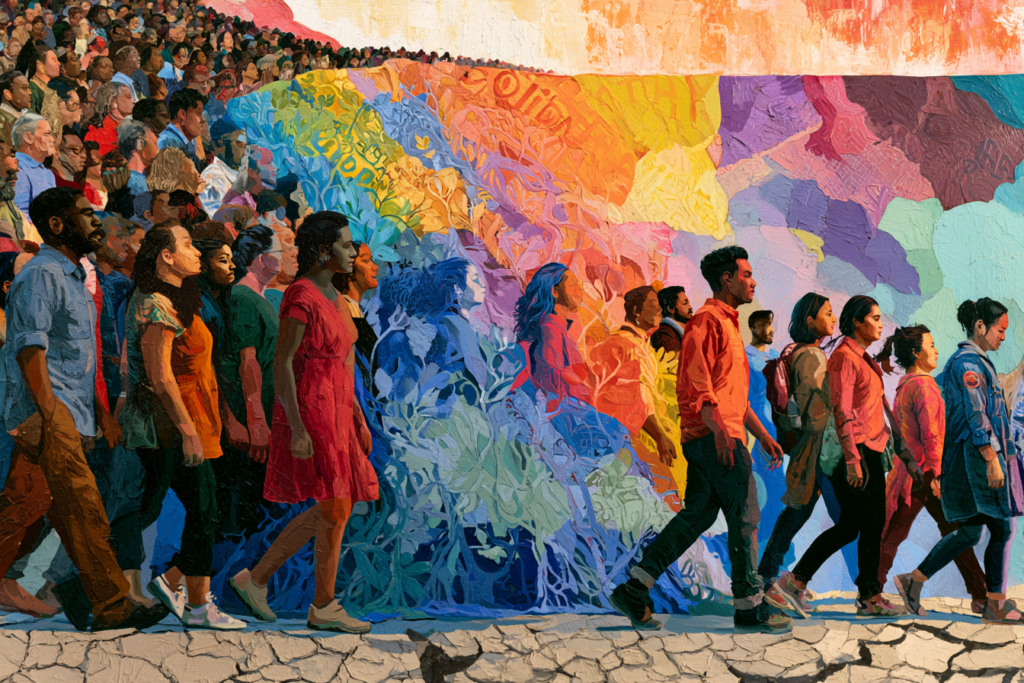
Solidarity as a bridge: Shared discrimination is indirectly associated with voting intentions among People of Color
By Kasheena G. Rogbeer & Efrén Pérez

Facing a dark future: Young people’s future anxiety and political attitudes in the UK and Greece
By Olaf Borghi, Melina Niraki, Ermioni Seremeta, Kaat Smets, & Manos Tsakiris

The politics of well-being during democratic backsliding: How partisan affiliation and support for government actions relate to happiness and life satisfaction

Voices behind walking the talk: Quantified qualitative insights on D&I policy support reasoning
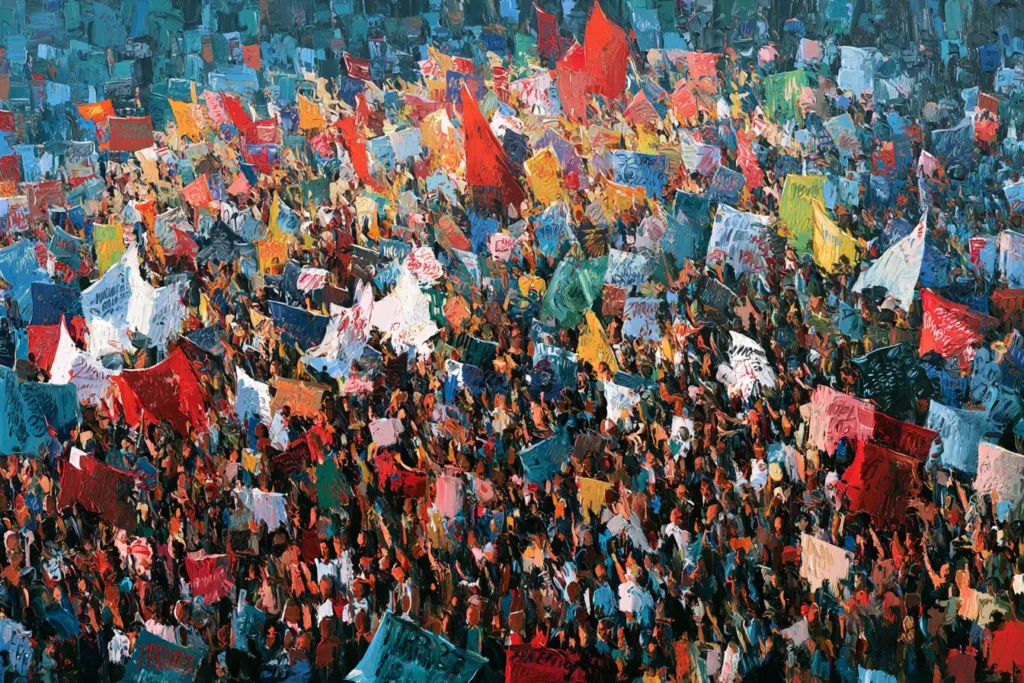
Collective action hinders the increase in post-election trust among election losers: Longitudinal evidence from the 2024 UK election
By Gaëlle Marinthe, Fanny Lalot, Alice Kasper, Efisio Manunta, & Genavee Brown

When it doesn’t get better: Leaning into minoritized identity to brace for decline
By Thomas A. Morton & Jessica Salvatore

Weaponising the past: An extended SIMCA model for how social identity and collective memory shape variation in collective action responses to democratic backsliding

War, what is it good for? Propaganda, value-instantiating beliefs, war support and resistance in Russia

Race, memory, and colorblindness: Critical history and deconstructing United States democracy

Understanding public responses to counter-protests disrupting social change movements
By Hema Preya Selvanathan, Matthew J. Hornsey, Jolanda Jetten, Xanthia E. Bourdaniotis, Melinda Hewett, & Rheaa Thulasi Manoharan

Stigma-based solidarity betrayal: Implications for resistance to the rise of ethno-nationalism in the U.S.
By Crystal Shackleford, Maya Rabinowitz, & Jennifer A. Richeson

White Americans’ feelings of being “last place” are associated with anti-DEI attitudes, Trump support, and Trump vote during the 2024 U.S. presidential election
“Ask Me Anything” (AMAs) on Reddit with Special Issue Authors
(Please note that the Article Processing Charge is waived for this special issue, given cuts in funding that authors at many institutions experience at the moment.)
This Special Issue, edited by Jonas R. Kunst ✉️ (BI Norwegian Business School/University of Oslo) and John F. Dovidio ✉️ (Yale University), seeks to advance our understanding of the psychological dynamics underlying resistance and compliance during periods of democratic decline. We welcome both theoretical and empirical contributions that, beside others:
- Examine the intersection of organizational and societal resistance
- Examine the cognitive, emotional, and behavioral processes that shape individual and collective responses to democratic backsliding
- Investigate the psychological mechanisms behind institutional and individual complicity versus resistance
- Explore the role of identity, values, and group dynamics in mobilizing or inhibiting resistance
- Analyze the psychological barriers to recognizing and responding to democratic erosion
- Study leadership psychology during periods of institutional stress
- Investigate the psychological impact of digital technologies and social media (including misinformation, disinformation, conspiracy theories) on resistance dynamics
- Analyze the psychological effects of democratic backsliding for mental health and well-being of dominant and marginalized groups
All submissions will undergo a rigorous and fair, transparent and double-blind peer-review process, where reviewers are compensated financially for their work. At advances.in/psychology, we are committed to inclusivity and accessibility in academic publishing. Recognizing the importance of this topic and the financial constraints that may limit participation from many scholars in current environments, the Article Processing Charges (APC) is waived for this special issue.
Deadline and Article Formats
The deadline for submission is June 30, 2025 (earlier submission is encouraged). Accepted papers will be published online and open access on a rolling basis. We accept research articles (5,000 words, excluding references), research reports (2,000 words excluding references), review/perspective papers (up to 10,000 words, excluding references), and methods papers (no length limit). The word limit may be extended upon request. You can find more information in the author guidelines.
We look forward to your submissions and collaborating with you to publish groundbreaking perspectives in this field of broad importance. In case of questions, do not hesitate to contact us at [email protected].

