




Abstract
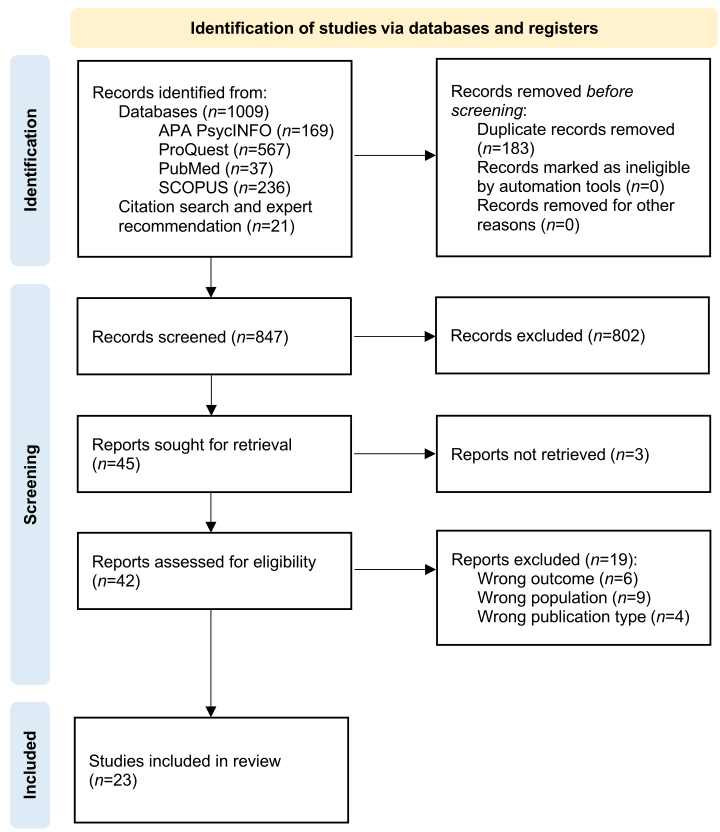
Adverse Childhood Experiences (ACEs) are stressful and potentially traumatic events that occur during the first two decades of life, with the potential for detrimental effects on development. ACEs are associated with a range of negative outcomes, including various violent behaviors. While there is interest in the relationship between ACEs and violent extremism (VE), it is unclear how systematically this has been studied. We conducted a scoping review of qualitative, quantitative, and mixed methods studies to synthesize the literature on ACEs and VE by searching APA PsycINFO, ProQuest Social Science Premium Collection, PubMed, and Scopus up to April 2026. Data extraction and quality appraisal were done following the Mixed Methods Appraisal Tool (MMAT). 847 records were screened. We included 23 studies that consisted of n = 4,946 individuals who supported or engaged in a range of right- and left-wing, Islamist, white supremacist, and other extremist groups. The most common ACEs reported across studies were related to the domain of household dysfunction, followed by maltreatment. VE individuals were observed to have a higher prevalence of ACEs compared to the general population, suggesting that ACEs may play a role in the radicalization process. Further research is needed to explore the complex relationship between ACEs and VE through longitudinal studies, adopting standardized tools and definitions, inclusion of appropriate control groups, and exploration of developmental pathways and causal mechanisms.
Editor Curated
Key Takeaways
- This scoping review synthesized 23 studies (totaling 4,946 individuals) examining the link between Adverse Childhood Experiences (ACEs) and violent extremism (VE). Household dysfunction (such as caregiver loss, imprisonment, or substance abuse) emerged as the most commonly reported adversity, followed by maltreatment such as emotional neglect and physical or sexual abuse. Among certain samples, such as US right-wing extremists, up to 70% reported four or more ACEs.
- While ACE rates in extremist populations were often far higher than general population base rates (roughly 38-39%), they were not always higher than in control groups like violent offenders or gang members. For example, political extremists were not statistically significantly more likely to come from broken homes than gang members, and non-radicalized Muslim inmates actually showed higher rates of violent childhood punishment (77%) than radicalized inmates (64%). This points to 'multifinality,' meaning ACEs can lead to many different outcomes, not just VE.
- Of the four studies testing direct associations, some found significant links (e.g., ACEs and involvement in terrorist violence: OR = 2.08, p ≤ 0.05), while others did not. Childhood abuse was not statistically significantly associated with participation in violence in a US extremist sample, nor with terrorism in Iraqi prisoners. Continuation in education emerged as a potential protective factor moderating the ACE-VE relationship (p < 0.05).
Keywords: