



The question of why individuals endorse, support, or commit ideologically motivated violence carries significant stakes in psychology and is frequently misunderstood. Research spanning decades has refuted the notion of a singular “terrorist personality,” demonstrating instead that radicalization is a dynamic process influenced by development, identity, grievance, group dynamics, and exposure to violent content rather than a fixed trait. Concurrently, the emergence of a new cohort of perpetrators—often young, frequently acting in isolation, and seemingly lacking a coherent worldview—is compelling researchers to reconsider whether ideology truly serves as the primary driver of extremist violence.
This knowledge hub consolidates peer-reviewed studies appearing in advances.in/psychology, notably the continuous special issue Advances in the Psychology of Violent Extremism overseen by Jonas R. Kunst and Milan Obaidi.
Key Takeaways
- Radical attitudes rarely become radical action. Although individuals with extreme viewpoints seldom resort to violence, certain perpetrators of extremist acts lack a coherent ideological framework entirely (Cassam, 2026; McCauley, 2026; Rousseau & Veissière, 2026).
- The role of ideology is now the field’s central debate. Over a period of three years, the proportion of UK Prevent referrals categorized as ideologically “mixed, unstable or unclear” increased from 11% to 51%; however, scholars remain divided on whether this trend indicates an actual change or constitutes an analytical failure (Baele, 2026; Horgan & Shayler, 2026; Perliger, 2026).
- Radicalization has developmental roots. Research indicates that the trajectory toward radicalism is associated with adverse childhood experiences and political alienation during adolescence, whereas trustworthy institutions and education serve as protective influences (Miklikowska & Besta, 2026; Pammi et al., 2026).
- Engagement is self-reinforcing. The dynamic between obsessive passion for a cause and the intentional consumption of violent media mutually amplifies itself across time, resulting in what is characterized as a “radicalization syndrome” instead of a straightforward progression (Bélanger et al., 2026).
- Leadership shapes lethality. Organizations led by charismatic extremists, whose motives are rooted in the pursuit of personal authority, exhibit a fatality rate approximately twelve times greater than those managed by leaders with socialized orientations (Harms et al., 2026).
- Prevention can work. Psychological inoculation enhanced the detection of extremist manipulation within a randomized trial conducted in post-conflict Iraq; however, these effects diminish when evaluated outside laboratory settings (Saleh et al., 2023).
Foundational Concepts in Extremism Research
What Are Violent Extremism, Terrorism, and Radicalization?
The term Violent extremism in its traditional definition refers to the endorsement, support, or employment of violence aimed at achieving political, religious, or other ideological objectives. Distinct from this broader scope, Terrorism constitutes a more specific subset characterized by the intentional use or threat of violence—usually directed at civilians—to intimidate a larger audience or sway political results. Meanwhile, Radicalization denotes the trajectory via which individuals or collectives come to adopt extremist convictions, occasionally progressing to act upon them.
Practical implications arise from these differences. The subsequent study illustrates that individuals may satisfy the criteria for violent extremism without constituting terrorists, especially in contexts lacking an identifiable ideological motivation.
Does Ideology Really Drive Extremist Violence?
The FBI famously characterized the beliefs of modern attackers as a “salad bar of ideologies,” reflecting an increasing difficulty among security agencies in categorizing threats that defy standard classification. However, in Why the ‘salad bar of ideologies’ does not help us understand contemporary violent extremism, John Horgan and Morgan Shayler contend that this metaphor exaggerates novelty, conflates separate processes, and has generated over 20 competing labels without achieving consensus. Instead, they suggest a more straightforward typology based on whether individuals mix or migrate between belief systems and whether those ideologies ultimately converge or diverge.
This piece initiated one of the discipline’s most vibrant debates. In Why the ‘salad bar’ might actually help extremism research, Stephane Baele argues that the trend is genuine and growing, noting that UK Prevent referrals coded as “mixed, unstable or unclear” climbed from 11% in 2016/17 to 51% in 2019/20, while radicalized youth lacking group affiliations in the US surged by 311% over ten years. Conversely, in The erosion of conceptual clarity in the study of political violence, Arie Perliger asserts that such apparent lack of coherence typically stems from analysts’ insufficient ideological literacy rather than actual confusion among perpetrators; he maintains that manifestos serve performative functions and that a perpetrator’s complete digital footprint across forums and chat logs generally exposes clear ideological trajectories.
Can Someone Be a Violent Extremist Without an Ideology?
Recent research increasingly supports this affirmative conclusion. In Extremism without ideology, Quassim Cassam differentiates between value extremists, who view violence as inherently valuable, and violence-fixated individuals, who harbor a psychological fixation on violence itself. By analyzing the 2024 Southport attacker as a primary example, he demonstrates how an individual can function as a violent extremist without advocating for any political, religious, or racial agenda, thereby failing to satisfy the legal criteria for terrorism.
In The end of ideological violence, Clark McCauley advances the argument that ideology suffers from a lack of consensus regarding its definition and measurement, suggesting instead that “collective action framing”—comprising grievance, solution, and call to action—offers a superior framework for capturing intergroup conflict and emotion. Meanwhile, in Shifts and continuity in contemporary violent extremism, Cécile Rousseau and Samuel Veissière utilize previous findings from longitudinal data collected from 574 Quebec high school students, who exhibited significant movement across ideological profiles within one year, to advocate for a developmental continuum that spans from coherent ideological projects to nihilistic violence, where the act of violence itself constitutes the source of identity.
| Contribution | Core position |
|---|---|
| Horgan & Shayler (2026) | The “salad bar” metaphor confuses more than it clarifies; replace it with a mixing-versus-migrating typology. |
| Baele (2026) | Composite extremism is real and growing, driven by online fragmentation and the erosion of traditional ideologies. |
| Perliger (2026) | Apparent incoherence often reflects analysts’ limited ideological literacy, not incoherent perpetrators. |
| Cassam (2026) | Some violent extremists, such as violence-fixated individuals, have no ideology at all. |
| McCauley (2026) | Replace ideology with collective action framing: grievance, proposed solution, and motivation to act. |
| Rousseau & Veissière (2026) | Understand cases along a developmental continuum, from coherent ideological projects to nihilistic violence. |
The Developmental Roots of Radicalization
How Does Political Alienation Push Young People Toward Radicalism?
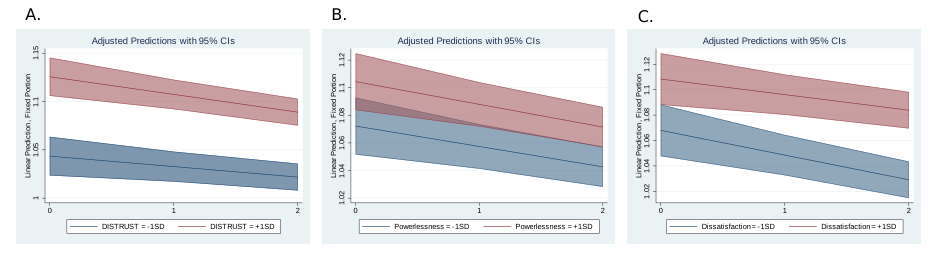
By monitoring a cohort of 892 Swedish adolescents over five waves spanning ages 13 to 17, Marta Miklikowska and Tomasz Besta demonstrate in System-disillusioned youth radicalize that intrapersonal rises in political alienation corrrelate with and sometimes even forecast concurrent escalations in radical political conduct. The authors report that distrust of institutions explained 19% of the variance, dissatisfaction accounted for 15%, and powerlessness contributed 14%; furthermore, these effects were significantly more pronounced in boys. Although classroom-level alienation failed to predict individual radicalism, the findings indicate that personal experiences of alienation exerted greater influence than group climate.
Do Adverse Childhood Experiences Lead to Violent Extremism?
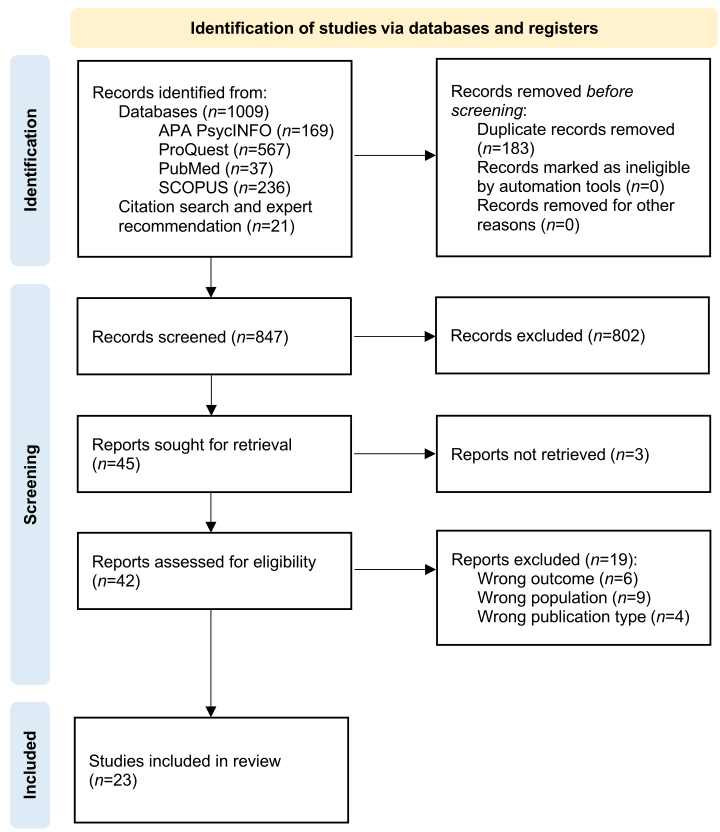
In their scoping review titled Adverse childhood experiences and violent extremism: A scoping review of the literature, Teja Pammi and colleagues analyze 23 studies comprising a total of 4,946 individuals. Among extremist populations, household dysfunction—including caregiver loss, imprisonment, and substance abuse—and maltreatment emerged as the predominant adverse experiences, with right-wing extremists reporting four or more such events in up to 70% of cases. Although the link between childhood adversity and violent extremism yielded mixed results across the reviewed literature, prompting the authors to advocate for longitudinal designs equipped with appropriate control groups, one notable finding persisted: continued education served as a protective factor against radicalization risk associated with adversity.
What Keeps Radicalization Going Once It Starts?
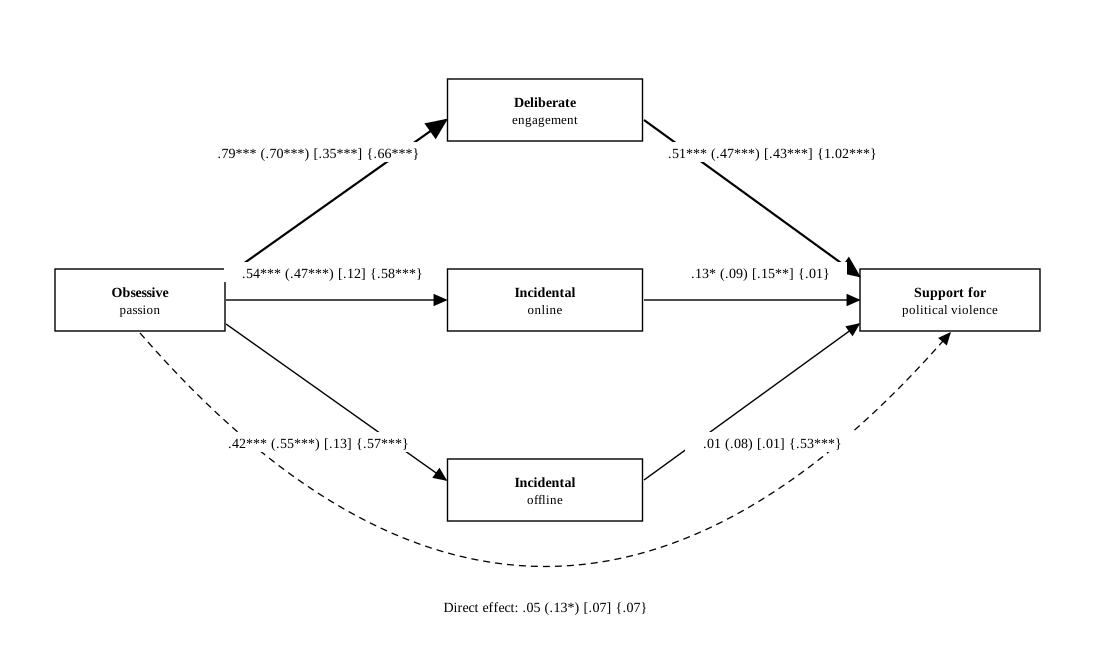
According to Jocelyn J. Bélanger and colleagues in The radicalization syndrome, the conventional model portraying radicalization as a linear progression—from cause passion to extremist content engagement, then to violence support—is insufficient. Their analysis, which encompasses four cross-sectional studies (N = 924) and a six-wave longitudinal study (N = 593), reveals that obsessive passion and intentional engagement with violent material reciprocally amplified one another across six-week periods. Furthermore, at the trait level, deliberate engagement and support for violence were nearly indistinguishable, exhibiting high correlations (.88 to .89). Consequently, the researchers argue that these components constitute a radicalization syndrome—a tightly coupled, self-reinforcing system—rather than a straightforward causal sequence.
Groups, Leaders, and Lethality
How Do Leaders Shape the Deadliness of Extremist Organizations?
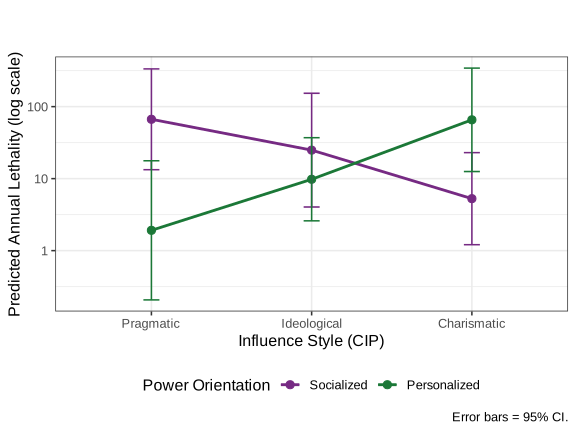
The narrative of individual pathways is incomplete; it is the organizational context that dictates the lethality of extremism. As Mackenzie Harms and colleagues demonstrate in Deadly persuasion, an interaction exists between power motives and influence style, based on data from 645 leader-year observations covering 68 leaders of violent extremist organizations. Specifically, those with a personalized power orientation who employed charismatic leadership oversaw groups averaging approximately 66 deaths annually, whereas their socialized peers presided over roughly 5 deaths; however, this dynamic inverted among pragmatic leaders. Regardless of the specific configuration tested, organizational mortality rates rose in tandem with increased tenure.
Evidence-Based Prevention of Violent Extremism
Can Psychological Inoculation Build Resistance to Extremist Recruitment?
Psychological inoculation functions by exposing individuals to attenuated versions of manipulative rhetoric, thereby equipping them to detect and counter such tactics subsequently. As detailed in Inoculating against extremist persuasion techniques, Nabil Saleh, Fadi Makki, Sander van der Linden, and Jon Roozenbeek describe a randomized controlled trial involving 191 youth participants situated in post-conflict regions of Iraq. The experimental group engaged with MindFort, an interactive simulation wherein players assume the role of a recruiter to gain insight into manipulation techniques from within. Relative to a control group that played Tetris, this gameplay experience yielded a significant enhancement in the capacity to recognize manipulative messaging (d = 0.31).

What Protects Young People Against Radicalization?
Two protective factors emerge consistently from the evidence, extending beyond specific interventions. A scoping review of childhood adversity highlights continued education as a mechanism that buffers against risks associated with such trauma, while Swedish longitudinal research underscores the critical role of responsive, fair, and trustworthy political institutions in mitigating the alienation that drives youth radicalism. Consequently, prevention strategies must address not merely counter-messaging but also the broader institutional contexts in which young people are raised.
| Factor | Direction | Key evidence |
|---|---|---|
| Political alienation (distrust, powerlessness, dissatisfaction) | Risk | Five-wave study of 892 adolescents; distrust explained 19% of variance in radicalism (Miklikowska & Besta, 2026) |
| Adverse childhood experiences | Risk (mixed) | 23 studies, 4,946 individuals; up to 70% of right-wing extremists report four or more ACEs, but direct associations vary (Pammi et al., 2026) |
| Obsessive passion and deliberate engagement | Risk | Reciprocal intensification across six-week intervals; trait-level correlation with violence support of .88–.89 (Bélanger et al., 2026) |
| Charismatic leadership with personalized power motives | Risk (organizational) | Roughly 66 versus 5 predicted annual deaths across 645 leader-years (Harms et al., 2026) |
| Psychological inoculation | Protective | Improved detection of manipulative messaging in a randomized trial, d = 0.31 (Saleh et al., 2023) |
| Continued education; trustworthy institutions | Protective | Education buffered adversity-related risk; institutional trust may counter alienation (Pammi et al.; Miklikowska & Besta, 2026) |
Challenges and Future Directions
Why Is It So Hard to Establish What Causes Radicalization?
This body of scholarship is defined by three recurring challenges. First, base rates: because violent extremism is uncommon, investigations typically utilize limited or proxy samples, and outcomes like inconsistent adversity findings cannot support causal claims without longitudinal frameworks and adequate control conditions (note that longitudinal studies still are vulnerable to confounding variables). Second, trait versus process: evidence from radicalization syndrome studies indicates that correlations observed between individuals may disappear within individuals over time, implying that cross-sectional data can be deceptive. Third, the lab-to-field gap: the Iraq inoculation trial demonstrated significantly reduced effects compared to the initial UK research, highlighting how cultural setting, prior violence exposure, and implementation context influence intervention transferability. The special issue continues to welcome contributions targeting these specific lacunae, ranging from causal inference in intervention studies to viewpoints originating from the Global South.
Related research hubs

The Psychology of Propaganda
Propaganda is one of the oldest instruments of political power and one of the most psychologically misunderstood. It…

The Psychology of Democratic Backsliding
The psychology of democratic backsliding examines why psychological vulnerabilities actively facilitate the erosion of democratic norms and institutions.…

The Psychology of Acculturation

Advances in Network Psychometrics
In recent years, psychological science has witnessed a significant paradigm shift in how it conceptualizes and studies psychological…