



급진화 증후군: 강박적 열정과 의도적 관여의 상호적 역동

 ORCID logo,  ORCID logo, , &  ORCID logo

접수: 12월 13, 2025. 승인: 7월 16, 2026. 게재: 8월 19, 2026. https://doi.org/10.56296/aip00067 · © 2026 저자

저자 정보

: Carnegie Mellon University Qatar

: Florida Gulf Coast University

: Carnegie Mellon University Qatar

: Heriot-Watt University Dubai

*연락처: Jocelyn J. Bélanger, [email protected], Carnegie Mellon University in Qatar, Faculty of Arts and Sciences, PO Box 24866, Doha, Qatar.

투명한 동료 심사

본 논문은 세 차례의 동료 심사를 거쳤습니다. 익명 심사 보고서는 여기에서 확인하실 수 있습니다.

인용 정보

Bélanger, J.J., Snook, D.W., Ahmed, M.R., & Adam-Troian, J. (2026). The radicalization syndrome: Reciprocal dynamics of obsessive passion and deliberate engagement. advances.in/psychology, 1, e912056. https://doi.org/10.56296/aip00067

Bélanger, Jocelyn J., et al. "The radicalization syndrome: Reciprocal dynamics of obsessive passion and deliberate engagement." advances.in/psychology, vol. 1, no. 1, 2026, e912056. https://doi.org/10.56296/aip00067.

Bélanger, Jocelyn J., Daniel W. Snook, Muhammed Rayyan Ahmed, and Jais Adam-Troian. 2026. "The radicalization syndrome: Reciprocal dynamics of obsessive passion and deliberate engagement." advances.in/psychology 1 (1): e912056. https://doi.org/10.56296/aip00067.

Bélanger JJ, Snook DW, Ahmed MR, Adam-Troian J. The radicalization syndrome: Reciprocal dynamics of obsessive passion and deliberate engagement. advances.in/psychology. 2026;1(1):e912056. doi:10.56296/aip00067.

Bélanger, J.J. et al. (2026) 'The radicalization syndrome: Reciprocal dynamics of obsessive passion and deliberate engagement', advances.in/psychology, 1(1), e912056. Available at: https://doi.org/10.56296/aip00067.

이것은 제목, 초록 및 핵심 요점에 대한 AI 생성 번역이며, 본문은 영어로 유지됩니다.

초록

급진적 콘텐츠에의 노출은 폭력적 극단주의 연구에서 주요한 관심사이지만, 그러한 콘텐츠를 접하는 대부분의 사람은 결코 폭력을 지지하지 않는다. 본 연구는 어떤 형태의 노출—급진적 인물 및 환경에 대한 의도적 관여 대(對) 우발적 노출—이 정치적 폭력에 대한 지지와 연관되는지, 그리고 이념에 대한 강박적 열정의 역할을 검토하였다. 네 개의 횡단면적 미국 표본(민주당원, 공화당원, 환경운동 지지자, 무슬림; 총 N = 924)에서 우발적 노출이 아니라 의도적 관여가 일관되게 폭력 지지와 연관되는 것으로 나타났다. 강박적 열정은 의도적 관여 및 폭력 지지 양쪽 모두와 신뢰롭게 연관된 반면, 조화적 열정은 그렇지 않았다. 우파 미국인을 대상으로 한 3차 종단 연구( N = 593)는 이 결합을 시간적으로 위치시켰다: 개인 내 수준에서 강박적 열정과 의도적 관여는 6주 간격에 걸쳐 서로를 상호적으로 예측하였으나, 열정과 폭력 지지는 어느 방향으로도 개인 내 역동을 보이지 않았으며—이들의 강한 연관성은 전적으로 안정적인 특성 수준의 차이에 의해 매개되었다. 이러한 변인들은 열정에서 관여를 거쳐 폭력으로 이어지는 단순한 선형적 경로라기보다는 긴밀하게 결합된 급진화 증후군을 형성하는 것으로 보인다. 이 결과는 동기에서 폭력으로 이어지는 순차적 과정을 가정하는 이론 및 개입에 이의를 제기한다.
Editor Curated

핵심 요점

  • 이념적으로 다양한 네 개의 미국 표본(민주당원, 공화당원, 환경운동 지지자, 무슬림)에 걸쳐, 급진적 인물, 환경, 콘텐츠를 능동적으로 찾아 나서는 의도적 관여가 강박적 열정을 정치적 폭력에 대한 지지와 일관되게 연결하는 유일한 경로였다(모든 집단에서 유의한 간접 연관성, 즉 민주당원: B = .41, 95% CI [.20, .65]; 공화당원: B = .33 [.15, .61]; 환경운동가: B = .15 [.04, .33]; 무슬림: B = .68 [.31, 1.08]). 반면, 우발적이거나 우연한 노출은 대부분의 집단에서 이 관계를 통계적으로 유의하게 매개하지 못하였으며, 이는 단순한 노출보다 개인이 어떻게 관여하는가가 더 중요함을 시사한다.
  • 본 연구는 급진화와 결부되는 것이 헌신의 순전한 강도가 아니라 이념적 열정의 강박적 성질임을 강조한다. 동등하게 강하지만 균형 잡힌 헌신을 반영하는 조화적 열정은 대부분의 표본에서 폭력 지지와 통계적으로 유의한 연관을 보이지 않은 반면, 강박적 열정은 폭력 지지와 강한 상관을 보였다(민주당원: r = .53; 공화당원: r = .47; 환경운동가: r = .29; 무슬림: r = .57; 모두 ps < .001).
  • 극우 미국인을 대상으로 한 3차 종단 연구(N = 593)는 강박적 열정과 의도적 관여가 개인 내에서 시간에 걸쳐 서로를 강화함을 밝혔다(강박적 열정 → 관여 B = .25, p = .042; 관여 → 강박적 열정 B = .29, p = .036). 그러나 강박적 열정과 폭력 지지는 강한 특성 수준의 결합(무선 절편 r = .58)에도 불구하고 통계적으로 유의한 개인 내 역동을 보이지 않았으며(ps > .828), 이는 단순한 인과적 연쇄라기보다는 자기 강화적인 '증후군'을 시사한다.
전문은 영어로 이어집니다

Introduction

Extremist messages circulate widely across digital and offline spaces, yet political violence remains rare. This paradox has long challenged radicalization research: if exposure to extremist content is widespread, why do only some individuals come to endorse violence? Although exposure is often positioned as an early stage in radicalization (Moghaddam, 2005; Precht, 2007), most people who encounter extremist ideas never radicalize (Gerstenfeld et al., 2003; Keipi et al., 2017). What appears to matter is not simply whether one is exposed, but how—and which individuals are predisposed to seek out such exposure in the first place.

A substantial literature suggests that deliberate engagement with extremists or radical environments predicts pro-violence attitudes more strongly than incidental encounters (Clemmow et al., 2022; Gill et al., 2015; Pauwels et al., 2014), and case studies indicate that radicalization typically involves sustained interaction within extremist networks rather than passive contact with propaganda (Malthaner, 2017; von Behr et al., 2013). Yet exposure alone cannot explain why some individuals seek out, or are drawn into, radical environments in the first place. This points to a motivational question: what disposes particular individuals toward deliberate involvement with radical content and actors?

Psychology of Violent ExtremismPart of a Special IssuePsychology of Violent ExtremismThis article belongs to a curated special issue. Discover more research on this topic from the full collection.Explore the special issue →

We propose that obsessive passion (OP) is one such motivational vulnerability. OP is a form of ideological commitment in which self-worth becomes contingent on the cause, leading alternative goals to be suppressed and the cause to be defended rigidly when it is threatened (Bélanger et al., 2019b, 2022; Rip et al., 2012); it is also among the more consistent psychological correlates of violent extremism across political and religious groups (Wolfowicz et al., 2021). Crucially, what matters is not the intensity of ideological involvement per se. Harmonious passion reflects a comparably strong commitment yet is not associated with violence. The difference is qualitative rather than one of degree: harmonious passion holds the cause in balance with a person’s other goals and values, whereas OP organizes the self around it. It is this controlled, rigid mode of involvement—not the strength of commitment—that we expect to drive radicalization. We therefore hypothesize that OP, more than harmonious passion, is linked both to deliberate engagement with radical content and to support for political violence.

This account also makes a claim about direction that has rarely been tested. OP has been characterized as a quasi-addictive relationship to a cause, sustained through ego-defensive reactions to threat and deepening immersion in like-minded networks (Bélanger et al., 2020, 2021)—a description that implies a self-reinforcing cycle rather than a one-way path. We take this idea seriously and test it directly. Using longitudinal data, we ask not only whether OP, radical engagement, and support for violence move together, but whether they reinforce one another over time within the same individuals, as a self-reinforcing model of ideological obsession would predict. As we will argue, the evidence fits this self-reinforcing picture better than a linear one: across our studies, obsessive passion, deliberate engagement, and support for political violence behave less like ordered links in a causal chain than like mutually reinforcing facets of a single radicalization syndrome. We use syndrome throughout in its statistical rather than clinical sense: a set of attitudes and dispositions that co-occur and sustain one another. The term implies no pathology, diagnosis, or medicalization of political actors; it names the co-occurrence structure of the phenomenon, not a disorder in the person.

Ideological Obsession

Passion for a cause has been defined as “a strong inclination toward a self-defining cause that is loved and valued, and in which people invest a significant amount of time and energy” (St-Louis et al., 2016, p. 263). This definition—loving, valuing, investing in, and prizing the activity—describes the commitment that makes an activity a passion in the first place; it is the quantity of motivation. Within this framework, however, not all passions are alike in kind. Harmonious passion (HP) and obsessive passion (OP) are not greater or lesser amounts of commitment but two qualitatively different ways the same passionate commitment can be internalized and regulated relative to other life goals (Bélanger et al., 2019a; Vallerand et al., 2003).

In HP, ideological pursuit is integrated alongside other goals and remains under the person’s control; in OP, it is internalized in a controlled, self-worth-contingent fashion that crowds out competing pursuits (Mageau et al., 2011; Rip et al., 2012). Accordingly, HP tends to be associated with peaceful activism, whereas OP is associated with support for ideological violence across political and religious groups (Bélanger, 2021; Bélanger et al., 2019b). This is the crux of the present account: two people can be equally and intensely committed to an ideology, yet differ sharply in the quality of that motivation—and it is the obsessive quality, not the intensity of commitment itself, that we expect to be linked to radical engagement and support for political violence. Isolating the contribution of OP therefore requires distinguishing the quality it indexes from the shared commitment it rests on—an issue to which we return.

Theoretically, obsessive passion for an ideology—what Bélanger (2021) and others term ideological obsession—has been characterized as a form of ideological addiction: an overwhelming, self-defining engagement with a cause that persists despite conflict with other life domains and mounting personal cost. Like other addictions, it is understood not as a simple deficit of self-control but as a goal-driven, self-reinforcing process rooted in unmet psychological needs (Adam-Troian & Bélanger, 2024; Bélanger, 2021). This characterization matters for what follows: an addiction framework implies that the relationship between obsessive engagement and support for political violence is reciprocal and self-sustaining rather than strictly one-directional—a possibility we examine directly.

Two self-regulatory mechanisms have been proposed to link OP to violence. The first is goal-shielding: because self-worth is staked on the ideology, competing goals—and the moral considerations attached to them—are suppressed, loosening ordinary constraints on harmful action (Bélanger et al., 2019b; Shah et al., 2002). The second, and more central to the present argument, is ego-defensiveness. When self-worth is contingent almost entirely on ideological involvement, identity becomes fragile and is readily threatened by disconfirming information, which can heighten hatred and support for violent retaliation (Bélanger et al., 2021; Rip et al., 2012). Notably, this same fragility leads obsessively passionate individuals to seek out and affiliate with like-minded, pro-violence others, who in turn reinforce their commitments (Bélanger et al., 2020). Ego-defensiveness is thus inherently bidirectional in its logic: it disposes individuals toward support for radical, even violent, positions, and that support, once formed, becomes part of a fragile self that must be defended and therefore further entrenched.

These mechanisms have typically been studied as pathways from OP to radical outcomes. Yet both the addiction framing and the ego-defensive account imply feedback in the opposite direction—that radical engagement and the endorsement of political violence may themselves intensify obsessive passion. Whether OP precedes, follows, or reciprocally shapes radical engagement and violence support is, however, an empirical question that cross-sectional designs cannot resolve, and one we take up in Study 2.

Exposure to Radical Content

Clemmow et al. (2022) define exposure to radical content as “exposure to people, places, or settings that promote ideas which characterize extremism as morally legitimate” (p. 334). Although exposure figures as a precursor in many radicalization models (Moghaddam, 2005; Precht, 2007; Sageman, 2008; Wiktorowicz, 2004), its role is more complex than a simple stage account implies: the great majority of those exposed to radical content never radicalize (Gerstenfeld et al., 2003; Keipi et al., 2017; Pauwels & Schils, 2016). Large-scale surveys underscore this disconnect—in a Belgian sample of 6,020 youth, only 2.4% expressed sympathy for extremist organizations despite far broader exposure (Pauwels & Schils, 2016)—indicating that exposure alone is neither necessary nor sufficient for radicalization.

What appears to matter is the manner of exposure. Accumulating evidence links higher and more deliberate exposure to stronger extremist attitudes (Gill et al., 2015; Hassan et al., 2018; Pauwels et al., 2014; Wolfowicz et al., 2022), and active, sought-out engagement predicts pro-violence attitudes more robustly than passive or incidental encounters (Pauwels et al., 2014). Offender-based studies reinforce this distinction: only a small fraction of those exposed to extremist content online progress to terrorism (Binder & Kenyon, 2022), and individuals radicalized primarily online tend to show lower engagement, intent, and capability than those embedded in offline networks (Kenyon et al., 2023). Building on this, Clemmow et al. (2022) proposed the EXPO-12, which distinguishes four putative modes of exposure: active seeking (proactively searching for extremist material or groups), active action (direct behavioral involvement, such as meeting extremists or seeking weapons information), passive online exposure (inadvertent digital encounters), and passive offline exposure (unintentional encounters in one’s community). The organizing principle is the intentionality of exposure—the degree to which the individual deliberately brings it about.

This intentionality dimension is theoretically central, but whether the four proposed subtypes are empirically separable—and how cleanly they can be distinguished from the violent attitudes they are meant to predict—is less clear. Some forms of “active action” (e.g., meeting known extremists, seeking bomb-making information) are highly proximal to violence itself, raising the question of whether they index exposure or already constitute early radical engagement. We therefore treat the structure of the EXPO-12 as an open measurement question, and in Study 1 we examine whether its subtypes are distinguishable across ideological groups before using them to model the relationship between OP and support for political violence.

How should OP relate to these modes of exposure? The clearest theoretical expectation concerns deliberate engagement. Because OP motivates immersion in the cause and the suppression of competing goals, obsessively passionate individuals should be especially likely to seek out radical content, actors, and settings (Bélanger et al., 2020). The expected relationship with incidental exposure is weaker and more indirect: to the extent that OP draws individuals into radical-leaning networks and environments, it may raise the ambient likelihood of unsought encounters (homophily; McPherson et al., 2001), but OP is not expected to “cause” incidental exposure in any direct sense. This asymmetry—a strong, direct link to deliberate engagement and a weak, environmentally mediated link to incidental exposure—is the prediction the present research sought to test.

The Present Research

Exposure to radical content is widely treated as a stage linking motivational vulnerabilities to violent extremism, yet exposure alone is a poor predictor of who comes to support violence (Clemmow et al., 2022). The present research asks which form of contact with radical content matters, and for whom. We distinguish deliberate engagement—actively seeking out and immersing oneself in radical people, settings, and content—from incidental exposure, and we examine obsessive passion as the motivational orientation linked to such engagement and to support for political violence. The standard account treats this as a sequence—passion disposing individuals toward engagement and, through it, toward violence—but we do not assume that ordering; whether passion precedes, follows, or reciprocally shapes engagement and violence is among the questions Study 2 is designed to resolve. Study 2 additionally measures identity fusion—the visceral sense of oneness with a group that is obsessive passion’s nearest theoretical neighbor among self-and-group constructs (Gómez et al., 2011)—both to establish that obsessive passion is empirically distinguishable from fusion and to verify that its dynamics survive controlling for it. Because harmonious passion and ideological commitment can be just as intense, we test whether it is specifically the obsessive quality of passion—not intensity as such—that is linked to radical engagement and violence support.

Studies 1A–D test the cross-sectional account across four ideological groups: U.S. Democrats, Republicans, environmental supporters, and Muslims. These groups are not equivalent ideological categories—they differ in social structure, normative standing, and the likely meaning of “political violence,” and a religious identity is not interchangeable with a partisan or activist one. We therefore do not treat them as parallel cases. Rather, their heterogeneity is the point: examining whether the same association recurs across such different ideological contexts provides a stringent test of its robustness and generality, while also allowing us to ask whether the constructs and their measurement function comparably across groups. Before modeling the OP–engagement–violence-support relationship, we therefore examine the measurement structure of the exposure constructs within each sample.

Study 1 is, however, cross-sectional, and cross-sectional mediation cannot establish the temporal or causal ordering it is often taken to imply. Demonstrating that obsessive passion, engagement with radical content, and violence support covary—even consistently, across diverse groups—does not show that passion precedes engagement, or engagement violence, rather than the reverse or some reciprocal arrangement. Study 2 addresses this directly with a three-wave longitudinal study of far-right Americans, using random-intercept cross-lagged panel models to separate stable, between-person differences from within-person change. This design allows us to test not only the hypothesized forward pathway but also the theoretically plausible reverse and reciprocal pathways that the addiction and ego-defensive accounts of obsessive passion imply (Bélanger, 2021), and to do so while controlling for harmonious passion and ideological commitment. For transparency, all data and materials are available on the Open Science Framework (https://osf.io/958bh).

Study 1

Across four ideologically distinct samples—U.S. Democrats (Study 1A), Republicans (Study 1B), environmental supporters (Study 1C), and Muslims (Study 1D)—we examined how obsessive passion relates to exposure to radical content and, in turn, to support for political violence. Before testing these relationships, we examined whether the exposure constructs posited by the EXPO-12 were empirically distinguishable within each sample and how clearly they could be separated from support for political violence.

Method

Participants

Participants in all studies were adults residing in the United States, recruited online through Amazon Mechanical Turk using CloudResearch (Litman et al., 2017). To safeguard data quality, eligibility was limited to vetted workers with a historical approval rating of 90% or higher, and responses were screened using the platform’s built-in quality controls, which flag duplicate IP addresses and inconsistent geolocations and exclude workers previously identified as unreliable. In an independent prescreening survey, participants self-identified as Democrats (Study 1A), Republicans (Study 1B), environmental supporters (Study 1C), or Muslims (Study 1D). Sample sizes were determined a priori: based on prior work (Bélanger et al., 2019b; Pauwels et al., 2014), we anticipated large associations (r = .50) among obsessive passion, active action (here reconceptualized as deliberate engagement), and support for political violence, and moderate associations (r = .30) involving the remaining exposure types; Monte Carlo simulations indicated that N = 120 would provide .80 power for the smallest hypothesized effect—the indirect effect of obsessive passion on support for violence transmitted through a pathway with a and b paths of r = .30—with the larger hypothesized paths powered above .95. This analysis concerns Study 1’s between-person associations; it does not bear on the within-person parameters of Study 2, for which a dedicated sensitivity analysis is reported there. The analytic samples comprised 257 Democrats (136 women, 118 men, 3 other; Mage = 43.78, SD = 12.87), 250 Republicans (129 women, 121 men; Mage = 43.27, SD = 11.74), 264 environmental supporters (126 women, 136 men, 2 other; Mage = 41.97, SD = 11.09), and 153 Muslims (67 women, 86 men; Mage = 32.81, SD = 8.80). Detailed demographics for each sample are reported in Table S1. The research was approved by the Institutional Review Board of New York University Abu Dhabi (protocol 043-2017).

Procedure and Measures

Unless otherwise noted, all items were rated on a 7-point Likert scale ranging from 1 (not agree at all) to 7 (very strongly agree). Full item wording for all measures is provided in the Supplementary Materials. Means, standard deviations, and correlations are presented in Table 1.

Table 1
Means, Standard Deviations, and Correlations Among Study 1 Variables

Variable

M

SD

1

2

3

4

5

6

1. Obsessive passion

1.91 (1.87) [2.30] {3.19}

1.23 (1.24) [1.16] {1.58}

2. Harmonious passion

4.09 (3.83) [4.72] {5.13}

1.46 (1.52) [1.31] {1.24}

.49*** (.55***) [.42***] {.30***}

3. Commitment

3.76 (3.62) [4.67] {5.06}

1.33 (1.45) [1.23] {1.40}

.60*** (.66***) [.50***] {.54***}

.84*** (.83***) [.81***] {.80***}

4. Deliberate engagement

1.32 (1.36) [1.26] {1.98}

0.97 (0.96) [0.69] {1.64}

.68*** (.59***) [.30***] {.61***}

.20** (.22**) [-.01] {.03}

.28*** (.31***) [.07] {.22**}

5. Incidental online

1.83 (1.70) [1.80] {2.42}

1.13 (1.11) [1.01] {1.57}

.49*** (.38***) [.12*] {.60***}

.18** (.14*) [.01] {.13}

.23*** (.16**) [.07] {.32***}

.72*** (.71***) [.48***] {.82***}

6. Incidental offline

1.85 (1.48) [1.64] {2.11}

1.27 (1.00) [1.00] {1.60}

.42*** (.46***) [.15*] {.55***}

.16** (.15*) [.06] {.05}

.25*** (.21**) [.11] {.23**}

.62*** (.80***) [.53***] {.89***}

.67*** (.80***) [.60***] {.81***}

7. Support for violence

1.33 (1.25) [1.32] {2.00}

0.88 (0.89) [0.81] {1.71}

.53*** (.47***) [.29***] {.57***}

.18** (.12) [.10] {.05}

.24*** (.20**) [.14*] {.22**}

.73*** (.73***) [.65***] {.89***}

.60*** (.59***) [.46***] {.76***}

.49*** (.64***) [.42***] {.85***}

Note. Values are presented for Democrats (Study 1A, N = 257) outside parentheses, Republicans (Study 1B, N = 250) in parentheses, environmental supporters (Study 1C, N = 264) in square brackets, and Muslims (Study 1D, N = 153) in braces. Deliberate engagement is the merged active-seeking/active-action factor; incidental online and incidental offline are the EXPO-12 passive subscales. Support for violence is an attitudinal self-report. * p < .05. ** p < .01. *** p < .001.

Ideological passion. Passion was measured with the Passion Scale (Vallerand et al., 2003), adapted to each group’s ideology. The scale comprises two six-item subscales assessing harmonious passion (e.g., “My involvement in [the cause] is in harmony with the other activities in my life”; Study 1A α = .92, 1B α = .92, 1C α = .93, 1D α = .93) and obsessive passion (e.g., “I have almost an obsessive feeling for [the cause]”; “[The cause] is the only thing that I can think of”; 1A α = .91, 1B α = .92, 1C α = .87, 1D α = .90).

Ideological commitment. Commitment, harmonious passion, and obsessive passion are three dimensions of the same Passion Scale (Vallerand et al., 2003), not separate instruments.a The commitment items capture the defining criteria of a passion—that the activity is something one loves, values, invests time and energy in, and regards as important (e.g., “[The cause] is important to me”; four items; 1A α = .84, 1B α = .86, 1C α = .86, 1D α = .86). In this sense commitment indexes the quantity of motivation: how strongly the activity functions as a passion at all. Harmonious and obsessive passion, measured by the remaining items, do not add further intensity on top of this; they characterize the quality of that motivation—how the passion is internalized and regulated relative to other life goals. A person high in commitment is, by definition, passionate; whether that passion takes a harmonious or an obsessive form is a separate, qualitative distinction (Bélanger et al., 2019a; Vallerand et al., 2003).

Exposure to radical content. Exposure was measured with the EXPO-12 (Clemmow et al., 2022), comprising four three-item subscales: active seeking (e.g., “Searched for people or groups who support violence to achieve political, religious, or social goals”; 1A α = .94, 1B α = .96, 1C α = .92, 1D α = .95), active action (e.g., “Chosen to meet face-to-face with people who support the use of violence…”; “Searched for information on how to use weapons or make bombs…”; 1A α = .95, 1B α = .97, 1C α = .87, 1D α = .96), passive online (e.g., “Accidentally came across content which supports violence… online”; 1A α = .90, 1B α = .91, 1C α = .91, 1D α = .93), and passive offline (e.g., “Noticed people where you live who support violence…”; 1A α = .95, 1B α = .96, 1C α = .95, 1D α = .97). Items were rated on a 7-point frequency scale from 1 (never) to 7 (every day).

Support for political violence. Support for ideologically motivated violence was assessed with a five-item scale adapted from Gousse-Lessard et al. (2013), with content tailored to each group’s ideology and outgroup (1A α = .91, 1B α = .95, 1C α = .91, 1D α = .96). For example, the item “Using any means, even violent ones, to…” was completed as “…prevent the Republican Party from being elected” for Democrats, “…prevent the Democratic Party from being elected” for Republicans, “…help the environmental cause” for environmental supporters, and “…further the cause of Islam” for Muslims. We note that this measure assesses attitudinal support for political violence—a self-reported endorsement of violent means—rather than violent behavior or behavioral intention; we interpret it accordingly throughout.

Results and Discussion

Measurement of Exposure to Radical Content

A note on cross-group comparison frames everything that follows. The four samples are analyzed in parallel, but we did not establish full measurement invariance of the passion, exposure, and violence measures across these very different ideological groups—indeed, the measurement analyses below show that the exposure structure itself differs by sample. Accordingly, convergence of the qualitative pattern across samples is treated as a robustness check on the focal within-sample associations; we refrain from comparing coefficient magnitudes across groups or interpreting between-group differences, and conclusions are drawn at the level of each sample and the recurring pattern rather than cross-group contrasts.

Before testing the hypothesized relationships, we examined whether the four exposure subtypes posited by the EXPO-12 (Clemmow et al., 2022)—active seeking, active action, passive online, and passive offline—were empirically distinguishable within each ideological sample, and how clearly they could be separated from support for political violence. This step is essential to distinguish whether the exposure constructs are distinct from one another and from the outcome they are meant to predict.

We estimated confirmatory factor analyses (CFAs) for each sample in AMOS (Arbuckle, 2007) using maximum likelihood. Because measures of violent extremism are characteristically floored and non-normal—as they were here, with pronounced positive skew on most items—we evaluated model fit using the Bollen–Stine bootstrap and based all inferences on bias-corrected bootstrap confidence intervals (5,000 resamples), which do not assume multivariate normality. For each sample we compared the theorized four-factor model against more parsimonious alternatives, treating a factor correlation whose 95% confidence interval included or exceeded 1.0 (or a model that was inadmissible because a correlation exceeded unity) as evidence that two factors were not empirically distinguishable. Full model-comparison ladders and fit statistics for all samples are reported in the Supplementary Materials (Tables S2–S3); here we summarize the retained structure and the distinctions most consequential for our hypotheses.

The four-factor structure was not supported, and its form differed across groups. In three of the four samples, active seeking and active action were not empirically separable. Among Democrats and environmental supporters their factor correlations were statistically indistinguishable from unity (Democrats r = .977, 95% CI [.918, 1.012]; environmentalists r = .947, 95% CI [.846, 1.004]), and in the Muslim sample the four-factor model was inadmissible, with a seeking–action correlation of 1.004 that rendered the factor covariance matrix non-positive-definite. In each of these samples, the best-fitting admissible structure merged seeking and action into a single deliberate engagement factor, distinct from incidental online and incidental offline factors. Only among Republicans did the four subtypes remain separable, though seeking and action were still highly correlated (r = .835, 95% CI [.662, .953]). Critically, the structure that fit best therefore differed across samples—evidence of configural non-invariance. For consistency across this heterogeneous set, and because the deliberate/incidental distinction was the dimension that held throughout, we modeled three exposure constructs in all samples: deliberate engagement, incidental online exposure, and incidental offline exposure. Imposing this common three-factor structure fit less well in the Republican sample, where the four-factor solution was supported—an expected consequence of applying a single measurement model to groups that are not psychometrically equivalent. Concretely, the four-factor models showed CFI = .971–.980 and SRMR = .016–.044 alongside RMSEA = .082–.103 (90% confidence intervals in Table S2). Their fit should not be read as support for the four-factor description: with seeking–action correlations of .95–1.00 in three samples—reaching an inadmissible 1.00 in Study 1D—the fourth factor largely duplicates another, and the merge was adopted on those grounds rather than on fit. The measurement models carried forward (merged deliberate engagement, the two incidental factors, and support for violence) span a different and larger indicator set and are therefore not directly comparable in fit; they showed CFI = .863–.931, RMSEA = .105–.173, and SRMR = .041–.061 in three samples and .137 among Muslims (Table S3), fitting worst among Republicans—the one sample whose seeking–action correlation (.84) could sustain four factors, and whose mediation we therefore also report under the four-factor structure. The recurring divergence between low standardized residuals and elevated RMSEA is the pattern expected when indicators are severely floored, and it is why inference rests on the bootstrap procedures described above rather than on normal-theory absolute indices.

Deliberate engagement and support for violence were proximal but distinguishable. Across samples, the deliberate-engagement factor correlated strongly with support for political violence (rs = .70 to .83: environmentalists .70 [.45, .85]; Republicans .80 [.59, .93]; Democrats .82 [.64, .93]; Muslims .83 [.69, .94])—the highest correlations involving any exposure construct and the outcome. This proximity is substantively meaningful: several deliberate-engagement items (e.g., meeting known extremists, seeking weapons information) describe conduct that is itself a form of early radical involvement rather than mere exposure. The two constructs remained empirically separable in the cross-sectional data—their factor correlations did not reach unity—but their closeness indicates that deliberate engagement is best understood not as a neutral antecedent of violent attitudes but as a participatory facet of radical involvement closely bound up with them. We return to this point, which bears on the interpretation of the mediation analyses, in the General Discussion. In the Muslim sample, the incidental factors also correlated substantially with support for violence (online r = .65; offline r = .77), reflecting the near-unidimensional structure of these measures in that group—a point we take up when interpreting Study 1D.

Implications for the comparability of groups. That the EXPO-12 took a different factor structure in each ideological sample indicates that exposure to radical content is not measured equivalently across these populations. This is consistent with the broader concern that Democrats, Republicans, environmental supporters, and Muslims are not interchangeable ideological categories. We therefore do not interpret cross-group differences in the magnitude of specific parameters as substantive; rather, our inferences rest on whether the same pattern of association recurs across these psychometrically distinct groups—a test of robustness rather than of equivalence.

Mediation Analyses

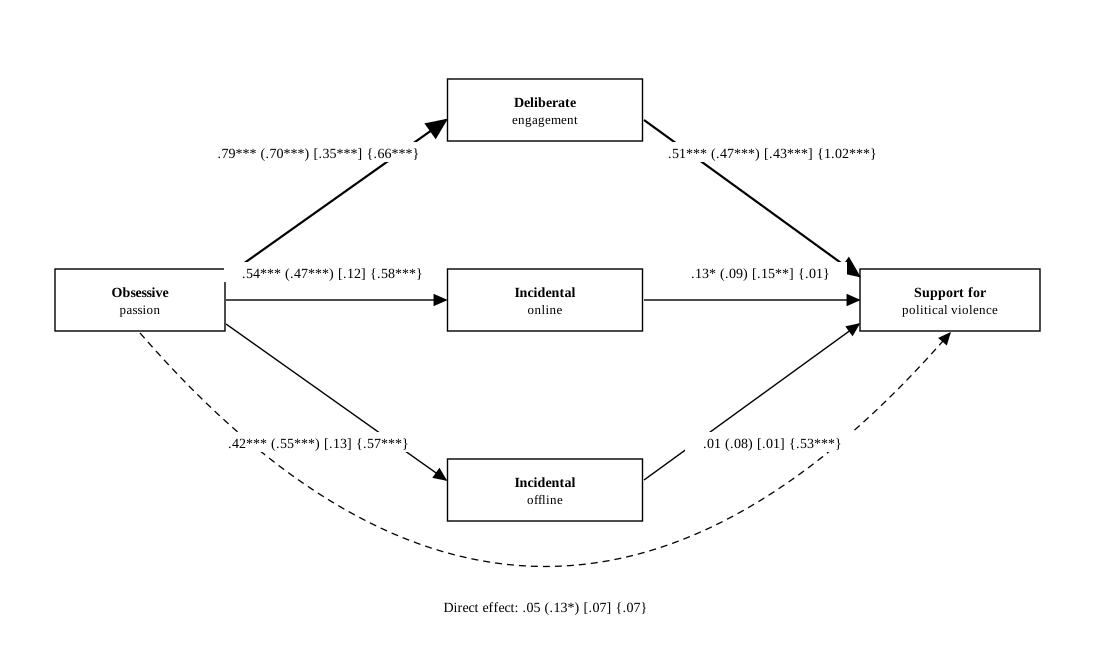
Forward models. We first tested the hypothesized pathway from obsessive passion to support for political violence through the three exposure constructs retained from the measurement analyses—deliberate engagement, incidental online exposure, and incidental offline exposure—modeled as parallel mediators using the Preacher and Hayes (2008) multiple-mediation procedure (see Figure 1), with harmonious passion and ideological commitment included as covariates and indirect effects evaluated with 95% bias-corrected bootstrap confidence intervals (5,000 resamples). Because the analyses are cross-sectional, we describe these as associational patterns; we take up the question of directionality below.

Because the exposure and violence measures are on different response scales, we report coefficients from models with all predictors standardized (the outcome left in its original metric), so that indirect effects are comparable across mediators and samples. Across all four samples, deliberate engagement was the only mediator whose indirect effect was significant in every group: Democrats B = .41, 95% CI [.20, .65]; Republicans B = .33 [.15, .61]; environmentalists B = .15 [.04, .33]; Muslims B = .68 [.31, 1.08]. The two incidental pathways were inconsistent. Incidental online exposure carried a significant indirect effect only among Democrats (B = .07 [.02, .17]) and was not statistically significant elsewhere; incidental offline exposure was significant only among Muslims (B = .30 [.07, .72])—a sample in which, as noted, the exposure and violence measures were only weakly differentiated—and was non-significant in the other three groups. The direct effect of obsessive passion on support for violence, controlling for all mediators, was not statistically significant among Democrats, environmentalists, and Muslims (full mediation) and was small but significant among Republicans (B = .13, p = .030; partial mediation). The variance explained in support for violence ranged from 47% (environmentalists) to 81% (Muslims).

Figure 1
Parallel Multiple Mediation of the Obsessive Passion–Support-for-Violence Association via Three Exposure Pathways (Studies 1A–D)

Parallel Multiple Mediation of the Obsessive Passion–Support-for-Violence Association via Three Exposure Pathways (Studies 1A–D)

Note. Coefficients are from the Preacher and Hayes (2008) multiple-mediation procedure with all predictors standardized and the outcome in its original metric; harmonious passion and ideological commitment were included as covariates. Values are for Democrats (N = 257), Republicans (in parentheses, N = 250), environmental supporters [in brackets, N = 264], and Muslims {in braces, N = 153}. The a paths are obsessive passion → mediator; the b paths are mediator → support for violence (controlling for the other mediators); c′ is the direct effect. Deliberate engagement is the merged active-seeking/active-action factor. The deliberate-engagement indirect effect was significant in every sample (bias-corrected bootstrap confidence intervals, 5,000 resamples); incidental pathways were significant only sporadically. Exact coefficients for every path, with 95% confidence intervals and exact p values, are reported in Table 3. *p < .05. **p < .01. ***p < .001.

Because the four-factor exposure structure was supported in the Republican sample alone, we re-estimated the Study 1B mediation under that structure as a robustness analysis, entering active seeking and active action as separate mediators alongside the two incidental pathways (same covariates and bootstrap procedure). The total indirect effect was virtually identical to the merged model’s (B = .34, 95% CI [.16, .54], vs. .33 [.15, .61]), and the incidental pathways remained null. Disaggregation showed the transmitted effect flowing uniquely through active action (B = .27 [.09, .52]); the unique indirect effect through active seeking was not significant (B = .03 [−.03, .20]). Given the seeking–action factor correlation of .835, this unique-effect partition is conservative—seeking’s contribution is largely shared with action rather than absent—but the pattern indicates that, where the two facets can be separated, it is the participatory end of deliberate engagement that carries the association with violence support. The substantive conclusion is unchanged: the pathway runs through deliberate engagement, not incidental exposure.

Taken at face value, this pattern appears to support the hypothesized model: obsessive passion is associated with greater deliberate engagement, which is in turn associated with stronger support for political violence, with deliberate engagement emerging as the consistent mediating pathway and the incidental pathways playing little reliable role. We caution, however, against a directional reading of this result, for two reasons developed across the rest of the paper. First, as the measurement analyses showed, deliberate engagement and support for violence are highly proximal constructs; the mediator is not a neutral antecedent but a participatory facet of radical involvement. Second, and more fundamentally, cross-sectional mediation cannot establish the temporal ordering it appears to imply.

The comparative nature of this finding also bears emphasis. That the incidental pathways played little reliable role does not imply that incidental exposure is inconsequential: passive encounters may still contribute to radicalization indirectly—by normalizing extremist narratives or prompting the deliberate engagement we model here—and the sporadic incidental indirect effects we did observe (incidental online among Democrats, incidental offline among Muslims) are consistent with such a role. Our claim is therefore comparative rather than dismissive: deliberate engagement, not incidental exposure, is the pathway that consistently and proximally links obsessive passion to support for violence in these data.

Reverse models and the limits of cross-sectional mediation. To make this second point concretely—because an alternative ordering is equally plausible (e.g., that support for violence leads to engagement, which reinforces ideological commitment)—we re-estimated each model with the predictor and outcome reversed: support for political violence as the predictor, deliberate engagement as the mediator, and obsessive passion as the outcome (covariates and bootstrap settings unchanged). If the forward model captured a genuine directional process, the reversed model should fit poorly. It did not. In every sample, the reversed indirect effect through deliberate engagement was also significant, and of comparable magnitude to the forward effect (Democrats B = .48 [.32, .64]; Republicans B = .30 [.16, .46]; environmentalists B = .18 [.06, .37]; Muslims B = .49 [.12, .94]).

This symmetry is not a substantive finding about direction; it is a demonstration of what cross-sectional mediation can and cannot do. When three constructs are strongly intercorrelated and measured at a single occasion, models positing different causal orderings are statistically indistinguishable—each is merely a different decomposition of the same covariances (Bullock et al., 2010). The reversed models therefore do not show that violence “causes” obsessive passion any more than the forward models show the reverse; they show that these data cannot adjudicate between the orderings. We report them precisely to make that limitation explicit. Establishing temporal precedence requires longitudinal data in which within-person change in each construct can be separated and sequenced—which is the purpose of Study 2.

We also note an incidental observation consistent with the construct-overlap concerns raised earlier: in the reversed models, ideological commitment was a strong predictor of obsessive passion in every sample (Bs = .48 to .87, all p < .001), reflecting the close correspondence between commitment and obsessive passion documented in the measurement analyses. As we develop in the General Discussion, this overlap is expected under the dualistic model of passion—commitment is the shared substrate of both harmonious and obsessive passion—and is not, in itself, evidence that obsessive passion is redundant with commitment.

Study 2

Study 2 subjected the model to a within-person test. Using a three-wave longitudinal study of far-right Americans and random-intercept cross-lagged panel models (RI-CLPM), we separated stable between-person differences from within-person change, allowing us to test the hypothesized forward pathway alongside the reverse and reciprocal pathways implied by the addiction and ego-defensive accounts of obsessive passion.

Method

Participants and Procedure

Participants were 600 U.S. adults on the political right, defined as those scoring 6 (right) or 7 (far-right) on a 7-point left–right scale, recruited via CloudResearch and surveyed at three waves spaced approximately one month apart (Wave 1, June; Wave 2, July; Wave 3, September). Data quality was ensured through several safeguards: eligibility was restricted to CloudResearch workers with a prior approval rating of at least 90%; the study employed CloudResearch’s standard data-quality protocols, including duplicate-IP and suspicious-geolocation screening and the exclusion of known low-quality respondents; and participants responding faster than two seconds per item across the three waves were excluded (7 cases), yielding an analytic sample of 593. Of these, 443 provided data at Wave 2 and 347 at Wave 3. Participants completed the obsessive passion, harmonious passion, ideological commitment, full EXPO-12 (active seeking, active action, incidental online, incidental offline), and support-for-violence measures from Study 1, adapted to a far-right identity, together with identity fusion (Gómez et al., 2011), at all three waves. As in Study 1, active seeking and active action were combined into deliberate engagement; the within-person models focus on deliberate engagement—the only facet that consistently mediated in Studies 1A–D—and the incidental facets, though measured, are not modeled here.

Analytic Strategy

To separate within-person change from stable between-person differences—the distinction a conventional latent growth or cross-lagged model conflates—we specified random-intercept cross-lagged panel models (RI-CLPM; Hamaker et al., 2015; Mulder & Hamaker, 2021), estimated in lavaan 0.6 (Rosseel, 2012) with maximum likelihood, robust (Huber–White) standard errors, and scaled test statistics (MLR), retaining full-information maximum likelihood (FIML) for missing data under a missing-at-random assumption. In an RI-CLPM, a random intercept captures each construct’s stable trait level across the three waves, while the cross-lagged paths among the time-specific residuals capture purely within-person dynamics: whether a person’s deviation from their own typical level on one construct predicts their subsequent deviation on another. Harmonious passion and ideological commitment were each operationalized as the participant’s mean across the three waves and entered as time-invariant covariates of the random intercepts. Because a random intercept represents the stable, between-person component of a construct, an across-wave average is the appropriate control: it draws on all three measurements rather than a single wave, while indexing the between-person trait. Entering wave-specific scores instead would inject the within-person fluctuations that the cross-lagged paths are designed to isolate. Identity fusion, though measured at all three waves, was not entered as a within-person variable; it is reported as a between-person correlate (Table 2) and, in robustness analyses reported below, as an additional trait-level covariate. Lagged paths were constrained equal across waves a priori, on parsimony and stationarity grounds appropriate to a three-wave design (Mulder & Hamaker, 2021); these constraints were supported against unconstrained alternatives (engagement model: Δχ²(4) = 2.64, p = .621; violence-support model: Δχ²(4) = 1.03, p = .905). Because the within-person residual variance for engagement was inadmissible (negative) when freely estimated—an expected consequence of the floored distributions—within-person residual variances were additionally constrained equal across Waves 2–3; this constraint produced no detectable loss of fit (Δχ²(2) = 1.17, p = .557, and Δχ²(2) = 1.77, p = .412) and yielded fully admissible solutions. The full model-building sequence—from unconstrained baselines without covariates through the reported covariate models—is given in Table S4; the baseline models fit well before covariates were added (CFIs = 1.00), and the reported models fit excellently (obsessive passion–engagement: χ²(11) = 12.43, p = .333, CFI = 1.00, RMSEA = .014, 90% CI [.000, .064], SRMR = .018; obsessive passion–violence support: χ²(11) = 10.98, p = .445, CFI = 1.00, RMSEA = .000 [.000, .061], SRMR = .020). Because FIML precludes the case-resampling bootstrap used in Study 1, inference rests on the robust standard errors and scaled test statistics.

Table 2
Means, Standard Deviations, and Correlations Among Study 2 Variables

Variable

M

SD

1

2

3

4

5

6

7

8

9

10

11

1. OP (W1)

1.87

1.20

2. OP (W2)

1.81

1.16

.82

3. OP (W3)

1.79

1.15

.75

.84

4. Engagement (W1)

1.32

0.97

.63

.51

.44

5. Engagement (W2)

1.26

0.81

.55

.60

.58

.71

6. Engagement (W3)

1.26

0.88

.55

.54

.58

.82

.79

7. Violence (W1)

1.31

1.01

.52

.47

.42

.74

.70

.79

8. Violence (W2)

1.29

0.96

.48

.50

.48

.61

.76

.73

.83

9. Violence (W3)

1.23

0.86

.43

.48

.49

.51

.67

.73

.80

.89

10. Harmonious passion

4.01

1.26

.52

.50

.46

.27

.27

.26

.23

.23

.21

11. Commitment

3.21

1.48

.65

.69

.66

.35

.40

.36

.32

.34

.32

.75

12. Identity fusion

2.02

1.43

.51

.50

.52

.48

.47

.47

.48

.49

.46

.44

.44

Note. N = 593. W1, W2, and W3 denote the three measurement waves. OP = obsessive passion; Engagement = deliberate engagement. Harmonious passion, commitment, and identity fusion are averaged across waves. Correlations are based on pairwise-complete data (pairwise N ranges from 388 to 593 due to attrition); the random-intercept cross-lagged panel models reported in the text were estimated with full-information maximum likelihood on all 593 cases. All correlations are significant at p < .01.

Figure 2
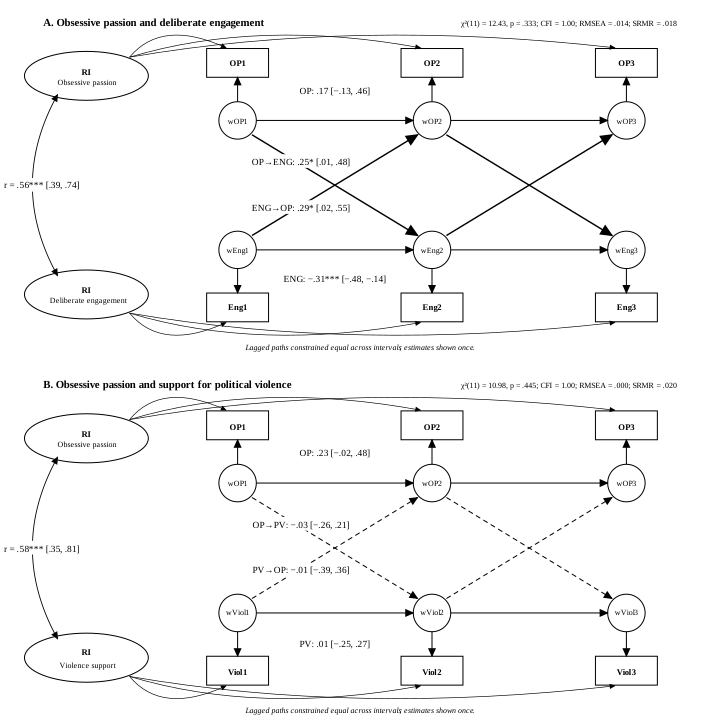
Random-Intercept Cross-Lagged Panel Models for Study 2 (N = 593)

Random-Intercept Cross-Lagged Panel Models for Study 2 (N = 593)

Note. Panel A models obsessive passion and deliberate engagement; Panel B models obsessive passion and support for political violence. Circles are within-person components; RI ellipses are stable between-person random intercepts. Values are unstandardized estimates with robust 95% confidence intervals (MLR estimation); lagged paths and within-person residual variances are constrained equal across waves. Harmonious passion and ideological commitment are included as time-invariant covariates of the random intercepts (omitted from the diagram for clarity; Tables S5–S6). r = random-intercept correlation (standardized). *p < .05. ***p < .001.

Results and Discussion

Attrition

Because attrition of this magnitude could bias estimates if dropout were related to the constructs under study, we tested whether Wave 1 scores predicted subsequent attrition. They did not for any focal variable: obsessive passion, harmonious passion, ideological commitment, deliberate engagement, and support for political violence were not statistically significantly related to dropout (all p > .12). The absence of selective attrition on the modeled variables supports the MAR assumption underlying FIML.

The Three-construct System: Engagement and Violence Are Barely Separable at the Trait Level

We first estimated the full three-construct RI-CLPM (obsessive passion, deliberate engagement, support for violence). The model was admissible and fit well (with harmonious passion and commitment as trait-level covariates: χ²(18) = 33.34, p = .015, CFI = .997, RMSEA = .039, SRMR = .018). Its central message concerns the trait level. The random intercepts of deliberate engagement and support for violence correlated .88, 95% CI [.80, .96], without covariates, and .89 [.71, 1.07] with covariates—a boundary-grazing value whose confidence interval reaches unity—whereas trait obsessive passion correlated .56 with trait engagement and .63 with trait violence support. At the level of stable individual differences, then, engagement and violence support are barely separable: the joint system can be estimated, but the two trait components carry largely the same between-person information. This quantifies the construct proximity documented in Study 1. We accordingly present the obsessive-passion dynamics in two bivariate models for interpretability; the focal estimates replicated within the trivariate system (obsessive passion → engagement, B = .23, p = .049; engagement → obsessive passion, B = .31, p = .014; both obsessive passion–violence within-person paths null, ps > .67).

Longitudinal Measurement Invariance

Before estimating the panel models, we tested whether each construct retained the same measurement structure across the three waves, fitting longitudinal confirmatory factor models with autocorrelated uniquenesses and comparing configural, metric (equal loadings), and scalar (equal intercepts) specifications, evaluated with scaled likelihood-ratio tests and changes in approximate fit (ΔCFI ≤ .01; Chen, 2007; Cheung & Rensvold, 2002) (MLR estimation; Table S8). For support for violence, full scalar invariance was supported (configural CFI = .990, RMSEA = .055; metric Δχ²(8) = 9.70, p = .287, ΔCFI = −.003; scalar Δχ²(8) = 6.94, p = .543, ΔCFI = .000). For obsessive passion, full scalar invariance was supported (configural CFI = .976, RMSEA = .058; metric Δχ²(10) = 11.49, p = .321, ΔCFI = −.001; scalar Δχ²(10) = 6.32, p = .788, ΔCFI = .000). For deliberate engagement, the invariance constraints were fully supported (metric Δχ²(10) = 7.30, p = .697, ΔCFI = +.002; scalar Δχ²(10) = 7.98, p = .631, ΔCFI = +.001), although the configural model’s absolute fit was modest (CFI = .894, RMSEA = .154), consistent with the pronounced floor effects in these items (the scaled test statistic was less than one fourth of its normal-theory counterpart, indicating severe non-normality) and with the seeking–action substructure documented in Study 1. Because the cross-wave equality of loadings—the property on which within-person comparisons depend—held for all three constructs, we proceeded to the panel models, interpreting the engagement models with this measurement caveat in mind.

Obsessive Passion and Deliberate Engagement: a Reciprocal Within-person Relationship

In the RI-CLPM relating obsessive passion and deliberate engagement (with harmonious passion and commitment controlled), the within-person cross-lagged paths were significant in both directions. When individuals rose above their own typical level of obsessive passion, they subsequently rose above their typical level of deliberate engagement (B = .25, 95% CI [.01, .48], p = .042); reciprocally, when they rose above their typical engagement, they subsequently rose above their typical obsessive passion (B = .29 [.02, .55], p = .036; Figure 2, Panel A; all estimates are presented in Table 3). Constraining the two paths equal did not worsen fit, Δχ²(1) = 0.13, p = .721 (difference = .04, 95% CI [−.18, .26]), indicating reciprocal coupling of indistinguishable magnitude rather than a dominant direction. The autoregression of the engagement within-person component was negative (B = −.31 [−.48, −.14], p < .001), indicating that wave-specific elevations in engagement tended to reverse by the following wave—a pattern consistent with transient spikes around discrete events in a floored measure rather than persisting elevation, and one reason the six-week within-person dynamics should be read as short-run fluctuation rather than cumulative growth. Between persons, the random intercepts correlated .56, 95% CI [.39, .74]: individuals with chronically higher obsessive passion were also chronically more engaged. Rather than obsessive passion simply driving engagement, the two intensify one another within persons over time.

Table 3
Study 1 Mediation Path and Direct-Effect Coefficients, by Sample

Path / Effect

β

95% CI

p

Study 1A — Democrats (N = 257)

OP → Deliberate engagement (a)

.79

[.68, .90]

< .001

OP → Incidental online (a)

.54

[.41, .68]

< .001

OP → Incidental offline (a)

.42

[.28, .56]

< .001

Deliberate engagement → SPV (b)

.51

[.38, .65]

< .001

Incidental online → SPV (b)

.13

[.01, .24]

.032

Incidental offline → SPV (b)

.01

[-.09, .12]

.820

OP → SPV, direct (c′)

.05

[-.08, .17]

.465

Study 1B — Republicans (N = 250)

OP → Deliberate engagement (a)

.70

[.56, .83]

< .001

OP → Incidental online (a)

.47

[.32, .62]

< .001

OP → Incidental offline (a)

.55

[.41, .70]

< .001

Deliberate engagement → SPV (b)

.47

[.33, .61]

< .001

Incidental online → SPV (b)

.09

[-.04, .22]

.190

Incidental offline → SPV (b)

.08

[-.07, .24]

.307

OP → SPV, direct (c′)

.13

[.01, .25]

.030

Study 1C — Environmental supporters (N = 264)

OP → Deliberate engagement (a)

.35

[.22, .49]

< .001

OP → Incidental online (a)

.12

[-.02, .26]

.103

OP → Incidental offline (a)

.13

[-.01, .27]

.072

Deliberate engagement → SPV (b)

.43

[.34, .53]

< .001

Incidental online → SPV (b)

.15

[.06, .25]

.001

Incidental offline → SPV (b)

.01

[-.09, .10]

.866

OP → SPV, direct (c′)

.07

[-.02, .16]

.118

Study 1D — Muslims (N = 153)

OP → Deliberate engagement (a)

.66

[.51, .82]

< .001

OP → Incidental online (a)

.57

[.42, .73]

< .001

OP → Incidental offline (a)

.57

[.41, .73]

< .001

Deliberate engagement → SPV (b)

1.02

[.72, 1.32]

< .001

Incidental online → SPV (b)

.01

[-.23, .24]

.946

Incidental offline → SPV (b)

.53

[.24, .81]

< .001

OP → SPV, direct (c′)

.07

[-.11, .26]

.432

Note. N = 924 across the four samples. β = standardized path coefficient from the Preacher and Hayes (2008) multiple-mediation procedure, with all predictors standardized and the outcome (SPV = support for political violence) left in its original metric; harmonious passion and ideological commitment were included as covariates. 95% confidence intervals are Wald intervals (β ± 1.96 SE); p-values are two-tailed. The a paths are obsessive passion → mediator; the b paths are mediator → SPV (controlling for the other mediators); c′ is the direct effect of obsessive passion on SPV. Indirect effects and their bias-corrected bootstrap confidence intervals (5,000 resamples) are reported in the Results text. OP = obsessive passion; deliberate engagement is the merged active-seeking/active-action factor.

Obsessive Passion and Support for Violence: No Within-person Dynamics, Strong Trait-level Coupling

In the corresponding model relating obsessive passion and support for political violence, neither within-person cross-lagged path differed from zero (obsessive passion → violence support, B = −.03, 95% CI [−.26, .21], p = .828; violence support → obsessive passion, B = −.01 [−.39, .36], p = .941; equality test Δχ²(1) = 0.02, p = .888; Figure 2, Panel B), and the within-person components of violence support consisted almost entirely of residual variance, consistent with a floored outcome affording little reliable short-run change. Between persons, however, the random intercepts correlated .58 [.35, .81]: stable individual differences in obsessive passion were strongly coupled with stable differences in support for violence. The coupling between passion and violence support in these data is thus a trait-level phenomenon; we detected no within-person dynamics between them across six-week intervals in either direction.

Power Sensitivity for the Within-person Null

Because the within-person obsessive passion → violence-support path was null, we conducted a Monte Carlo sensitivity analysis to establish what effect size the design could have detected (300 replications per condition; Table S9). Simulated datasets were generated from the reported obsessive passion–violence-support model as the population—preserving the observed trait structure, within-person variances, and floored outcome—with attrition imposed at the observed retention rates (593 → 443 → 347) as random monotone dropout, and the within-person cross-lag varied from .05 to .25. Power to detect the cross-lag at α = .05 was .15 for B = .05, .47 for B = .10, .80 for B = .15, .96 for B = .20, and 1.00 for B = .25. The design was thus well powered for moderate within-person effects (B ≥ .15) but not for small ones. The null forward path should accordingly be read as evidence against within-person effects of B ≈ .15 or larger across six-week intervals, not as evidence that smaller effects are absent—a bound worth noting given that the observed estimate (B = −.03) was an order of magnitude below the detectable range. Because dropout was imposed at random, the simulation benchmarks sensitivity under the observed retention rates rather than modeling covariate-dependent attrition. We also note that the Study 1 power analysis concerned between-person associations and does not speak to these within-person parameters.

Trait-level Structure and the Role of Commitment

In both models, ideological commitment strongly predicted the stable trait components (obsessive passion: B = .53, 95% CI [.45, .61], standardized β = .77; violence support: B = .24 [.15, .33], β = .39; engagement: B = .23 [.15, .31], β = .44; all ps < .001), whereas harmonious passion predicted none of them (ps > .35). This strong overlap with commitment is expected rather than anomalous: under the dualistic model of passion (Vallerand et al., 2003), commitment, harmonious passion, and obsessive passion are three dimensions of one scale, and commitment is the quantity-of-motivation dimension on which both passions are built—so both correlate highly with it at the trait level. Substantial trait variance nonetheless remained beyond the covariates, and the residual trait components of obsessive passion remained strongly correlated with those of engagement (r = .56) and violence support (r = .58). What distinguishes obsessive passion is not the quantity of this shared commitment but the quality of motivation and its consequences—as shown by the fact that, in Study 1, harmonious passion and commitment did not predict support for violence whereas obsessive passion did, and by the within-person dynamics reported above.

Robustness: Identity Fusion As an Additional Trait-level Covariate

Re-estimating both models with identity fusion (across-wave mean) as an additional trait-level covariate left the within-person results unchanged: the reciprocal obsessive passion–engagement paths remained significant (Bs = .26 and .30, ps = .043 and .036), and the obsessive paths between obsessive passion and violence support remained null (Table S7). Fusion independently predicted the trait components of engagement (β = .46) and violence support (β = .47), yet the trait-level correlations between obsessive passion and both outcomes remained significant with fusion controlled (rs = .45 and .46), indicating that the coupling of obsessive passion with engagement and with violence support is not attributable to identity fusion.

Beyond the engagement autoregression noted above, the within-person components showed little temporal persistence (obsessive passion AR = .17 and .23, violence AR = .01, all not statistically significant), indicating that wave-specific deviations were largely transient. Given the roughly six-week spacing between waves, this counsels caution in interpreting any single within-person path as evidence of enduring change: a cadence of weeks may be mismatched to the timescale on which support for political violence actually moves. If violent attitudes consolidate over months or years rather than weeks, the short-lived fluctuations captured here would under-represent the slower dynamics through which obsessive passion might come to shape violence support. The present design therefore speaks to short-run within-person coupling and is poorly suited to detecting longer-horizon processes; the forward passion-to-violence path may operate over intervals this study could not observe.

General Discussion

Across five samples spanning the political spectrum and two designs, this research set out to test a widely assumed account of radicalization: that obsessive passion for an ideology drives individuals into deliberate engagement with radical people and settings, which in turn fosters support for political violence. The cross-sectional studies appeared to support that account. The longitudinal study, analyzed at the within-person level, did not—and in revising what the account gets wrong, it points toward a more defensible model of how passion, engagement, and violent endorsement are related. The story unfolds in three movements.

First: cross-sectionally, the model appears to hold. In four ideologically distinct samples, obsessive passion was associated with deliberate engagement, which was in turn associated with support for political violence; deliberate engagement was the one mediating pathway that emerged consistently across groups, while incidental exposure played little reliable role. Read on its own, this is a tidy confirmation of the hypothesized sequence.

Second: the constructs do not separate as cleanly as the model assumes. Two findings complicate the tidy reading. In the measurement analyses, the four exposure types posited by the EXPO-12 did not hold as four factors; in three of four samples, deliberate seeking and deliberate action collapsed into a single deliberate-engagement factor, and that factor correlated with support for violence at .70 to .83. Deliberate engagement is not a neutral antecedent sitting upstream of violent attitudes—it is a participatory facet of radical involvement, conceptually and empirically close to the outcome it supposedly predicts. Study 2 sharpened this point to a fine edge: in the corrected three-construct model, the trait components of deliberate engagement and support for violence correlated .88–.89, with the covariate-adjusted confidence interval reaching unity—estimable, but barely separable as distinct dimensions. What the cross-sectional mediation treated as a mediator and an outcome are, at the trait level, heavily overlapping rather than cleanly separable. This proximity carries a direct implication for how the EXPO-12 should be used in future research. Because the deliberate-engagement items are empirically close to support for political violence (correlations of .70 to .83) rather than upstream of it, they are best read as an index of early participatory radicalization—nascent behavioral involvement in radical milieus—rather than as “exposure” in the incidental sense the broader scale implies. Researchers should therefore avoid modeling deliberate engagement as a neutral antecedent of the violent attitudes with which it overlaps so heavily, and should report and interpret its proximity to the outcome explicitly rather than treating all four EXPO-12 subscales as interchangeable exposure dimensions.

Third: within persons, obsessive passion is not the upstream driver. When we separated within-person change from stable between-person differences, the assumed sequence did not appear. Obsessive passion and deliberate engagement intensified one another reciprocally, with the two directions statistically indistinguishable in magnitude. And the within-person path from obsessive passion to subsequent support for violence—the central claim of the standard account—was null; so was the reverse path, with the strong association between passion and violence support carried entirely by stable, trait-level coupling. Whatever obsessive passion is doing in this system, it is not functioning as the clean upstream cause that drives engagement and then violence.

Syndrome, not sequence. Taken together, these findings suggest that obsessive passion, deliberate engagement, and support for political violence are best understood not as a causal chain but as a tightly coupled, mutually reinforcing syndrome. The picture differs by level of analysis. Across people, the three travel together: those higher in obsessive passion are also more engaged and more supportive of violence, and at the trait level engagement and support for violence overlap so heavily (trait correlations of .88–.89, with confidence intervals reaching unity) as to be barely separable. Within the same person over time, the passion–engagement relationship is reciprocal rather than one-directional—rises in obsessive passion were followed by rises in engagement, and engagement in turn fed back into passion—whereas passion and violence support showed no within-person dynamics in either direction over these intervals, their association residing at the trait level. The standard account assumes that because passionate people are also more violence-supporting (a between-person fact), becoming more passionate must lead a person toward violence (a within-person claim). Our data separate these levels and show that the second does not follow from the first. What remains is a set of constructs that move together across people and reinforce one another over time, with none clearly leading the rest. Radicalization, on this view, is less a staircase that individuals ascend one step at a time than a self-reinforcing state in which ideological intensity, radical participation, and violent endorsement rise together.

The content of the two focal measures reinforces this reading. Several deliberate-engagement items describe concrete, violence-adjacent actions—including searching for information on how to use weapons or make bombs—whereas the support-for-violence items describe attitudinal endorsement; in severity, the former are arguably as extreme as the latter, and their means were strikingly similar in every sample. The two measures may therefore be best understood as capturing endorsement of political violence at two psychological levels—incipient action and attitude—rather than as a behavior and a distal attitude. On this reading, the boundary-grazing trait-level overlap between them is theoretically intelligible rather than a psychometric nuisance: at the level of stable dispositions, those who take the first concrete steps are largely the same people who endorse violence in the abstract.

This reframing speaks back to the puzzle we began with: if most people exposed to extremist content never come to support violence, what distinguishes those who do? The intuitive answer is that some motivational vulnerability selects them onto a pathway the rest never enter. Our results suggest a different reading. What sets the radicalized apart may be less a disposition that initiates a sequence than entry into a self-reinforcing state in which passion, engagement, and violent endorsement sustain one another. Obsessive passion marks vulnerability to that state—across people it travels closely with engagement and violence support—but it does not appear to be the upstream gate through which individuals pass on the way in.

Reconciliation with the Obsessive-passion Literature

This reframing extends rather than overturns existing theory. The dominant account of ideological obsession already describes it in terms that imply feedback rather than linear causation: obsessive passion has been characterized as a quasi-addictive relationship to a cause, sustained through goal-shielding, ego-defensive reactions to threat, and progressive immersion in like-minded networks (Adam-Troian & Bélanger, 2024; Bélanger, 2021). Each of these mechanisms is intrinsically circular—immersion deepens passion, which motivates further immersion; threats to the cause intensify commitment, which heightens sensitivity to threat. Our results make that implied circularity explicit and locate it at the within-person level. The reciprocal passion–engagement dynamic is precisely what an addiction-style model predicts (Bélanger, 2021). And the finding that passion and violence support are fused at the level of stable individual differences—while showing no short-run push–pull within persons—is consistent with a condition that consolidates as a whole rather than assembling link by link. What prior work described verbally as a self-reinforcing condition, the present within-person evidence renders as measurable feedback architecture.

This also resolves an apparent tension with the substantial body of work showing that obsessive passion predicts support for violence. That evidence is overwhelmingly between-person and cross-sectional: people who are more obsessively passionate are more supportive of violence. Our results do not contradict this; they replicate it cross-sectionally. What they qualify is the further inference that within-person increases in obsessive passion temporally precede increases in violent support. That stronger, dynamic claim—the one most relevant to causal and interventionist readings—was not supported here.

Interpreting the Within-person Null with Appropriate Caution

The non-significant within-person paths between obsessive passion and violence support should not be over-read as evidence that passion is irrelevant to violence. Several features of the design bound this conclusion. The waves were spaced roughly six weeks apart, and the within-person elevations we observed were largely transient rather than accumulating across waves; genuine passion-to-violence effects may unfold over longer intervals than this design could capture. Support for violence was also strongly floored, leaving little within-person variance to predict. The Monte Carlo sensitivity analysis quantifies these constraints: the design afforded .80 power only for within-person effects of B ≈ .15 or larger, so the null is informative about moderate-to-large short-run effects but silent about smaller ones. What the design does establish is where the passion–violence-support association resides in these data: not in short-run within-person dynamics in either direction, but in stable, trait-level coupling (r = .58)—a locus that itself carries theoretical information, as we discuss above.

The Status of Obsessive Passion As a Construct

Our findings speak to a long-standing question about whether obsessive passion is distinct from neighboring constructs, and the answer is best read through the dualistic model of passion. Obsessive passion was highly correlated with ideological commitment at the trait level—but this overlap is not a threat to the construct, it is a prediction of the model. Commitment, harmonious passion, and obsessive passion are three dimensions of a single passion scale, with commitment indexing the quantity of motivation (whether the activity is loved, valued, and invested in—that is, whether it is a passion at all) and the two passion forms indexing its quality. Both passions necessarily correlate highly with commitment because both are built on it. The two passions are therefore distinguished not by the quantity of commitment but by the quality of motivation—and the decisive evidence for that distinction is differential prediction. Across all four Study 1 samples, harmonious passion and commitment did not predict support for political violence, whereas obsessive passion did; and in Study 2, obsessive passion exhibited distinctive within-person dynamics net of both. Obsessive passion thus earns its place not by being uncorrelated with intensity of commitment but by the quality of motivation it indexes and the outcomes it uniquely predicts—consistent with prior demonstrations that harmonious and obsessive passion diverge sharply in activism outcomes (Bélanger, 2021; Bélanger et al., 2019b). It is also distinguishable from identity fusion, with which it correlated only moderately, and so is not merely fusion relabeled.

Practical Implications

Our findings bear on prevention less by recommending tactics than by questioning the logic most prevention rests on. That logic is sequential: locate an early step in a pathway—exposure, engagement, contact with radical others—and interrupt it before it culminates in violence. A syndrome is not a pathway, and three features of our results sit awkwardly with this chain model.

First, if deliberate engagement and support for violence are not separable at the trait level, then “reduce engagement to reduce violence” does not describe two linked targets but, in effect, one; intervening on participation need not move violent attitudes the way an upstream-to-downstream model assumes. Second, because passion and engagement reinforce one another, lowering either may be offset by the other unless both are addressed—an intervention aimed at a single node risks being absorbed by the system it leaves intact. Third, the association between passion and support for violence was carried entirely by stable, trait-level coupling, with no within-person signal in either direction across six-week intervals; violent attitudes therefore warrant direct attention in their own right—as a chronic feature of the syndrome rather than a downstream product that could be expected to fade if passion alone were reduced.

Together these point away from interrupting a sequence at one point and toward destabilizing a self-reinforcing state—addressing several mutually reinforcing components at once, or the psychological needs that sustain them, rather than searching for a single lever. We offer this as a reorientation, not a program. Our data cannot show that reducing any one component reduces violence, and every specific tactic this view might suggest remains a hypothesis requiring direct experimental test.

A final caution concerns what is treated as a target. Deliberate engagement, as measured here, includes attending protests and seeking out like-minded others—activities that are, for most people, ordinary and protected features of democratic life. Treating participation itself as a precursor to be monitored or “redirected” risks pathologizing normal political behavior and carries civil-liberties costs that any intervention must weigh against its expected benefit. The goal of prevention is to reduce violence, not to discourage the engagement through which citizens lawfully pursue their convictions.

Limitations

Beyond the bounded interpretation of the within-person null discussed above, several limitations qualify these conclusions. All samples were drawn from U.S. online panels, limiting generalizability beyond this WEIRD context; cultural settings differing in honor norms or in the social meaning of political violence may show different dynamics.

The samples themselves are not equivalent ideological categories—partisan identities, an issue-based activist identity, a religious identity, and a far-right self-placement sample differ in social structure and in what “political violence” denotes—and we have accordingly treated convergence of pattern across them as a robustness check rather than evidence of a single invariant process. A caveat applies to the Muslim sample specifically: because the passion items were anchored to Islam rather than to a political movement, some (e.g., “Islam is important to me”; “I spend a lot of time thinking about Islam”) may partly index religiosity or religious identification rather than ideological passion in the movement sense the construct is meant to capture. The obsessive-passion construct may therefore not be strictly equivalent in Study 1D, and the Study 1D results should be read with that ambiguity in mind.

Relatedly, the exposure, passion, and violence measures did not function identically across groups, and we did not establish full measurement invariance. The longitudinal interval was short and the outcome floored. Finally, support for political violence throughout was an attitudinal self-report; it is not behavior, and claims about radicalization as enacted conduct exceed what these data can support. The converse also merits note: obsessive passion could conceivably shape enacted violence through pathways not captured by attitudinal endorsement, so the null within-person path to endorsement does not preclude effects on violent behavior itself, which these data cannot observe.

Conclusion

The intuitive account of radicalization is a sequence: ideological passion draws people toward radical engagement, and that engagement, in turn, fosters support for violence. Across five samples this sequence looked plausible. But when we examined change within individuals over time, it did not hold—passion did not lead the others in the orderly way the sequence requires. What we found instead is a set of constructs bound tightly together: engagement and violent support so close as to be barely distinguishable, passion and engagement feeding one another, and passion and violent support coupled at the level of stable dispositions, with no within-person push in either direction across the intervals we observed. These are the marks of a self-reinforcing syndrome, not a causal chain.

This reframing does not diminish the importance of obsessive passion; it relocates it. Passion matters not as the first domino in a sequence but as one tightly woven element of a system that sustains itself. Understanding radicalization, then, may depend less on tracing the order in which its parts arise than on grasping how they hold together—and, for prevention, less on finding the step at which to intervene than on loosening a state that resists being taken apart one piece at a time.

Data Availability Statement

For transparency and replicability, all data and materials are publicly available on the Open Science Framework repository: https://osf.io/958bh/

Conflicts of Interest

The authors declare no competing interests.

Author Contributions

JB, DS, and JAT designed the study. JB collected the data, JB analyzed the data. JB, DS, MA, and JAT wrote the manuscript.

Supplementary Materials

The supplementary materials can be found here.

Endnotes

a. To verify that the passion scale’s three components were empirically separable, we estimated a confirmatory factor analysis (Study 1A, N = 257). Results supported the distinctiveness of the three constructs. The hypothesized three-factor model (obsessive passion, harmonious passion, commitment), χ²(81) = 311.88, CFI = .936, RMSEA = .106 [.093, .118], SRMR = .102, fit significantly better than a two-factor model merging obsessive passion and commitment, Δχ²(2) = 229.47, p < .001 (CFI = .873, RMSEA = .147), and a one-factor model, Δχ²(3) = 515.37, p < .001 (CFI = .795, RMSEA = .186); AIC and BIC favored the three-factor solution in both comparisons. Obsessive passion correlated .67 with commitment, indicating that the two are related—as the dualistic model expects, since commitment is the substrate of both passions—but empirically distinct. Because absolute fit was modest, these analyses are interpreted as a relative comparison among nested specifications rather than as evidence of close absolute fit.

Readers of this article also read
Commentary

The erosion of conceptual clarity in the study of political violence

by Arie Perliger Cited by 3
Commentary

Why the ‘salad bar’ might actually help extremism research – A reply to Horgan and Shayler

by Stephane Baele Cited by 2
Review

Adverse childhood experiences and violent extremism: A scoping review of the literature

by Teja Pammi et al.
Research Article

System-disillusioned youth radicalize: The role of political alienation in the formation of political radicalism

by Marta Miklikowska & Tomasz Besta
Perspective

Why the ‘salad bar of ideologies’ does not help us understand contemporary violent extremism

by John Horgan & Morgan Shayler Cited by 5
Commentary

Extremism without ideology

by Quassim Cassam Cited by 2
Research Article

Deadly persuasion: A multilevel analysis of leader influence tactics and lethality in violent extremist organizations

by Mackenzie Harms, Alex Bruens, Justin Jones, & Gina Ligon
Commentary

Shifts and continuity in contemporary violent extremism: Moving toward a dynamic and developmental understanding?

by Cécile Rousseau & Samuel Veissière
Editor Curated

Frequently Asked Questions

  • Why do only some people who see extremist content become radicalized?

    This is the central paradox the research by Bélanger et al. (2026) tackles: extremist messages are everywhere, yet political violence is rare. The study argues that simple exposure is neither necessary nor sufficient for radicalization—in one Belgian survey cited, only 2.4% of 6,020 youth expressed sympathy for extremist groups despite broad exposure. What matters is the manner of contact. Bélanger et al. (2026) distinguish deliberate engagement (proactively seeking radical people, settings, and content) from incidental exposure (accidentally encountering it). Their findings show that deliberate engagement, not passive exposure, is the pathway consistently linked to supporting violence. This points to a deeper motivational question: what disposes certain individuals to seek out radical environments in the first place?

  • What is 'obsessive passion' and how does it differ from harmonious passion?

    According to Bélanger et al. (2026), passion for a cause comes in two qualitatively different forms that are not simply stronger or weaker versions of each other. The distinction includes:

    1. Harmonious passion: a strong commitment that stays balanced with a person’s other goals and values, and remains under their control.
    2. Obsessive passion: a commitment in which self-worth becomes contingent on the cause, crowding out competing goals and leading the cause to be defended rigidly when threatened.

    The key insight from Bélanger et al. (2026) is that two people can be equally intense in their commitment, yet only the obsessive quality is linked to radical engagement and support for political violence. Harmonious passion, by contrast, tends to be associated with peaceful activism.

  • Does obsessive passion cause support for violence, or is the relationship more complex?

    Bélanger et al. (2026) directly challenge the idea of a simple one-way causal chain. Using a three-wave longitudinal study of far-right Americans, they found that obsessive passion and deliberate engagement reinforced each other over time within individuals (paths of B = .25 and B = .29, both statistically significant). However, obsessive passion and support for violence showed no statistically significant within-person effects across six-week intervals, even though they were strongly coupled at the stable trait level. Bélanger et al. (2026) therefore describe these elements as behaving less like ordered links in a chain and more like mutually reinforcing facets of a single ‘radicalization syndrome’—a term used in a statistical, not clinical or diagnostic, sense.

  • How did the researchers measure exposure to radical content?

    The team used the EXPO-12, a scale designed to capture four proposed modes of exposure: active seeking, active action, passive online exposure, and passive offline exposure. Importantly, Bélanger et al. (2026) treated the structure of this tool as an open question rather than assuming it was valid. Their analysis found that the four categories were not cleanly separable across ideological groups—in three of four samples, active seeking and active action merged into a single ‘deliberate engagement’ factor. Bélanger et al. (2026) also note that some ‘active action’ items (like meeting known extremists or seeking weapons information) are so close to violence itself that deliberate engagement is best understood not as a neutral precursor but as a participatory facet of radical involvement.

  • Why did the study include such different groups like Democrats, Republicans, and Muslims?

    Bélanger et al. (2026) deliberately chose four very different groups—U.S. Democrats, Republicans, environmental supporters, and Muslims—precisely because they are not equivalent categories. These groups differ in social structure, normative standing, and what ‘political violence’ even means. Rather than treating them as interchangeable, the researchers used this heterogeneity as a stringent test: if the same association between obsessive passion, deliberate engagement, and support for violence recurs across such different contexts, it demonstrates robustness and generality. Notably, Bélanger et al. (2026) did not establish full measurement equivalence across groups and refrained from directly comparing coefficient sizes between them, instead drawing conclusions from the recurring pattern of association within each distinct sample.

References

Adam-Troian, J., & Bélanger, J. J. (2024). “Consumed by creed”: Obsessive-compulsive symptoms underpin ideological obsession and support for political violence. Aggressive Behavior, 50(1), e22124. https://doi.org/10.1002/ab.22124

Arbuckle, J. L. (2007). Amos 16.0 user’s guide. Amos Development Corporation.

Bélanger, J. J. (2021). The sociocognitive processes of ideological obsession: Review and policy implications. Philosophical Transactions of the Royal Society B, 376, 20200144. https://doi.org/10.1098/rstb.2020.0144

Bélanger, J. J., Adam-Troian, J., Nisa, C. F., & Schumpe, B. M. (2022). Ideological passion and violent activism: The moderating role of the significance quest. British Journal of Psychology, 113(4), 917–937. https://doi.org/10.1111/bjop.12576

Bélanger, J. J., Robbins, B. G., Muhammad, H., Moyano, M., Nisa, C. F., Schumpe, B. M., & Blaya-Burgo, M. (2020). Supporting political violence: The role of ideological passion and social network. Group Processes & Intergroup Relations, 23, 1187–1203. https://doi.org/10.1177/1368430220933954

Bélanger, J. J., Schumpe, B. M., & Nisa, C. F. (2019a). How passionate individuals regulate their activity with other life domains: A goal-systemic perspective. Journal of Personality, 87, 1136–1150. https://doi.org/10.1111/jopy.12463

Bélanger, J. J., Schumpe, B. M., Nisa, C. F., & Moyano, M. (2021). When countermessaging backfires: The role of obsessive passion in psychological reactance. Motivation Science, 7(1), 83. https://doi.org/10.1037/mot0000206

Bélanger, J. J., Schumpe, B. M., Nociti, N., Moyano, M., Dandeneau, S., Chamberland, P. E., & Vallerand, R. J. (2019b). Passion and moral disengagement: Different pathways to political activism. Journal of Personality, 87, 1234–1249. https://doi.org/10.1111/jopy.12470

Binder, J. F., & Kenyon, J. (2022). Terrorism and the internet: How dangerous is online radicalization? Frontiers in Psychology, 13, 997390. https://doi.org/10.3389/fpsyg.2022.997390

Bullock, J. G., Green, D. P., & Ha, S. E. (2010). Yes, but what’s the mechanism? (Don’t expect an easy answer). Journal of Personality and Social Psychology, 98(4), 550–558. https://doi.org/10.1037/a0018933

Chen, F. F. (2007). Sensitivity of goodness of fit indexes to lack of measurement invariance. Structural Equation Modeling, 14, 464–504. https://doi.org/10.1080/10705510701301834

Cheung, G. W., & Rensvold, R. B. (2002). Evaluating goodness-of-fit indexes for testing measurement invariance. Structural Equation Modeling, 9, 233–255. https://doi.org/10.1207/s15328007sem0902_5

Clemmow, C., Rottweiler, B., & Gill, P. (2022). EXPO-12: Development and validation of the Exposure to Violent Extremism Scale. Psychology of Violence, 12(5), 333. https://doi.org/10.1037/vio0000430

Gerstenfeld, P. B., Grant, D. R., & Chiang, C.-P. (2003). Hate online: A content analysis of extremist Internet sites. Analyses of Social Issues and Public Policy, 3(1), 29–44. https://doi.org/10.1111/j.1530-2415.2003.00013.x

Gill, P., Corner, E., Thornton, A., & Conway, M. (2015). What are the roles of the Internet in terrorism? Measuring online behaviours of convicted UK terrorists. VOX-Pol Network of Excellence.

Gómez, Á., Brooks, M. L., Buhrmester, M. D., Vázquez, A., Jetten, J., & Swann, W. B., Jr. (2011). On the nature of identity fusion: Insights into the construct and a new measure. Journal of Personality and Social Psychology, 100(5), 918–933. https://doi.org/10.1037/a0022642

Gousse-Lessard, A.-S., Vallerand, R. J., Carbonneau, N., & Lafrenière, M.-A. K. (2013). The role of passion in mainstream and radical behaviors: A look at environmental activism. Journal of Environmental Psychology, 35, 18–29. https://doi.org/10.1016/j.jenvp.2013.03.003

Hamaker, E. L., Kuiper, R. M., & Grasman, R. P. P. P. (2015). A critique of the cross-lagged panel model. Psychological Methods, 20(1), 102–116. https://doi.org/10.1037/a0038889

Hassan, G., Brouillette-Alarie, S., Alava, S., Frau-Meigs, D., Lavoie, L., Fetiu, A., . . . Sieckelinck, S. (2018). Exposure to extremist online content could lead to violent radicalization: A systematic review of empirical evidence. International Journal of Developmental Science, 12(1–2), 71–88. https://doi.org/10.3233/dev-170233

Keipi, T., Näsi, M., Oksanen, A., & Räsänen, P. (2017). Online hate and harmful content: Cross-national perspectives. Routledge. https://doi.org/10.4324/9781315628370

Kenyon, J., Binder, J. F., & Baker-Beall, C. (2023). Online radicalization: Profile and risk analysis of individuals convicted of extremist offences. Legal and Criminological Psychology, 28(1), 74–90. https://doi.org/10.1111/lcrp.12218

Litman, L., Robinson, J., & Abberbock, T. (2017). TurkPrime.com: A versatile crowdsourcing data acquisition platform for the behavioral sciences. Behavior Research Methods, 49, 433–442. https://doi.org/10.3758/s13428-016-0727-z

Mageau, G. A., Carpentier, J., & Vallerand, R. J. (2011). The role of self-esteem contingencies in the distinction between obsessive and harmonious passion. European Journal of Social Psychology, 41, 720–729. https://doi.org/10.1002/ejsp.798

Malthaner, S. (2017). Radicalization: The evolution of an analytical paradigm. European Journal of Sociology, 58(3), 369–401. https://doi.org/10.1017/s0003975617000182

McPherson, M., Smith-Lovin, L., & Cook, J. M. (2001). Birds of a feather: Homophily in social networks. Annual Review of Sociology, 27, 415–444. https://doi.org/10.1146/annurev.soc.27.1.415

Moghaddam, F. M. (2005). The staircase to terrorism: A psychological exploration. American Psychologist, 60(2), 161. https://doi.org/10.1037/0003-066x.60.2.161

Mulder, J. D., & Hamaker, E. L. (2021). Three extensions of the random intercept cross-lagged panel model. Structural Equation Modeling, 28(4), 638–648. https://doi.org/10.1080/10705511.2020.1784738

Pauwels, L., Brion, F., Schils, N., Laffineur, J., Verhage, A., De Ruyver, B., & Easton, M. (2014). Explaining and understanding the role of exposure to new social media on violent extremism: An integrative quantitative and qualitative approach. Academia Press. https://doi.org/10.1007/978-3-030-67925-5_11

Pauwels, L., & Schils, N. (2016). Differential online exposure to extremist content and political violence: Testing the relative strength of social learning and competing perspectives. Terrorism and Political Violence, 28(1), 1–29. https://doi.org/10.1080/09546553.2013.876414

Preacher, K. J., & Hayes, A. F. (2008). Asymptotic and resampling strategies for assessing and comparing indirect effects in multiple mediator models. Behavior Research Methods, 40(3), 879–891. https://doi.org/10.3758/brm.40.3.879

Precht, T. (2007). Home grown terrorism and Islamist radicalisation in Europe: From conversion to terrorism—An assessment of the factors influencing violent Islamist extremism and suggestions for counter radicalisation measures. Danish Ministry of Justice.

Rip, B., Vallerand, R. J., & Lafrenière, M.-A. K. (2012). Passion for a cause, passion for a creed: On ideological passion, identity threat, and extremism. Journal of Personality, 80, 573–602. https://doi.org/10.1111/j.1467-6494.2011.00743.x

Rosseel, Y. (2012). lavaan: An R package for structural equation modeling. Journal of Statistical Software, 48(2), 1–36. https://doi.org/10.18637/jss.v048.i02

Sageman, M. (2008). A strategy for fighting international Islamist terrorists. The Annals of the American Academy of Political and Social Science, 618, 223–231. https://doi.org/10.1177/0002716208317051

Shah, J. Y., Friedman, R., & Kruglanski, A. W. (2002). Forgetting all else: On the antecedents and consequences of goal shielding. Journal of Personality and Social Psychology, 83(6), 1261. https://doi.org/10.1037/0022-3514.83.6.1261

St-Louis, A. C., Carbonneau, N., & Vallerand, R. J. (2016). Passion for a cause: How it affects health and subjective well-being. Journal of Personality, 84, 263–276. https://doi.org/10.1111/jopy.12157

Vallerand, R. J., Blanchard, C., Mageau, G. A., Koestner, R., Ratelle, C., Léonard, M., Gagné, M., & Marsolais, J. (2003). Les passions de l’âme: On obsessive and harmonious passion. Journal of Personality and Social Psychology, 85(4), 756. https://doi.org/10.1037/0022-3514.85.4.756

von Behr, I., Reding, A., Edwards, C., & Gribbon, L. (2013). Radicalisation in the digital era: The use of the internet in 15 cases of terrorism and extremism. RAND Europe. https://doi.org/10.7249/rr453

Wiktorowicz, Q. (2004). Islamic activism: A social movement theory approach. Indiana University Press.

Wolfowicz, M., Hasisi, B., & Weisburd, D. (2022). What are the effects of different elements of media on radicalization outcomes? A systematic review. Campbell Systematic Reviews, 18(2), e1244. https://doi.org/10.1002/cl2.1244

Wolfowicz, M., Litmanovitz, Y., Weisburd, D., & Hasisi, B. (2021). Cognitive and behavioral radicalization: A systematic review of the putative risk and protective factors. Campbell Systematic Reviews, 17, e1174. https://doi.org/10.1002/cl2.1174

Previous Post
A woodcut-style print showing a dark, foreboding interior with tangled black tree-like branches filling the left side, an open door on the right revealing a pale bleak landscape, and a stark red path winding through the center foreground. The high-contrast black, cream, and red palette evokes trauma, threat, and disturbed childhood environments symbolizing adverse experiences leading toward violence.

Adverse childhood experiences and violent extremism: A scoping review of the literature