



정치폭력 연구에서 개념적 명료성의 침식

ORCID logo 382 조회

접수: 7월 2, 2026. 승인: 7월 3, 2026. 게재: 7월 6, 2026. https://doi.org/10.56296/aip00059 · © 2026 저자

저자 정보

: UMass Lowell

*연락처: Arie Perliger, arie_perliger@uml.edu, School of Criminology and Justice Studies, University of Massachusetts Lowell 113 Wilder Street, Lowell, MA 01854, United States

투명한 동료 심사

본 논평은 해당 출판 형식에 대한 학술지 정책에 따라 편집상의 검토만을 거쳤습니다.

본 내용은 제목, 초록, 핵심 시사점에 대한 AI 생성 번역이며, 본문은 영어로 유지됩니다.

초록

정치폭력 가해자를 이념적으로 "혼합적이거나, 불명확하거나, 불안정하다"고 분류하려는 증가하는 경향은, "이념의 샐러드 바"라는 은유로 대표되며, 정치폭력 연구에서 개념적 명료성이 보다 광범위하게 침식되고 있음을 반영한다. 본 논평은 샐러드 바 구성개념에 대한 Horgan과 Shayler(2026)의 비판을 다루며, 그들의 진단이 정확하기는 하나 충분히 나아가지 못했다고 주장한다. 서로 연관된 네 가지 우려가 전개된다. 첫째, 사례를 이념적으로 일관성이 없다고 규정하는 것은 흔히 가해자의 신념이 아니라 해당 분야의 쇠퇴하는 이념적 문해력을 측정하는 것이다. 폭력 운동의 지적 계보에 익숙하지 않은 분석가들은 일관된 세계관이 존재하는 곳에서 파편만을 인식하기 때문이다. 둘째, 동기의 복잡성은 언제나 규범이었으며, 개인 수준에서의 이질적 동기가 이념의 부재를 나타내지는 않는다. 표적 선택의 양상은 여전히 특정한 이념적 비전을 드러내기 때문이다. 셋째, 이념은 핵심 원칙을 유지하면서 진화하며, 대전환 이론(Great Replacement), 전투적 가속주의(militant accelerationism), 인셀 여성혐오(incel misogyny)를 포함한 표면상 새로운 형태들은 더 오래된 전통의 새로운 관습으로 이해하는 것이 더 낫다. 넷째, 이 분야가 수행적이고 선별적으로 구성된 문서인 선언문(manifesto)에 지나치게 의존하는 것은 일관성 결여라는 인위적 결과를 낳으며, 이는 가해자 담론의 전체 말뭉치를 활용할 때 해소된다. 개념적 명료성을 회복하기 위해서는 폭력적 이념에 대한 비교적, 역사적, 담론 기반 연구에 대한 재투자가 필요할 것이다.
Editor Curated

핵심 시사점

  • 저자는 널리 통용되는 '이념의 샐러드 바' 은유에 대한 Horgan과 Shayler(2026)의 비판에 동의하지만, 더 나아간다. 즉, '혼합적이거나, 불명확하거나, 불안정한' 사례의 증가하는 수치는 가해자의 진정한 일관성 결여보다 분석가의 제한된 이념적 문해력을 측정하는 경우가 많다는 것이다. 이는 채널(Channel) 의뢰의 다수가 혼합적 또는 불명확한 것으로 분류된 영국과, 대상자의 5퍼센트 미만만이 그에 상응하는 분류를 받은 토론토의 개입 프로그램 사이의 두드러진 차이로 예시된다.
  • 동기의 복잡성은 새로운 것이 아니다. Laqueur(1999) 같은 인물은 테러리스트가 일반적으로 '자기 대의의 정당성을 가장 깊이 확신하는 사람들이 아니'라고 지적했으며, Blee(1991)의 1920년대 클랜(Klan) 연구는 구성원들이 공동체와 지위를 위해 가입하면서도 그 집단은 여전히 일관된 백인우월주의 강령을 추구했음을 발견했다. 저자는 이질적인 개인적 동기로부터 현상 수준에서의 '이념의 부재'를 추론하는 것을 경계한다.
  • 새로운 이념적 혼합처럼 보이는 것의 상당수는 실제로 오래된 전통 내부의 변이이며, 선언문에 대한 지나친 의존은 증거 기반을 왜곡한다. 저자는 선언문이 수행적이고 표절된 것이며 가해자 중 소수만을 포괄하므로, 온라인 참여의 전체 말뭉치(포럼, 채팅 기록, 밈)를 연구하면 '일관성이 없는' 사례들이 이해 가능한 이념적 궤적으로 자주 해소된다고 주장한다.
전문은 영어로 이어집니다

Introduction

On May 6, 2023, Mauricio Garcia opened fire at an outlet mall in Allen, Texas, murdering eight people before he was killed by a responding police officer. Garcia, a Hispanic man in his early thirties, wore a patch bearing the initials RWDS (Right Wing Death Squad), and his extensive online footprint combined neo-Nazi iconography, incel grievances, and an assortment of conspiratorial narratives. Analysts described the case as “fuzzy” and “bizarre,” and within days it was absorbed into a now familiar interpretive template, first articulated by FBI Director Christopher Wray in his September 2020 Senate testimony, in which contemporary attackers are understood to assemble a “salad bar of ideologies,” a little of this and a little of that, while “what they are really about is the violence” (Threats to the Homeland, 2020).

But why has a field that spent five decades constructing increasingly refined models of ideological mobilization become so willing to conclude that ideology itself is receding? How exactly did we arrive at a conceptual landscape in which any perpetrator whose belief system does not mirror an organizational catechism is classified as “mixed, unclear, or unstable”? And what analytic work, if any, do labels such as “salad bar” or “nihilistic violent extremism” actually perform? Despite the growing interest of academics and practitioners in these ostensibly ambiguous cases, we are still unable to answer such questions authoritatively. Horgan and Shayler’s (2026) persuasive critique of the salad bar construct provides an ideal point of departure for doing so. Their article demonstrates that the term is imprecise, that it conflates several distinct processes, and that it overstates novelty. I would argue, however, that their diagnosis, while accurate, does not go far enough. The terminological proliferation they document is a symptom of a deeper erosion of conceptual clarity, one rooted in the field’s declining willingness to engage in deep and systematic study of violent ideologies themselves.

Psychology of Violent ExtremismPart of a Special IssuePsychology of Violent ExtremismThis article belongs to a curated special issue. Discover more research on this topic from the full collection.Explore the special issue →

There is much in Horgan and Shayler’s account to endorse. Their distinction between mixing and migrating, and between convergent and divergent ideological combinations, restores a measure of order to a literature that has generated at least nineteen competing terms for phenomena that remain poorly specified. Their insistence that ideology should not be treated as a synonym for motivation is similarly well taken, and their observation that rising counts of “mixed, unclear, or unstable” cases may reflect how practitioners classify under conditions of limited training and heavy workload, rather than a change in the underlying population, deserves to reorient the empirical agenda. Their reminder that cross-ideological cooperation, side-switching, and idiosyncratic belief systems have deep historical roots is a needed corrective to a policy discourse enamored with novelty. Yet the article stops short of confronting the disciplinary conditions that allowed the salad bar metaphor to flourish in the first place. Four interrelated concerns follow.

The first relates to ideological literacy. The designation of a case as “mixed” or “unclear” is a measurement of the classifier as much as of the classified. An analyst who has never worked through the foundational texts of the American racist right, who cannot trace the genealogy connecting Christian Identity theology, the militia movement’s constitutional mythology, and the accelerationist milieus of the past decade, will perceive incoherence where a more immersed observer perceives a recognizable, if evolving, tradition. Horgan and Shayler (2026) gesture toward this possibility when they contrast the United Kingdom, where a majority of Channel referrals were designated mixed or unclear, with a Toronto intervention program in which fewer than five percent of clients received the equivalent label, and when they call for practitioner-engaged research into how such classifications are produced. I would push their point further. This variation is not merely administrative. It reflects a field in which sustained engagement with ideological content has become unfashionable, displaced by process models of radicalization that treat beliefs as interchangeable inputs and by a security-driven preference for behavioral indicators. Few doctoral programs in our field train students to read extremist intellectual production the way historians of political thought read canonical texts, and the consequences of that gap surface every time a perpetrator’s belief system is declared unclassifiable within days of an attack. Thus, it is not surprising that Garcia’s fusion of white supremacist and misogynist content struck practitioners as bizarre. Misogyny has been integral to far-right thought for a century, binding racial anxieties to the control of women’s bodies and of reproduction, and the incel vocabulary is in many respects a new dialect for that older grammar. Ideologies appear mixed when analysts decline to take white supremacy seriously as an organizing structure (Meier, 2023, as cited in Horgan & Shayler, 2026). Our reluctance to engage deeply with idea systems we find repugnant is understandable, but it produces a trained incapacity to recognize ideology when it stands in front of us, and it encourages us to set aside clear evidence that contemporary perpetrators remain motivated by specific ideological visions.

The second concern relates to motivational complexity. Implicit in the salad bar framing, and occasionally in critiques of it, is the assumption that earlier generations of militants were ideologically coherent in ways that contemporary attackers are not. The historical record does not support this baseline. Blee’s (1991) study of the 1920s Klan documented women who joined for community, status, and family ties as much as for doctrine, while the organization nonetheless pursued a coherent nativist and white supremacist program. Laqueur (1999) observed decades ago that terrorists are generally “not the people most deeply convinced of the righteousness of their cause” (p. 274). Interviews with foreign fighters, militia members, and former neo-Nazis have repeatedly surfaced the same braid of thrill-seeking, belonging, personal grievance, and conviction. Organizations from the Weather Underground to the Provisional IRA accommodated members whose command of doctrine was thin, without anyone concluding that those campaigns lacked ideological direction. Perpetrators of political violence were always motivated by a complex set of factors and ideas, and that complexity coexisted, in every era, with organized action in the service of specific ideological programs.

The analytic error, and here I part company with some readers of Horgan and Shayler’s argument rather than with the authors themselves, is the inference from motivational heterogeneity at the individual level to ideological absence at the level of the phenomenon. Ideology rarely operates as a private psychological engine. It operates as a collective framework that defines enemies, selects targets, legitimizes tactics, and supplies the narrative within which personal grievances acquire political meaning (Berger, 2018). A young man may arrive at violence through humiliation and isolation and still act, deliberately, in the service of a specific ideological vision. The target tells us so. Attackers who select a synagogue, a Black church, or a Walmart in a predominantly Hispanic border city are not distributing their violence randomly across a salad bar. The same logic applies over time. The fact that a perpetrator engaged with other ideas in the past does not mean he is not operating to promote specific ideas in the present. Migration between frameworks is evidence that people search, not evidence that no framework governs their conduct. Horgan and Shayler recognize this when they insist that ideology and motivation be separated analytically. Yet their suggestion that prevention might focus “less on the daunting task of understanding ideological commitment, which may be less important” (Horgan & Shayler, 2026) risks licensing precisely the dismissal their article otherwise resists.

Third, ideologies change, but in most cases they maintain their core principles, and much of what the field currently perceives as new ideological formations is better understood as new customs of old ones. The Great Replacement is routinely presented as a novel conspiracy theory. It is a re-customization of anxieties about “race suicide” that Madison Grant (1916) popularized, later filtered through the “Zionist Occupation Government” narratives of the 1980s. The conspiratorial architecture beneath it, a hidden elite orchestrating demographic destruction, descends in a direct line from the Protocols of the Elders of Zion, which is why attackers in Pittsburgh, Christchurch, and El Paso could deploy the same script against different proximate targets. Militant accelerationism is presented as an innovation of the Telegram era, yet its core scenario, the deliberate collapse of a corrupt system through exemplary violence, was elaborated in The Turner Diaries and in Mason’s Siege decades before the platforms existed (Macdonald, 1978). Incel ideology is treated as a freestanding category, though it grafts readily onto a much older hierarchy of gender that the far right has always policed. What presents as an ideological mixture is, in many cases, variation within a tradition whose stable core (anti-egalitarianism, conspiracism, and the dehumanization of out-groups) persists beneath rotating aesthetics, platforms, and vocabularies. Our own findings point in the same direction. Utilizing computational analysis of the online discourse of the major streams of the American violent far right, Hemmila and I found initial overlaps in designated adversaries alongside persistently distinct priorities, adversarial identities, and operational goals, a pattern consistent with adaptation and coalition-building rather than with the emergence of some new fused ideology (Hemmila & Perliger, 2025). This is also why the new category of nihilistic violent extremism should give the field pause, and here Horgan and Shayler’s (2026) caution is well placed. Labeling violence as nihilistic because we have not yet deciphered its ideological content converts an analytic failure of ours into a psychological attribute of the perpetrator. Residual categories have their uses in research. Institutionalizing one as a formal counterterrorism classification is how conceptual erosion hardens into policy.

Fourth, the evidentiary base on which these judgments rest has narrowed, to a troubling degree, to manifestos. Horgan and Shayler (2026) describe manifestos as “our most immediate and detailed glimpse into the kinds of ideas and content they want us to see.” The crucial clause is the final one. Manifestos are performative documents, frequently composed in the hours before an attack, addressed to an imagined audience of both followers and investigators, saturated with irony and in-group signaling, and heavily plagiarized from predecessors, as the chain of texts descending from Christchurch demonstrates (Ware, 2020). Inferring the depth or coherence of a perpetrator’s ideological commitment from such a document is akin to reconstructing a religion’s theology from a convert’s last letter. The sample is also badly skewed. Most perpetrators leave no manifesto at all, which means the cases that anchor our generalizations about “mixed” belief systems are precisely the ones curated for public consumption by their authors. When our primary instrument is this weak, the finding that perpetrators’ beliefs appear shallow, mixed, or incoherent is partly an artifact of the source. More specifically, ideological coherence is rarely located in any single text. It is located in years of participation, in forum posts, chat logs, memes, gaming servers, video playlists, and the organizational literature that circulates through them. The tools for analyzing such corpora at scale now exist, and the paradox Horgan and Shayler (2026) identify, that unprecedented access to extremists’ writings has coincided with diminishing consensus about their motivations, dissolves once we stop mistaking the manifesto for the discourse. When researchers utilize the full corpus of a perpetrator’s engagement, ostensibly incoherent cases frequently resolve into legible ideological trajectories.

Horgan and Shayler have performed a service in dismantling the salad bar metaphor, and their proposed schema offers a constructive foundation for empirical work. But abandoning a defective term will not by itself restore conceptual clarity. That will require the field to reinvest in what it has allowed to atrophy, namely the comparative, historical, and discourse-based study of violent ideologies, pursued by scholars willing to read the texts, trace the genealogies, and follow the conversations in which those ideologies actually live. It will also require us to hold two ideas simultaneously. Ideology is not a synonym for motivation, and ideology is not noise. The disciplines that study political violence did not lose their conceptual bearings because ideology vanished from the world. They lost them when they stopped studying it closely, and the remedy is available to us whenever we choose to take it up.

Conflicts of Interest

The author declares no conflicts of interest.

Readers of this article also read
Commentary

The end of ideological violence

by Clark McCauley
Commentary

Extremism without ideology

by Quassim Cassam
Commentary

Why the ‘salad bar’ might actually help extremism research – A reply to Horgan and Shayler

by Stephane Baele
Perspective

Why the ‘salad bar of ideologies’ does not help us understand contemporary violent extremism

by John Horgan & Morgan Shayler
Research Article

System-disillusioned youth radicalize: The role of political alienation in the formation of political radicalism

by Marta Miklikowska & Tomasz Besta
Research Article

Facing a dark future: Young people’s future anxiety and political attitudes in the UK and Greece

by Olaf Borghi, Melina Niraki, Ermioni Seremeta, Kaat Smets, & Manos Tsakiris Cited by 1
Editor Curated

Frequently Asked Questions

  • What is the 'salad bar of ideologies' and why is it criticized?

    The phrase comes from FBI Director Christopher Wray’s 2020 Senate testimony, describing attackers who allegedly assemble ‘a little of this and a little of that’ while ‘what they are really about is the violence.’ As discussed by Perliger (2026), Horgan and Shayler dismantle this metaphor because it is imprecise, conflates several distinct processes, and overstates novelty. Perliger (2026) endorses this critique but pushes further, arguing that the term’s popularity reflects a deeper problem: the field’s declining willingness to study violent ideologies closely. In short, cases look like a random ‘salad bar’ mainly when analysts lack the background to recognize the coherent, if evolving, ideological tradition standing in front of them.

  • Does mixed motivation mean an attacker has no ideology?

    No. A central argument in Perliger (2026) is that we must not infer ideological absence from motivational complexity. People may reach violence through humiliation, isolation, or thrill-seeking, yet still act deliberately in service of a specific ideological vision. Perliger (2026) points to several forms of evidence:

    1. The target itself, such as a synagogue, a Black church, or a Walmart in a Hispanic border city, is not random.
    2. Historical cases, like the 1920s Klan, show mixed personal motives alongside a coherent program.
    3. Ideology functions as a collective framework that defines enemies and legitimizes tactics, not merely a private psychological engine.

    Migration between belief systems shows that people search, not that no framework governs their conduct.

  • Why does Perliger say manifestos are a weak source of evidence?

    According to Perliger (2026), the evidentiary base for judging attackers’ beliefs has narrowed dangerously to manifestos, which are unreliable for several reasons. They are performative documents, often written in the hours before an attack, addressed to an imagined audience of followers and investigators, saturated with irony, and heavily plagiarized from predecessors. Perliger (2026) compares inferring deep ideological commitment from such a text to reconstructing a religion’s theology from a convert’s last letter. The sample is also skewed, since most perpetrators leave no manifesto at all. Real ideological coherence, the author argues, lives in years of participation across forum posts, chat logs, memes, and organizational literature, and analyzing that full corpus often resolves ‘incoherent’ cases into legible ideological trajectories.

  • Is the Great Replacement conspiracy theory actually new?

    Perliger (2026) argues that much of what the field perceives as new ideology is better understood as a new ‘custom’ of an old one. The Great Replacement is routinely presented as a novel conspiracy theory, but Perliger (2026) traces it as a re-customization of early twentieth-century ‘race suicide’ anxieties popularized by Madison Grant, later filtered through 1980s ‘Zionist Occupation Government’ narratives, and ultimately descending from the Protocols of the Elders of Zion. This shared conspiratorial architecture, a hidden elite orchestrating demographic destruction, is why attackers in Pittsburgh, Christchurch, and El Paso could deploy essentially the same script against different targets. Beneath rotating aesthetics and platforms, the stable core of anti-egalitarianism, conspiracism, and dehumanization of out-groups persists.

  • What does Perliger propose the field should do instead?

    Perliger (2026) argues that simply abandoning a defective term will not restore conceptual clarity. Instead, the field must reinvest in what it has allowed to atrophy: the comparative, historical, and discourse-based study of violent ideologies. Practically, Perliger (2026) calls on scholars to read the foundational texts, trace ideological genealogies, and follow the online conversations where ideologies actually live, rather than relying on process models that treat beliefs as interchangeable inputs. The author also urges caution about institutionalizing residual labels like ‘nihilistic violent extremism,’ warning that labeling violence nihilistic simply because its content has not yet been deciphered converts an analytic failure into a supposed psychological trait of the perpetrator. Two ideas must be held together: ideology is not a synonym for motivation, and ideology is not noise.

References

Berger, J. M. (2018). Extremism. MIT Press.

Blee, K. M. (1991). Women of the Klan: Racism and gender in the 1920s. University of California Press.

Grant, M. (1916). The passing of the great race. Charles Scribner’s Sons.

Hemmila, T., & Perliger, A. (2025). Hybridization or salad bar ideology? Testing ideological convergence within the American violent far right. Crime & Delinquency, 71(3), 830–859. https://doi.org/10.1177/00111287241271288

Horgan, J., & Shayler, M. (2026). Why the ‘salad bar of ideologies’ does not help us understand contemporary violent extremism. advances.in/psychology, 1(1), e607682. https://doi.org/10.56296/aip00057

Laqueur, W. (1999). The new terrorism: Fanaticism and the arms of mass destruction. Oxford University Press.

Macdonald, A. (1978). The Turner diaries. National Vanguard Books. (Pseudonym of William Luther Pierce)

Threats to the homeland: Hearing before the Committee on Homeland Security and Governmental Affairs, United States Senate, 116th Cong. (2020) (testimony of Christopher A. Wray, Director, Federal Bureau of Investigation).

Ware, J. (2020). Testament to murder: The violent far-right’s increasing use of terrorist manifestos [Policy brief]. International Centre for Counter-Terrorism. https://icct.nl/publication/testament-murder-violent-far-rights-increasing-use-terrorist-manifestos

Previous Post
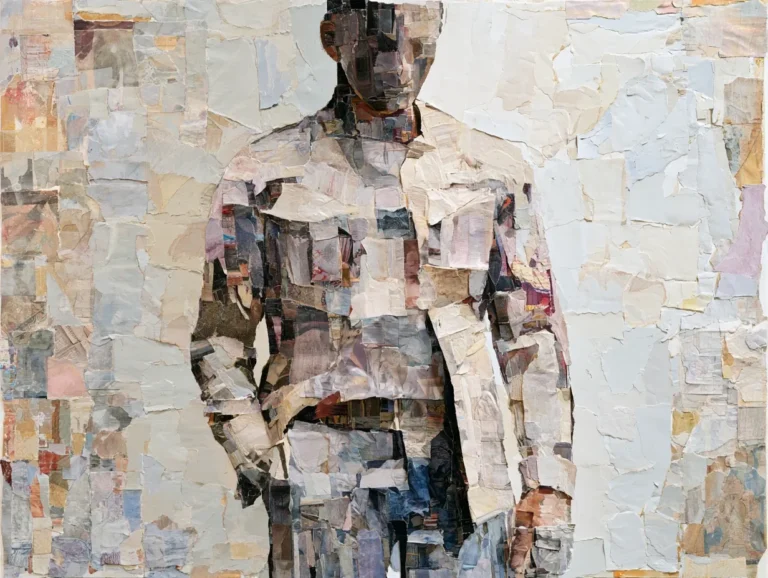
A mixed-media collage portrait showing a faceless human figure constructed from torn paper fragments in muted tones of beige, gray, blue, and brown. The fractured, layered composition assembles disparate scraps into a single ambiguous form, visually evoking the article's theme of fragmented, patchwork ideologies and the conceptual incoherence behind "salad bar" extremism, where contradictory pieces combine into one unstable identity.

Why the ‘salad bar of ideologies’ does not help us understand contemporary violent extremism

Next Post
A photo showing a close-up impasto oil painting of a human face composed of fragmented, palette-knife patches in blue, orange, yellow, red, and white. The mosaic-like brushstrokes assemble piercing blue eyes, nose, and mouth from disparate color blocks, visually evoking the article's "salad bar" metaphor of composite, hybrid extremist worldviews built from diverse ideological fragments.

Why the ‘salad bar’ might actually help extremism research – A reply to Horgan and Shayler