



The psychology of democratic backsliding examines why psychological vulnerabilities actively facilitate the erosion of democratic norms and institutions. Evidence shows that political engagement carries measurable mental health costs. For instance, opposing a government during democratic backsliding is associated with reduced happiness and life satisfaction, even as it is vital for democratic functioning (Wu et al., 2026). Research in political psychology has identified several core mechanisms driving this democratic decline. One such mechanism is status threat and last place aversion, where individuals near the bottom of perceived social hierarchies support authoritarian policies out of fear of falling further (Kukharkin et al., 2026). Another is transgression credit, where voters systematically forgive ethical violations by their own leaders while condemning the same behavior in opponents, thereby actively dismantling democratic accountability (Lalot & Abrams, 2025). Furthermore, stigma-based solidarity betrayal, where expectations of support among marginalized groups lead to acute feelings of betrayal when those expectations are violated (Shackleford et al., 2026), fractures coalitions and weakens the collective resistance needed to protect democratic institutions.
Key Takeaways
- “Last Place Aversion” drives political backlash: Support for authoritarianism and anti-DEI policies is not solely driven by objective economic hardship. Research indicates that White Americans who perceive themselves as “falling behind” both their own group and racial minorities—feeling near “last place” in the social hierarchy—are significantly more likely to support alt-right ideologies and candidates (Kukharkin et al., 2026).
- Partisan identity fuels “Transgression Credit”: Voters often grant their own political leaders a “moral pass.” In the aftermath of the 2024 UK election, voters from all major parties were more willing to forgive trust violations committed by their own party leaders compared to rival leaders, a phenomenon termed as transgression credit (Lalot & Abrams, 2025).
- Solidarity is fragile and prone to betrayal: While shared discrimination can foster solidarity among people of color, this alliance is precarious (Rogbeer & Pérez, 2026). When expectations of solidarity are violated—such as when members of one marginalized group vote for a candidate opposing another group’s interests—the feeling of betrayal is often more acute than if the same action were taken by a dominant group (Shackleford et al., 2026).
- Minoritized groups “lean in” rather than out during decline: Contrary to predictions that hostile political climates trigger disengagement or concealment, an eight-year, five-wave study of LGBTQ+ adults (N = 3,627; 2017–2025) found the opposite pattern. As perceptions of progressive social change declined, LGBTQ+ identification, group-based self-definition, group satisfaction, collective efficacy, and desires to preserve identity all increased significantly. Stronger identification buffered respondents against the otherwise negative emotional consequences of perceived decline — a phenomenon the authors term identity vigilance (Morton & Salvatore, 2026).
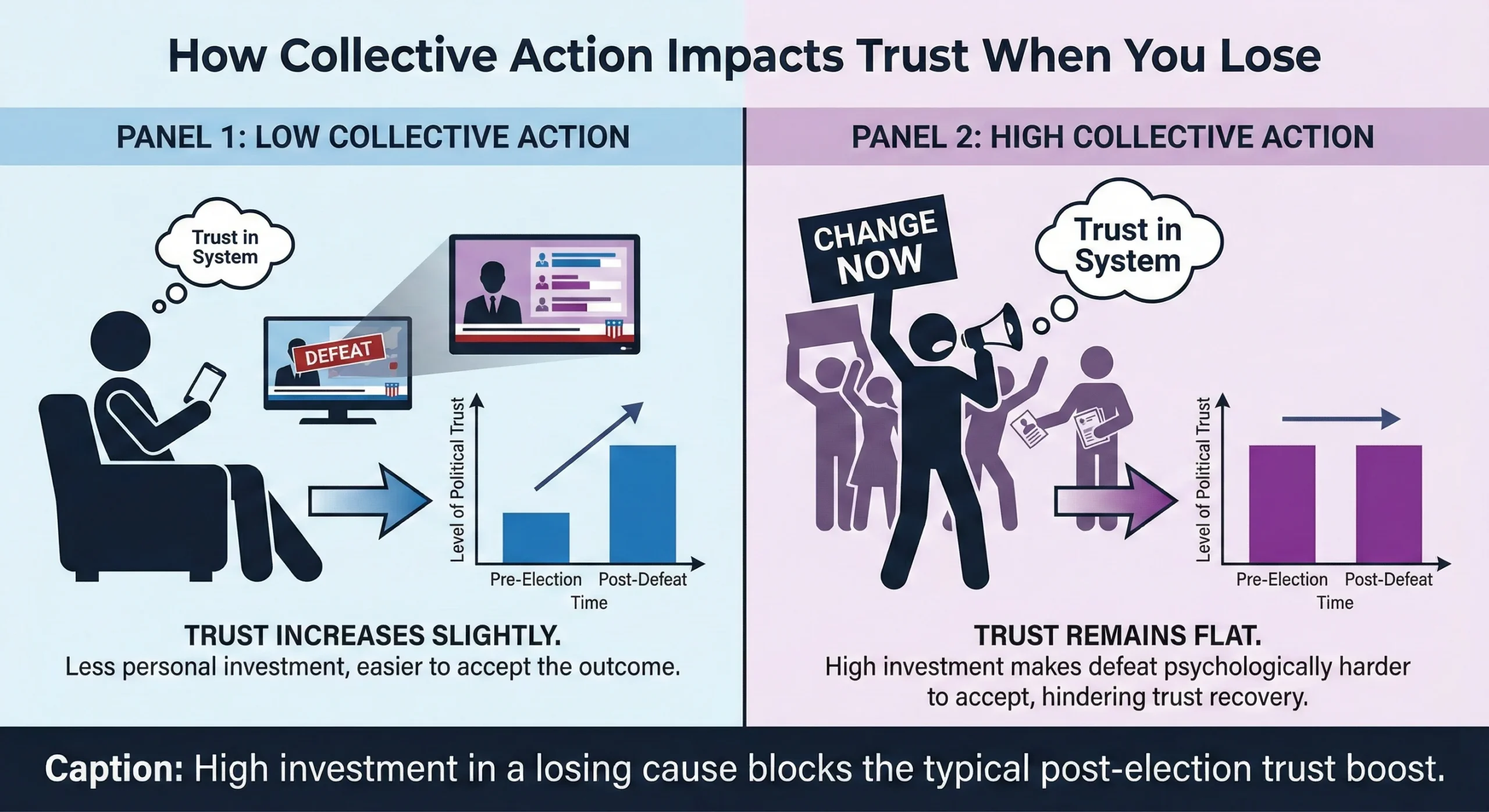
- Political engagement carries a “happiness cost”: Active political opposition during periods of democratic backsliding is linked to lower subjective well-being (Wu et al., 2026). While supporting government actions can provide a sense of “person-environment fit” and higher life satisfaction, opposing them is associated with decreased happiness, creating a psychological asymmetry between political winners and losers. Moreover, participating in political action can lead to less of an increase in political trust if one’s supported candidate loses (Marinthe et al., 2026).
- Resistance to diversity is not always ideological: Opposition to Diversity & Inclusion (DEI) policies is often binary (for vs. against) in public discourse, but psychologically, it is multidimensional. Many employees are “Bystanders” (supportive but passive) or “Reluctants” (skeptical but behaviorally compliant), driven by lack of clarity rather than malice (Bokern et al., 2026).
- Violent counter-protests often backfire: Disrupting a social movement with aggressive tactics—even non-physical ones like tearing down signs—can inadvertently increase public sympathy for the original cause. This occurs because the public views such disruptions as a suppression of free speech, which can be weaponized by anti-democratic actors to justify crackdowns on civil liberties (Selvanathan et al., 2026).
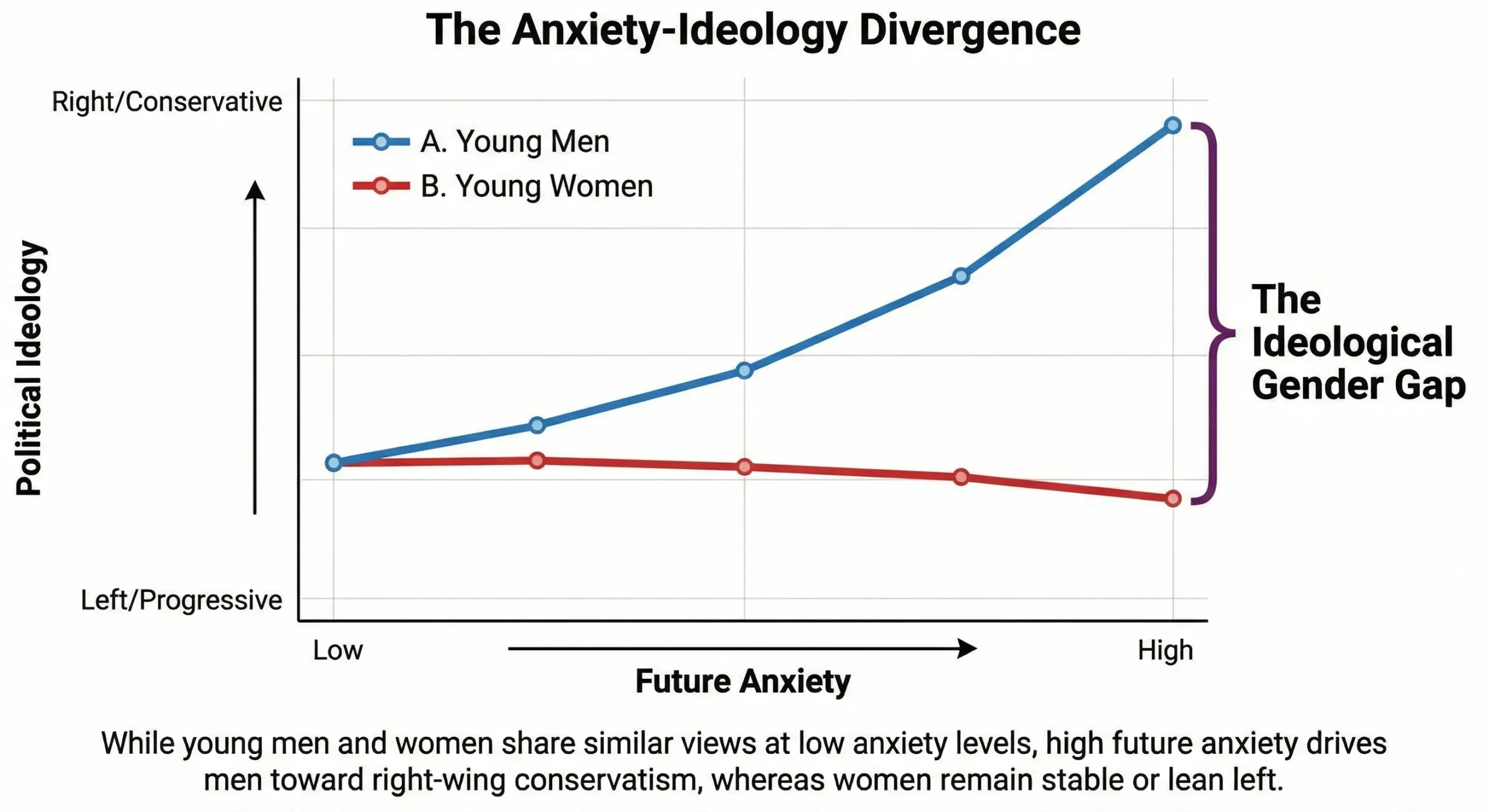
- Future Anxiety is reshaping youth politics: Young people are increasingly pessimistic about their economic and environmental prospects. This “future anxiety” makes young people more susceptible to authoritarian rhetoric. It is associated with support for democratic principles in the UK, but can also correlate with conservative ideology among young men, highlighting a gendered divergence in how anxiety shapes political identity (Borghi et al., 2025).
- The weaponization of collective memory is a powerful tool for autocratic leaders: They manipulate historical narratives to legitimize democratic backsliding and dampen resistance. By reframing the past, leaders can alter a group’s sense of identity and perceived efficacy, dictating whether citizens protest or acquiesce to democratic decline (Lavie-Driver & van der Linden, 2026).
- Propaganda succeeds by redefining moral values: In authoritarian contexts, propaganda does not merely instill fear but frames autocratic actions as fulfilling citizens’ core conservation values. Research shows that state media consumption correlates with construing aggressive state actions as protective of security, conformity, and tradition, thereby generating active support for the regime (Ponizovskiy et al., 2026).
What is Political Anxiety?
Political Anxiety vis-à-vis General Anxiety
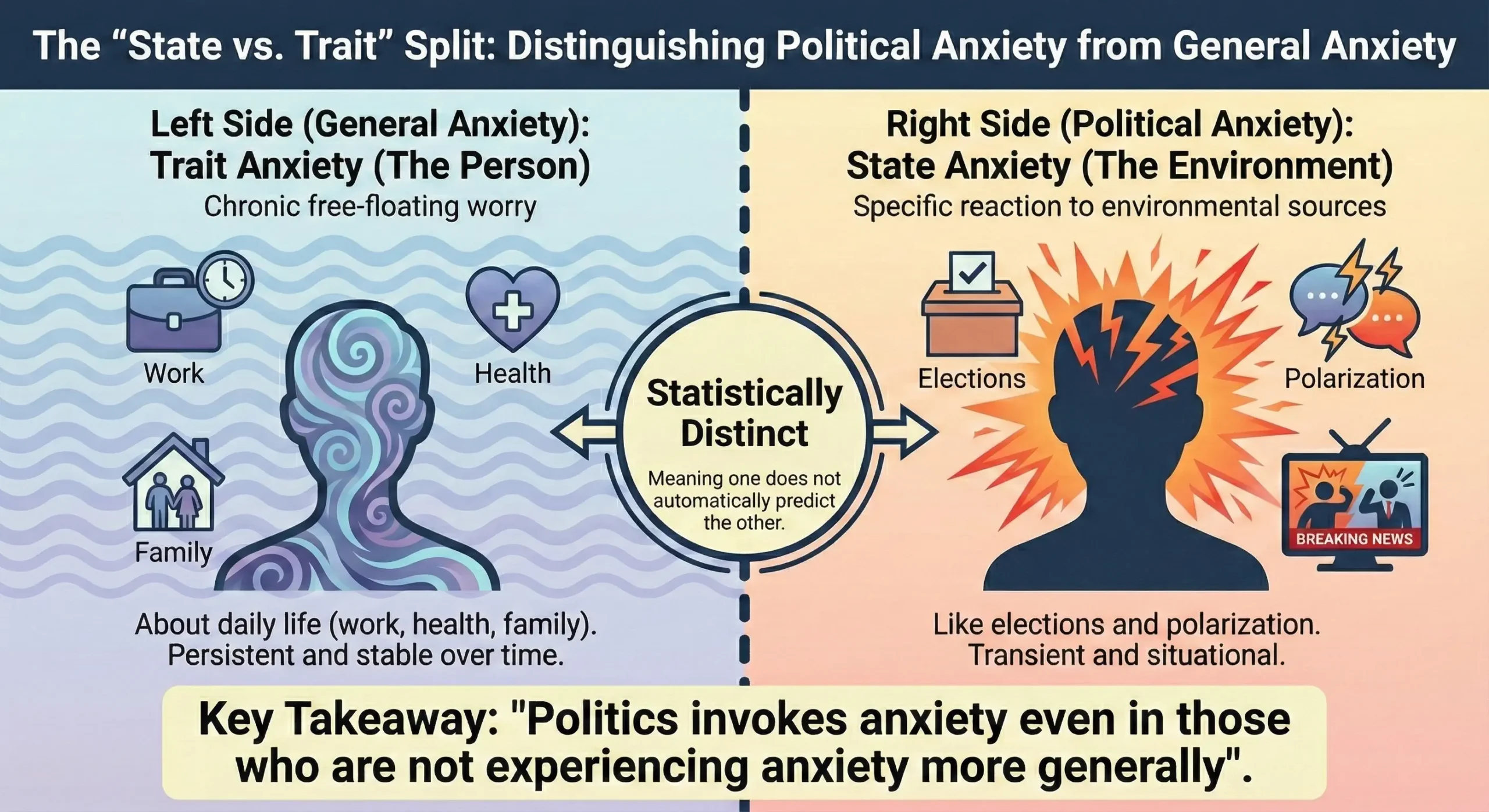
Political anxiety is conceptualized as a distinct psychological phenomenon rather than merely a sub-symptom of generalized anxiety disorder. While generalized anxiety is characterized as “chronic free-floating anxiety” involving apprehension about various daily circumstances, political anxiety functions as a form of “state-anxiety”—an environmental response triggered specifically by external political threats such as elections, polarization, and uncivil discourse (Weinschenk & Smith, 2024), see Figure 1. Empirical analysis supports this distinction, as researchers have found only a modest correlation (r = .24) between measures of general and political anxiety, indicating that the political environment induces significant worry even in individuals who do not otherwise display the underlying personality traits associated with general anxiety (Weinschenk & Smith, 2024). Furthermore, the demographic predictors for these conditions differ; for instance, while higher education levels typically correlate with lower general anxiety, they are associated with higher levels of political anxiety, suggesting the two constructs operate independently (Weinschenk et al., 2025).
Figure 1
This infographic illustrates the distinction between Trait Anxiety, a chronic personal characteristic, and State Anxiety, a transient reaction to environmental factors like political events. It highlights that political anxiety is a specific, situational response that is statistically distinct from general, persistent worry.
The Media Feedback Loop
The intensity of political anxiety is significantly exacerbated by a modern media ecosystem that functions as a feedback loop designed to maximize engagement through emotional arousal. Ambrosino (2024) notes that because media outlets must compete for digital audiences in a difficult financial landscape, news content is often engineered to “goad” consumers into clicking by eliciting strong emotional responses, particularly anger, see Figure 2. This dynamic is inescapable, with “attack ads” and hostile rhetoric infiltrating even non-political leisure spaces, contributing to a climate where 90% of Americans report feeling angry or exhausted by politics (Ambrosino, 2024). This environment fosters maladaptive behaviors akin to “Illness Anxiety Disorder,” where individuals obsessively check polls and consume alarmist news, creating a cycle of physiological stress and “doomscrolling” that negatively impacts public health. This environment exhausts voters and degrades trust in objective truth, which is a prerequisite for democratic backsliding.
Figure 2
This flow chart illustrates a three-stage cycle of environmental triggers, from media headlines and intrusive political ads to the habit of “doomscrolling,” that collectively contribute to political anxiety in the public.

How Did Status Threat Affect the 2024 U.S. Election?
Why do certain groups resist diversity initiatives or support authoritarian populism? A growing body of research suggests the answer lies in subjective status—how people perceive their rank relative to others.
The Role of “Last Place Aversion” in the 2024 U.S. Election
A five-wave longitudinal study of 506 White Americans during the 2024 election illuminated the power of status anxiety (Kukharkin et al., 2026). The study identified a specific profile of individuals who felt they were “falling behind” other White people while simultaneously being potentially “passed by” Black and Hispanic Americans.
- Subjective vs. Objective: Importantly, these individuals were not necessarily the poorest in the sample. Their distress stemmed from the perception of a tight status hierarchy where they were at risk of hitting the bottom (see Figure 3).
- Political Consequences: This “last place” perception was robustly associated with support for Donald Trump and intentions to vote for him. Furthermore, these individuals expressed the highest support for bans on Diversity, Equity, and Inclusion (DEI) initiatives, likely viewing such policies as an existential threat to their precarious standing.
Figure 3
This infographic illustrates a theoretical model based on Kukharkin et al. (2026) where perceived low status and the resulting status threat can lead to specific political and social behavioral outcomes.

How Does Collective Memory Shape Resistance to Democratic Backsliding?
The social identity model of collective action traditionally explains protests through group identity, perceived injustice, and group efficacy. However, when applied to democratic backsliding, collective memory becomes a crucial mechanism. Research demonstrates that autocratic actors manipulate historical narratives to lower resistance to democratic decline (Lavie-Driver & van der Linden, 2026). For instance, in Russia, selective glorification of the Soviet era and framing the 1990s as chaotic lowers citizens’ appraisals of democratic injustice and group efficacy. Similarly, in the United States and Israel, differing historical memories dictate whether groups mobilize to protect liberal democracy or support undemocratic actions. When leaders successfully reshape collective memory to prioritize stability or specific group dominance over democratic norms, they effectively neutralize public resistance.
How Does Propaganda Secure Support for Authoritarian Actions?
A critical question in authoritarian consolidation is why citizens actively support destructive state actions. The answer partly lies in value-instantiating beliefs. Propaganda operates not just through misinformation but by structuring the moral interpretation of events. A study of Russian citizens during the invasion of Ukraine found that state propaganda successfully framed the war as enhancing conservation values, such as security, conformity, and tradition (Ponizovskiy et al., 2026). Rather than simply forcing compliance, authoritarian messaging redefines state aggression as a protective measure that aligns with the public’s pre-existing moral concerns, creating an emotionally coherent motivation for citizens to support the regime and its actions.
Why Do Voters Forgive Their Own Leaders’ Scandals?
In an era of polarized politics, accountability often takes a backseat to loyalty. Research from the 2024 UK General Election offers critical insights into the limits of political forgiveness (Lalot & Abrams, 2025).
Is There Evidence of Ingroup Bias in Political Forgiveness?
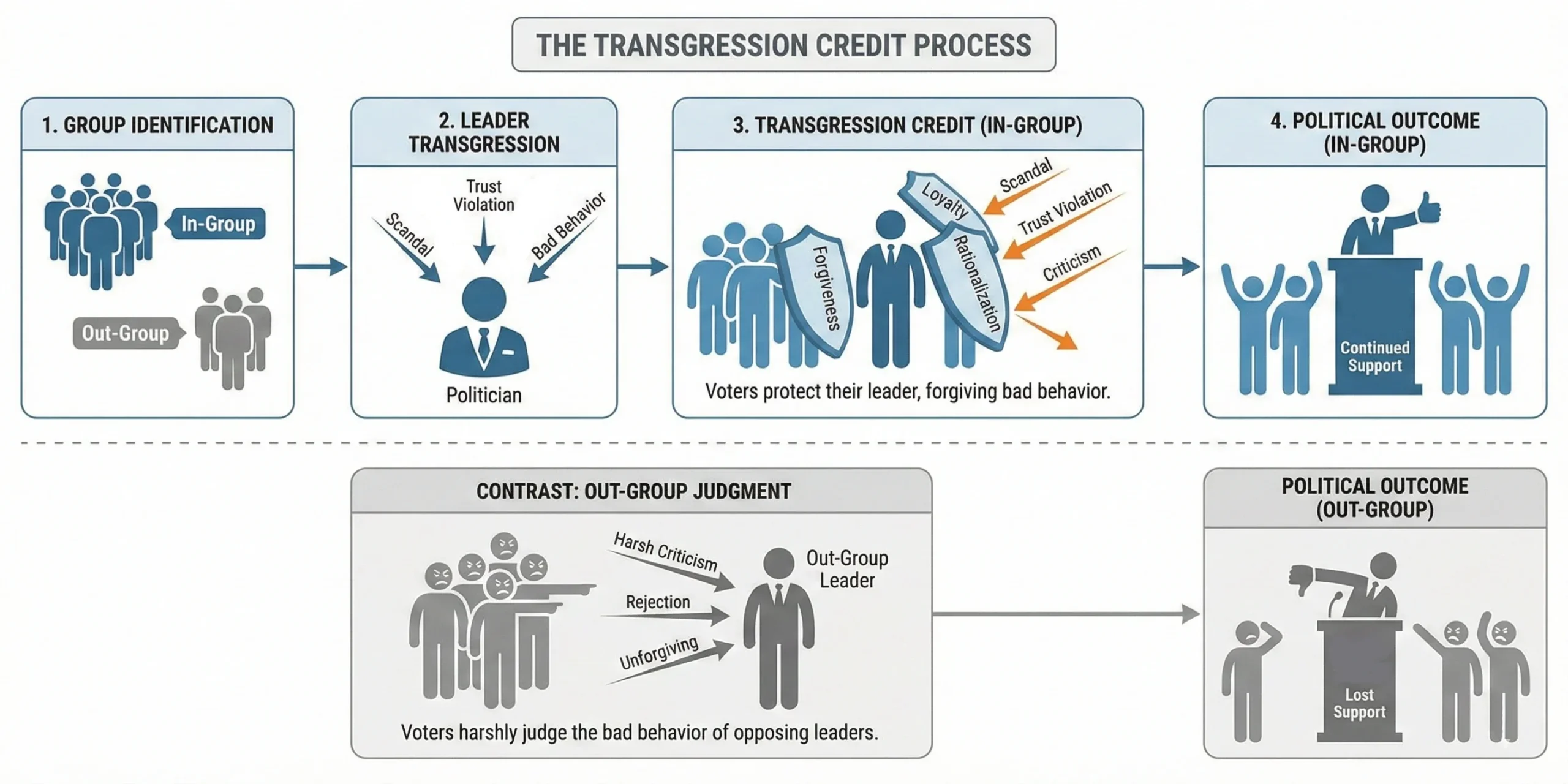
A longitudinal study of 535 UK voters (Lalot & Abrams, 2025) found consistent evidence for transgression credit. Voters for the Conservative, Labour, and Liberal Democrat parties were all significantly more willing to forgive trust violations (such as lying or corruption) when committed by their own party leader compared to leaders of opposing parties.
Interestingly, this forgiveness increased after the election for most leaders (see Figure 4). Winning the election (or performing well) seemed to validate the leader, further insulating them from accountability. The only exception was the leader of the populist Reform UK party, who was not granted greater forgiveness post-election, potentially due to the anti-establishment nature of their platform.
Figure 4
The Transgression Credit Process. This infographic illustrates a four-step model explaining how in-group voters tend to forgive their leader’s transgressions. The process begins with (1) Group Identification, followed by (2) a Leader Transgression. In step (3) Transgression Credit (In-Group), voters use psychological shields like ‘Forgiveness’, ‘Loyalty’, and ‘Rationalization’ to protect their leader from ‘Scandal’, ‘Trust Violation’, and ‘Criticism’. This leads to a positive (4) Political Outcome (In-Group), such as ‘Continued Support’. The bottom section contrasts this with the harsh ‘Out-Group Judgment’, where voters reject opposing leaders for similar behavior, resulting in a negative ‘Political Outcome (Out-Group)’ like Lost Support’.
How Does Shared Discrimination Affect Political Solidarity?
For marginalized groups, political strength is often found in coalitions. However, the psychology of solidarity is complex, involving both the promise of shared strength and the pain of perceived betrayal.
Does Facing Discrimination Foster Solidarity?
Does facing discrimination bring groups together? Research involving 2,550 Black, Latino, and Asian American adults suggests that highlighting shared experiences of discrimination can indeed foster solidarity (Rogbeer & Pérez, 2026). When shared discrimination was made salient, it increased feelings of solidarity across these groups (see Figure 5).
- Indirect Effects: While solidarity appeals increased feelings of connection, they did not directly change voting intentions. Instead, solidarity acted as a mediator, being indirectly associated with stronger intentions to vote for candidates perceived as representing People of Color (PoC) interests.
- The Representation Gap: The effectiveness of this solidarity was limited by candidate perception. For example, Kamala Harris was not universally perceived as a clear “PoC representative” by all groups, which dampened the translation of solidarity into votes.
Figure 5
A schematic flowchart based on Rogbeer and Pérez, (2026) illustrating two potential pathways from the initial stage of “Reading About Hate Crimes” to the final “Voting Action.”

What Is Stigma-Based Solidarity Betrayal?
Solidarity implies an expectation of loyalty. When that expectation is violated, the psychological cost is high. Two studies (N = 945, N = 1116) examining White and Black women’s reactions to the 2024 U.S. election revealed a phenomenon of stigma-based solidarity betrayal (Shackleford et al., 2026).
- The Betrayal Hierarchy: Black women felt more betrayed by Latino men voting for Trump than by White men doing the same. This suggests that marginalized groups hold specific expectations of support from other marginalized groups (see Figure 6).
- Relational Betrayal: White women, conversely, felt more betrayed by White men (an advantaged group) than by other groups, reflecting a sense of relational betrayal from within their own racial category (see Figure 6).
- Consequences: Feelings of betrayal were sometimes negatively correlated with future trust and willingness to engage in solidarity with the “betraying” group, highlighting how election outcomes can fracture future coalitions.
Figure 6
A split-screen comparison of ‘Stigma-Based Solidarity’ and ‘Relational Solidarity’ in Shackleford et al. (2026). The left panel illustrates the betrayal of stigma-based solidarity, showing violated expectations of shared marginalization between Black women and Latino men, symbolized by a broken chain. The right panel illustrates the betrayal of relational solidarity, showing violated kinship and care expectations between White women and White men, symbolized by a broken heart.

How Do Minoritized Groups Respond to Democratic Decline?
While research on solidarity betrayal examines coalitions between marginalized groups, a separate question asks how members of minoritized groups respond internally when democratic conditions deteriorate. Conventional theory predicts several “lean out” responses: psychological disengagement, identity concealment, or migration to more supportive environments. A large-scale longitudinal investigation of LGBTQ+ adults challenges this expectation, documenting instead a pattern of leaning in.
What Is Identity Vigilance?
Identity vigilance refers to the consolidation of awareness and mobilization of psychological resources around a potentially threatened collective identity. The concept draws on the rejection-identification model, which positions collective identification as a coping resource activated when group devaluation is perceived as pervasive rather than isolated (Morton & Salvatore, 2026). Under this view, leaning into minority identity is not denial of decline but an adaptive mobilization of community resources to fight back.
How Did LGBTQ+ Identity Evolve Across Eight Years of Political Volatility?
Across five cross-sectional waves of sexual minority participants (N = 3,627) collected between 2017 and 2025 — spanning the first Trump term, the Biden administration, and the first 100 days of the second Trump term — researchers documented a striking divergence between social optimism and identity dynamics (Morton & Salvatore, 2026):
- Declining optimism: Perceived possibility of progressive social change fell significantly across the 8-year period.
- Rising identity: Despite this pessimism, LGBTQ+ identification, group-based self-definition, group satisfaction, collective efficacy, and desires to preserve identity all increased significantly (each p < .001; effects survived Bonferroni correction).
- A late negative-emotion spike: Negative emotions about the social trajectory remained relatively stable until rising sharply at the start of the second Trump presidency in early 2025.
How Does Identification Buffer the Psychological Costs of Decline?
A sequential path model (CFI = .972; RMSEA = .061; SRMR = .019) revealed a “hydraulic” relationship between social pessimism and identity (Morton & Salvatore, 2026) — see Figure 7:
- The direct cost of pessimism: Considered alone, perceiving reduced possibility of progressive change was associated with more negative emotion, less positive emotion, weaker group-based self-definition, and lower collective efficacy.
- The indirect protection via identification: Across-time declines in optimism were associated with increases in minority identification, which in turn were associated with more positive affect, stronger self-definition and group satisfaction, higher collective efficacy, and stronger identity-preservation motives.
- A brief reprieve: The only exception was the 2020–2021 transition (onset of Biden’s term), during which indirect effects briefly reversed — a short-lived pause before the broader trajectory of identity consolidation resumed.
In other words: those who think things are getting better report more psychological distance from the group (lower identification), while those who see decline invest more in collective identity, and that investment shields them from the otherwise corrosive emotional effects of pessimism.
Figure 7
Hydraulic model of identity vigilance. As perceived possibilities for progressive change decline (left), LGBTQ+ identification rises (center), which in turn buffers positive affect, group satisfaction, collective efficacy, and identity-preservation

How Does Political Polarization Affect Mental Health?
Democratic backsliding and political polarization do not just affect institutions; they take a measurable toll on individual well-being.
Why Is There a Happiness Gap During Democratic Backsliding?
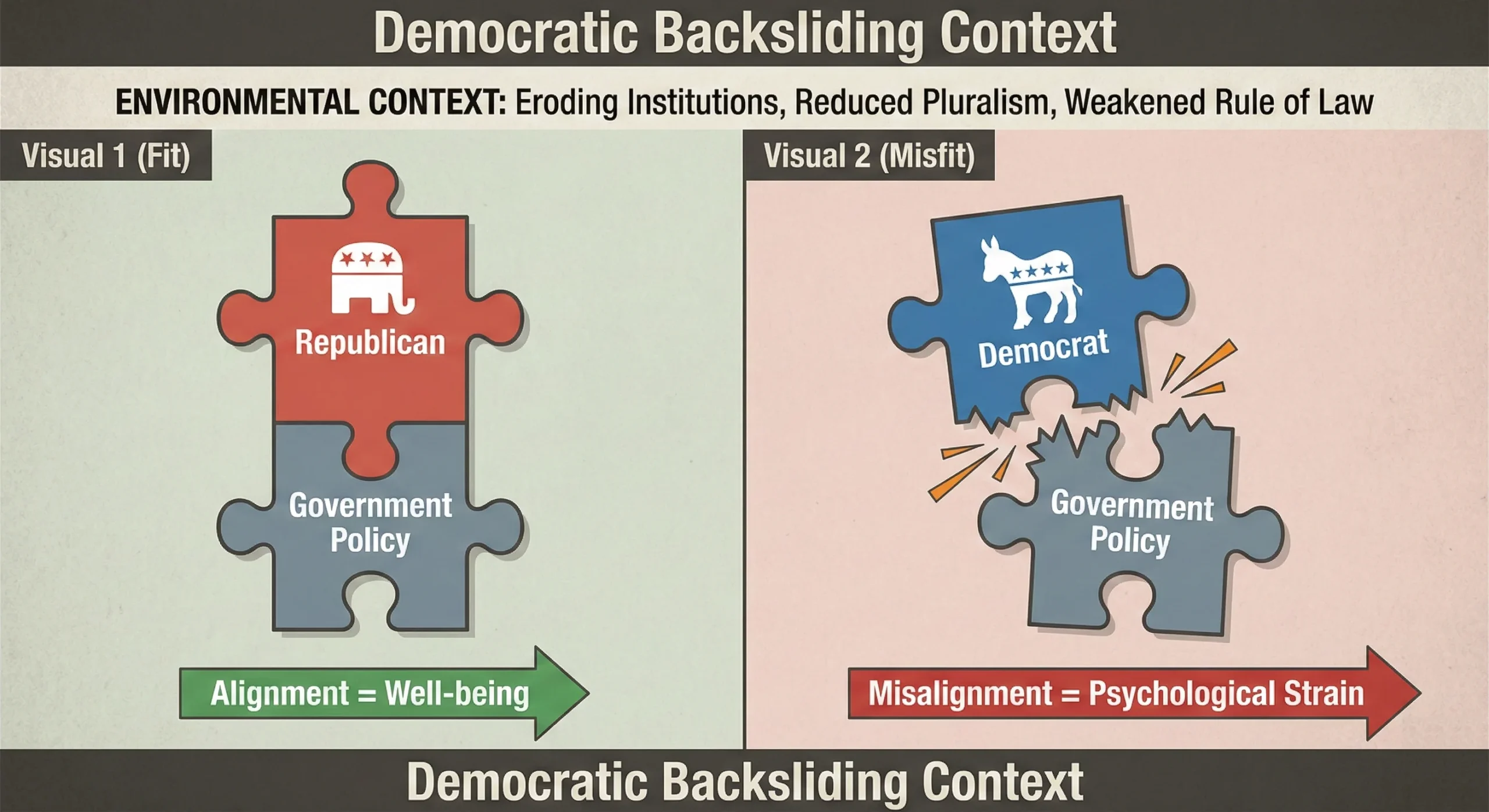
A longitudinal study tracking U.S. participants during the early months of a second Trump term (February–March 2025) found a persistent “happiness gap” (Wu et al., 2026), see Figure 8.
- Republicans: Reported increasing life satisfaction and happiness over time. Their support for the administration’s actions provided a sense of alignment or “person-environment fit”.
- Democrats: Consistently reported lower well-being. Their opposition to government actions—while vital for democratic resistance—carried a psychological cost, associated with lower happiness and life satisfaction.
Figure 8
This infographic illustrates the psychological effects of political alignment with the current administration based on Wu et al. (2026). It contrasts the positive well-being associated with supporting administration actions (a “political fit”) against the negative well-being from supporting opposition (a “political misfit”).
Why did Democrats experience a decline and subsequent “rebound” in well-being during the early months of the second Trump presidency?
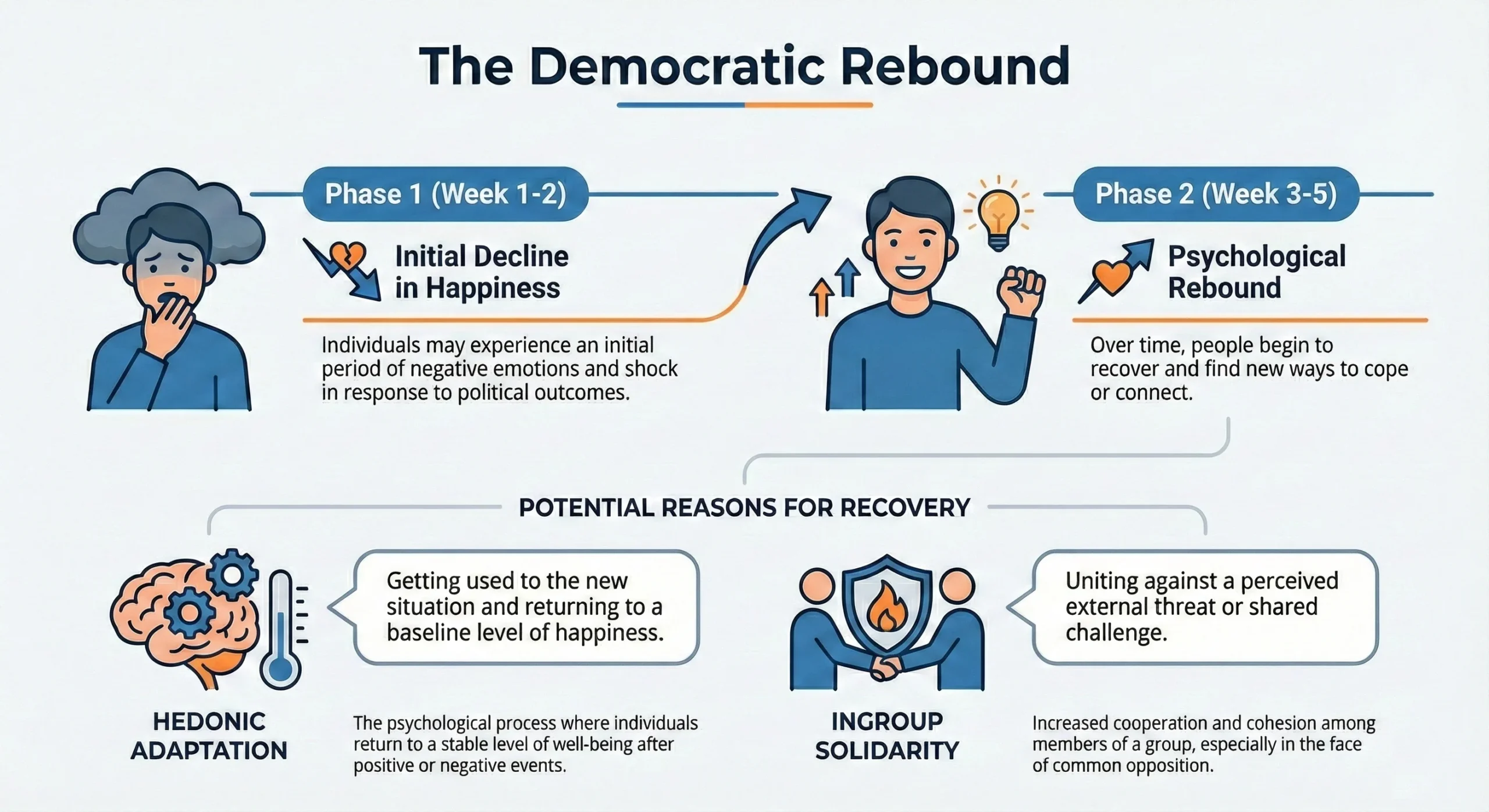
The Decline (Weeks 1-2): During the initial weeks of the study (February 2025), Democrats reported a significant decrease in both happiness and life satisfaction (see Figure 9). The study attributes this to the immediate context of “democratic backsliding” and the “rapid and, at times, overwhelming political change” characterizing the start of the second term. Specifically, the decline coincided with participants being presented with news stories about the administration’s new executive actions, which likely triggered negative emotional reactions and shock.
The Recovery (Weeks 3-5): Contrary to the researchers’ initial prediction that well-being would continue to decline, Democrats demonstrated a “positive quadratic change,” meaning their happiness levels bottomed out and then began to rise significantly in the final three weeks of the study. The study and the infographic highlight two primary psychological mechanisms for this recovery:
- Hedonic Adaptation: As illustrated in the figure, humans possess a psychological tendency to return to a stable “baseline level of happiness” after positive or negative life events. The study suggests that after the initial shock of the political transition faded, Democrats began to “adapt” to the new political reality, reducing the acute psychological toll of the administration’s actions.
- Ingroup Solidarity: The infographic notes that “uniting against a perceived external threat” can foster resilience. The researchers propose that the administration’s actions, viewed as a “collective threat,” may have strengthened moral identity and social cohesion among Democrats. This solidarity can spur “prosocial responses”—such as collective action or advocacy—that actively bolster well-being despite an adverse political environment.
Other Factors: The study also notes that in later weeks, participants read news stories about judicial actions taken against the administration (e.g., judges blocking orders), which initially appeared to boost morale. However, statistical analysis suggested that Hedonic Adaptation and Ingroup Solidarity were likely the more robust drivers of the rebound compared to these specific external news events.
Figure 9
This infographic illustrates the psychological trajectory of “The Democratic Rebound,” mapping the emotional journey from an initial post-event decline in happiness to a recovery phase weeks later based on Wu et al. (2026). It highlights hedonic adaptation and ingroup solidarity as key mechanisms driving this psychological resilience.
Why Do Employees Support or Resist Diversity Policies?
In the polarized landscape of culture wars, stance on Diversity and Inclusion (DEI) is often viewed as a binary choice: one is either an ally or an opponent. However, new organizational psychology research challenges this simplistic view, revealing that support and resistance are complex, multidimensional behaviors driven by distinct psychological needs (Bokern et al., 2026).
What Are the Different Types of D&I Policy Support?
A study of 2,639 employees in a Dutch organization identified five distinct profiles of support, disentangling attitudinal endorsement (what people believe) from behavioral enactment (what people do) (Bokern et al., 2026), see Figure 10.
- Reluctants (9%): Low attitudinal support but high behavioral engagement. These individuals are critical of the policy—often citing implementation flaws or skepticism—yet they actively participate in executing it. This group consists largely of managers who feel a professional duty to comply despite personal doubts.
- Champions (13%): High attitudinal and behavioral support. These individuals are ideologically committed and actively engaged.
- Opponents (13%): Low attitudinal and behavioral support. They often reject policies based on “meritocratic” beliefs (e.g., “hire the best person regardless of background”) or unawareness.
- Ambivalents (49%): The largest group. They score near the midpoint on both dimensions, often due to a lack of awareness or policy inaccessibility rather than active resistance.
- Bystanders (16%): High attitudinal support but low behavioral engagement. They exhibit a “principle-implementation gap”—supporting diversity in the abstract (“it’s the right thing to do”) but failing to act, often due to uncertainty about how to contribute.
Figure 10
This matrix, based on the Bokern et al. (2026) study, categorizes five distinct profiles of support for Diversity and Inclusion (D&I) policies. The profiles are mapped against two dimensions: Attitudinal Support (Beliefs) on the horizontal axis and Behavioral Engagement (Actions) on the vertical axis.

Why Is There a Gap Between D&I Beliefs and Actions?
The study revealed that the gap between belief and action is driven by different reasoning patterns. Bystanders often offer symbolic support, citing moral values without engaging in the messy reality of policy implementation. In contrast, Reluctants offer “critical compliance,” engaging with the policy while critiquing its effectiveness or scope. This suggests that what looks like resistance (criticism) can sometimes coexist with high engagement, while what looks like support (moral agreement) can coexist with total passivity.
Do Violent Counter-Protests Backfire?
Political conflict often plays out in the streets, where protests for social change are increasingly met by counter-movements defending the status quo. New research across four countries (Australia, USA, Thailand, Hong Kong) suggests that aggressive counter-protests may actually help the groups they are trying to silence.
How Does Free Speech Perception Shape Protest Sympathy?
Across five studies, researchers found that when a counter-protest uses violent or disruptive tactics (such as tearing down signs or shouting down speakers) against a peaceful social change group, it increases public sympathy for the original protesters (Selvanathan et al., 2026).
- The Mechanism: This “backfire effect” is mediated by perceived suppression of free speech (see Figure 11). When the public witnesses a counter-group aggressively disrupting a protest, they perceive it as a violation of the protesters’ democratic right to speak. This perception of unfair suppression generates sympathy for the targeted group.
- The Underdog Advantage: This effect is asymmetric. It is strongest when a system-supporting group (e.g., White Nationalists) attacks a system-challenging group (e.g., Immigrant Rights activists). When the roles were reversed—and immigrant rights groups aggressively counter-protested White Nationalists—the same increase in sympathy for the White Nationalists occured to less of an extent, likely because the public does not view the dominant group as a vulnerable “underdog”.
This finding is crucial for activists and political strategists: aggressive tactics to “shut down” an opponent may inadvertently amplify the opponent’s message by casting them as a victim of censorship.
Figure 11
This infographic illustrates how violent counter-protests can lead to increased sympathy for the original protesters by being perceived as a suppression of free speech based on Selvanathan et al. (2026).

Does Collective Action Influence Post-Election Trust?
For those who lose an election, engaging in collective action (protests, campaigning) can be a double-edged sword. A study of 543 UK voters found that while political trust generally increases after an election, this “trust bump” is hindered for those who campaigned hard for a losing cause (Marinthe et al., 2026), see Figure 12:
- The General “Trust Bump”: Contrary to the expectation that losing erodes trust, the study found a general increase in political trust across the board immediately following the election. While “winners” (Labour voters) saw a sharper increase, even “losers” (supporters of other parties) generally experienced a boost in trust, likely due to the validation of the democratic process itself.
- The “Local Loser” Effect: The critical exception to this rule was found at the local level. Voters who were highly engaged in collective action but saw their local Member of Parliament (MP) candidate lose did not experience the typical post-election increase in trust. In fact, their trust levels remained stagnant, unlike their less-engaged peers whose trust increased despite the loss.
- Intensity Matters: The study highlights that the amount of engagement matters. The negative interaction was most significant for those who invested heavily in multiple forms of collective action (a high count of actions), rather than those who merely participated in one or two activities.
- The Cost of Caring: These findings suggest a psychological cost to high-effort civic engagement. When intense bottom-up efforts (activism) are met with immediate institutional failure (local defeat), it may undermine the belief that the political system is responsive, preventing the restoration of trust that usually follows an election.
Figure 12
This infographic illustrates how the level of collective action during a political campaign affects the post-defeat trust recovery. High personal investment in a losing cause, as seen in protests and active campaigning, tends to hinder the typical increase in political trust that often occurs after an election, as the psychological impact of defeat is greater. The graphic is based on Marinthe et al. (2026).
How Does Future Anxiety Shape Youth Politics?
Conventional wisdom suggests that anxiety and fear drive voters toward authoritarian leaders who promise stability. However, a new study of 1,985 adolescents in the UK and Greece challenges this narrative, revealing that anxiety about the future can actually fuel support for democracy—depending on your gender and how you regulate your emotions (Borghi et al., 2025).
Does Fear of the Future Make Young People Anti-Democratic?
Surprisingly, in the UK sample (N = 988), higher levels of future anxiety (worry about upcoming personal and societal challenges) were associated with stronger support for democratic principles rather than authoritarianism:
- The Role of Emotion Regulation: The link between anxiety and democratic support was strongest among adolescents who struggled with cognitive reappraisal (the ability to reframe negative thoughts). Those who were skilled at regulating their emotions showed a much weaker connection between their anxiety and their political attitudes.
- Democratic Agency: The researchers suggest that anxious youth may view democratic systems as the best vehicle for exerting agency over an uncertain future, rather than retreating into passivity.
- Mobilization: This anxiety appears to be a mobilizing force. In both the UK and Greece, higher future anxiety was correlated with a greater willingness to participate in political actions, such as lawful demonstrations.
Is There a Gender Gap in How Anxiety Shapes Politics?
While the general trend pointed toward democratic support, a stark gender divide emerged regarding political ideology (Left vs. Right). The study found that future anxiety correlates with Right-Conservative ideology exclusively among young men (see Figure 13):
- Divergent Anxieties: This suggests that the “ideological gender gap” currently widening in many Western nations may be partly fueled by how different genders process fear. Young men may be responding to specific anxieties (e.g., economic competition, changing masculinity) that resonate more with right-wing narratives.
- The Male Shift: Among young men in both the UK and Greece, higher future anxiety was significantly associated with more conservative self-placement.
- The Female Stability: For young women, there was no credible association between future anxiety and conservative ideology; their political leanings remained stable regardless of their anxiety levels.
Figure 13
This graph illustrates the divergence in political ideology between young men and women as future anxiety increases, with men becoming more conservative and women remaining stable or leaning left. Based on Borghi et al. (2025).
New Section: How Does Historical Memory Shape Authoritarian Threat?
The perception that modern authoritarianism is a “new” threat to democracy often stems from a specific psychological and cultural orientation toward the past. Research by Perez et al. (2026) highlights how collective memory serves as a foundation for political division.
The Myth of Infallible Democracy
Many citizens view democratic institutions as historically secure. However, this perspective often relies on colorblind ideology—a cultural framework that ignores how the U.S. has historically functioned as an authoritarian state for marginalized groups (Perez et al., 2026). By omitting histories of racial violence and exclusion (such as Jim Crow laws), the canonical narrative creates a “colorblind historical context” that is hospitable to authoritarianism.
Cultural Affordances and Authoritarian Rhetoric
Selective memory provides cultural affordances that authoritarian leaders can exploit (Perez et al., 2026). When the history of racial hierarchy is suppressed, it becomes easier to:
- Mythologize the past: Create an idealized, non-existent “golden age” to fuel authoritarian nostalgia.
- Frame marginalized groups as threats: Position efforts for equity as “attacks” on a supposedly stable democratic tradition.
- Maintain the “Marley Hypothesis”: Research indicates that individuals with lower knowledge of historical racism are less likely to recognize systemic racism in the present, whereas exposure to critical history increases the recognition of how inequality persists.
Critical History as Resistance
The study suggests that critical racial history acts as a tool for psychological and social resistance. By deconstructing the majoritarian perspective and acknowledging that democracy has never been available to everyone, publics can develop a more robust “color conscious” democracy. This historical grounding makes citizens less susceptible to scapegoating and more aware of the ways authoritarianism can be embedded within democratic structures.
Summary of Political Psychology Phenomena
To provide a clear summary of the primary psychological dynamics discussed in the scientific literature published here, Table 1 compares their definitions, contexts, and key findings.
Table 1
Psychological Dynamics in Political Contexts
| Phenomenon | Definition | Key Findings & Context |
| Last Place Aversion | The fear of falling to the bottom of a social hierarchy, prioritizing relative status over absolute gain. | White Americans feeling “last place” were most likely to support Trump and oppose DEI policies, regardless of actual income (Kukharkin et al., 2026). |
| The “Backfire Effect” of Counter-Protests | The tendency for violent opposition to increase sympathy for the targeted group. | Violent disruption of social change protests may increase public sympathy for the protesters because it is viewed as suppressing free speech (Selvanathan et al., 2026). |
| Principle-Implementation Gap (Bystanders) | Endorsing a value in the abstract while failing to enact it in practice. | “Bystanders” support D&I policies attitudinally but remain passive behaviorally, often engaging only in symbolic support (Bokern et al., 2026). |
| Critical Compliance (Reluctants) | Enacting a policy behaviorally despite holding skeptical or negative attitudes toward it. | “Reluctants” (often managers) actively implement D&I policies despite doubting their effectiveness, driven by role obligations (Bokern et al., 2026). |
| Transgression Credit | The tendency to forgive ingroup leaders for ethical violations. | Voters forgive their own party leaders’ lies/corruption more than opponents’; forgiveness increased after winning the election (Lalot & Abrams, 2025). |
| Future Anxiety | A state of uncertainty and fear regarding future socio-political prospects. | Associated with higher support for democratic principles among UK youth, but right-wing views among some young men (Borghi et al., 2025). |
| Stigma-Based Solidarity Betrayal | The specific feeling of betrayal when one marginalized group fails to support another. | Black women felt more betrayed by Latino voters than White voters supporting Trump, damaging future coalition trust (Shackleford et al., 2026). |
| Colorblind Ignorance | The collective omission of racial history that maintains a perception of democracy as historically stable and infallible. | Ignorance of the U.S.’s history of racial authoritarianism (e.g., Jim Crow) makes the public more vulnerable to modern authoritarian rhetoric (Perez et al., 2026). |
| Weaponized Collective Memory | The manipulation of historical narratives to alter group identity and legitimize undemocratic actions. | Leaders selectively glorify authoritarian pasts or utilize nostalgia to dampen public resistance to democratic backsliding (Lavie-Driver & van der Linden, 2026). |
| Value-Instantiating Beliefs | The psychological process where state actions are construed as fulfilling an individual’s core moral values. | State media frames authoritarian actions as protective of tradition and security, generating active support rather than mere compliance (Ponizovskiy et al., 2026). |
| Identity Vigilance | The affirmative consolidation of collective identity in response to perceived social decline; functions as a psychological coping resource that buffers minority members against the emotional costs of pessimism. | Over 8 years (2017–2025), LGBTQ+ identification, group satisfaction, collective efficacy, and desires to preserve identity rose significantly as optimism about progressive change fell, with identification mediating protective effects on affect and well-being (Morton & Salvatore, 2026). |
What Are the Foundational Concepts of Political Psychology?
To effectively address the challenge of political polarization, it is essential to provide a clear and scientifically grounded understanding of the core concepts. This section defines key terms and examines the nuanced role of status and anxiety in how people evaluate political reality.
What Is Democratic Backsliding?
Democratic backsliding refers to the gradual erosion of democratic norms, institutions, and processes, often driven by elected leaders who undermine the very systems that brought them to power (Wu et al., 2026). Psychologically, living through backsliding creates a unique stressor: while supporters of the regime may experience increased well-being due to “person-environment fit,” opponents often suffer a significant “happiness cost” as they witness the degradation of civic values, see Figure 5.
What Are Counter-Protests?
Counter-protests are collective efforts aimed at resisting or reversing social change advocated by an initial movement (Selvanathan et al., 2026). Often described as “reactionary” or “system-supporting,” these movements often mobilize to defend the status quo against progressive reforms. Psychological research highlights that their impact depends heavily on tactics; violent counter-protests often shift public sympathy toward the groups they oppose by triggering public concerns about free speech suppression (Selvanathan et al., 2026), see Figure 9.
What Is Collective Action?
Collective action refers to any behavior enacted on behalf of a group to improve that group’s condition, ranging from peaceful voting to violent protest (Marinthe et al., 2026). While often assumed to empower participants, recent evidence suggests that engaging in collective action for a losing cause (e.g., campaigning for a candidate who loses) can actually hinder the restoration of political trust, leaving activists more cynical than those who remained disengaged (Marinthe et al., 2026), see Figure 10.
What is Future Anxiety?
Future anxiety describes a state of apprehension, uncertainty, and pessimism about what lies ahead (Borghi et al., 2025). Unlike generalized anxiety, it is specifically tethered to the anticipation of negative socio-political or economic changes. In the context of the “polycrisis” (simultaneous economic, environmental, and political crises), future anxiety has become a defining feature of the youth electorate. Research involving 988 UK adolescents and 997 Greek adolescents reveals that this anxiety is not merely passive; it may be an active driver of political participation (Borghi et al., 2025).
What is Last Place Aversion?
Last Place Aversion is a psychological phenomenon where individuals near the bottom of a social hierarchy fear falling to the very bottom—”last place”—more than they value absolute gains. In political psychology, this manifests when individuals (e.g., White Americans) feel their status is precarious relative to other groups. Data from the 2024 U.S. election suggests that this subjective feeling of “falling behind”—regardless of actual income and education—is a stronger predictor of voting behavior and support for DEI bans than objective measures of socioeconomic status (Kukharkin et al., 2026).
What is Transgression Credit?
Transgression credit refers to the leniency group members extend to their leaders, allowing them to violate norms or ethics without facing the same social sanctions as ordinary members, see Figure 2. It explains why political leaders can survive scandals that would end the careers of others (Lalot & Abrams, 2025). This credit is derived from the leader’s perceived prototypicality and their role in advancing group interests.
What Is Identity Vigilance?
Identity vigilance is the affirmative consolidation of awareness and psychological resources around a collective identity in response to perceived threat — a “leaning in” response that contrasts with the disengagement, concealment, or migration that classical “lean out” perspectives have predicted (Morton & Salvatore, 2026). Empirically, among LGBTQ+ adults during 2017–2025, declining perceptions of progressive social change were accompanied by rising group identification, collective efficacy, and desires to preserve identity spaces and symbols. This pattern aligns with the rejection-identification model, which frames collective identity as a coping resource that buffers the psychological costs of stigma and decline.
This knowledge hub was compiled by the editorial team of advances.in/psychology, based on peer-reviewed research from our contributing authors. Our mission is to advance the scientific understanding of the human mind and behavior. For more information about our journal and editorial standards, please visit our About page.
References
Bokern, Y.N.A., Toorn, J.v.d., & Ellemers, N. (2026). Voices behind walking the talk: Quantified qualitative insights on D&I policy support reasoning. advances.in/psychology, 1, e536151. https://doi.org/10.56296/aip00050
Borghi, O., Niraki, M., Seremeta, E., Smets, K., & Tsakiris, M. (2025). Facing a dark future: Young people’s future anxiety and political attitudes in the UK and Greece. advances.in/psychology, 2, e555124. https://doi.org/10.56296/aip00042
Kukharkin, A., Barber, F., Cooley, E., Caluori, N., Brown, X., Singh, A., Cipolli, W., & Brown-Iannuzzi, J.L. (2026). White Americans’ feelings of being “last place” are associated with anti-DEI attitudes, Trump support, and Trump vote during the 2024 U.S. presidential election. advances.in/psychology, 1, e549398. https://doi.org/10.56296/aip00046
Lalot, F. & Abrams, D. (2025). Partisan forgiveness of political leadership in the 2024 UK general election: Are there limits to transgression credit?. advances.in/psychology, 2, e972114. https://doi.org/10.56296/aip00040
Marinthe, G., Lalot, F., Kasper, A., Manunta, E., & Brown, G. (2026). Collective action hinders the increase in post-election trust among election losers: Longitudinal evidence from the 2024 UK election. advances.in/psychology, 1, e411811. https://doi.org/10.56296/aip00048
Morton, T.A. & Salvatore, J. (2026). When it doesn’t get better: Leaning into minoritized identity to brace for decline. advances.in/psychology, 1, e186113. https://doi.org/10.56296/aip00056
Perez, M.J., Beam, A.J., & Small, P.A. (2026). Race, memory, and colorblindness: Critical history and deconstructing United States democracy. advances.in/psychology, 1, e316437. https://doi.org/10.56296/aip00053
Rogbeer, K.G. & Pérez, E. (2026). Solidarity as a bridge: Shared discrimination is indirectly associated with voting intentions among People of Color. advances.in/psychology, 1, e328013. https://doi.org/10.56296/aip00045
Selvanathan, H.P., Hornsey, M.J., Jetten, J., Bourdaniotis, X.E., Hewett, M., & Manoharan, R.T. (2026). Understanding public responses to counter-protests disrupting social change movements. advances.in/psychology, 1, e648056. https://doi.org/10.56296/aip00049
Shackleford, C., Rabinowitz, M., & Richeson, J.A. (2026). Stigma-based solidarity betrayal: Implications for resistance to the rise of ethno-nationalism in the U.S.. advances.in/psychology, 1, e349228. https://doi.org/10.56296/aip00044
Wu, D.J., Law, K.F., Syropoulos, S., & Perry, S.P. (2026). The politics of well-being during democratic backsliding: How partisan affiliation and support for government actions relate to happiness and life satisfaction. advances.in/psychology, 1, e569295. https://doi.org/10.56296/aip00051
Related research hubs

The Psychology of Violent Extremism and Terrorism
What drives radicalization and terrorist violence? Peer-reviewed evidence on ideology, youth radicalization, extremist leaders, and what prevention works.

The Psychology of Propaganda
Propaganda is one of the oldest instruments of political power and one of the most psychologically misunderstood. It…

The Psychology of Acculturation

Advances in Network Psychometrics
In recent years, psychological science has witnessed a significant paradigm shift in how it conceptualizes and studies psychological…