




Abstract
Contributing to recent debate in this journal, this article outlines the phenomenon of Mixed, Unclear, Unstable extremism from the perspective of a law enforcement agency. Outlining a study conducted in 2025, I argue that the MUU phenomenon does not represent a unique or nascent type of extremism, and is instead a dynamic category primarily used in threat mitigation. There was no shared motive or uniform behavioural pattern within the group, and over 50% moved out of the classification within twelve months as fresh details emerged. The MUU label serves primarily as an administrative tool to handle people whose actions demand police focus, yet who lack the unified nature of a violent extremist or terrorist threat. The sole constant was their interaction with transnational online extremist ecosystems. Consequently, the critical issue shifts from asking if we need improved terrorism classifications to determining if counter-terrorism authorities are the right mechanism for dealing with these individuals, and examining how digital environments are influencing emerging criminal trends.
Editor Curated
Key Takeaways
- The author examined a cohort of individuals classified by New Zealand Police as 'Mixed, Unclear, Unstable' (MUU) extremists, a group that has consistently made up roughly 20% of the national security caseload since the category was introduced in 2023. Case files were manually coded against five non-ideological risk lenses: loneliness, suicidal ideation, poor mental health, family harm, and online extremism.
- The MUU cohort did not form a recognisable or discrete type of extremist. Beyond the absence of an identifiable cause, investigators found no consistent or statistically significant common pattern of behaviour linking the individuals, and the category was not capturing multi-cause 'salad bar' extremists; instead it was populated by people with unique motivations and poorly defined ideation.
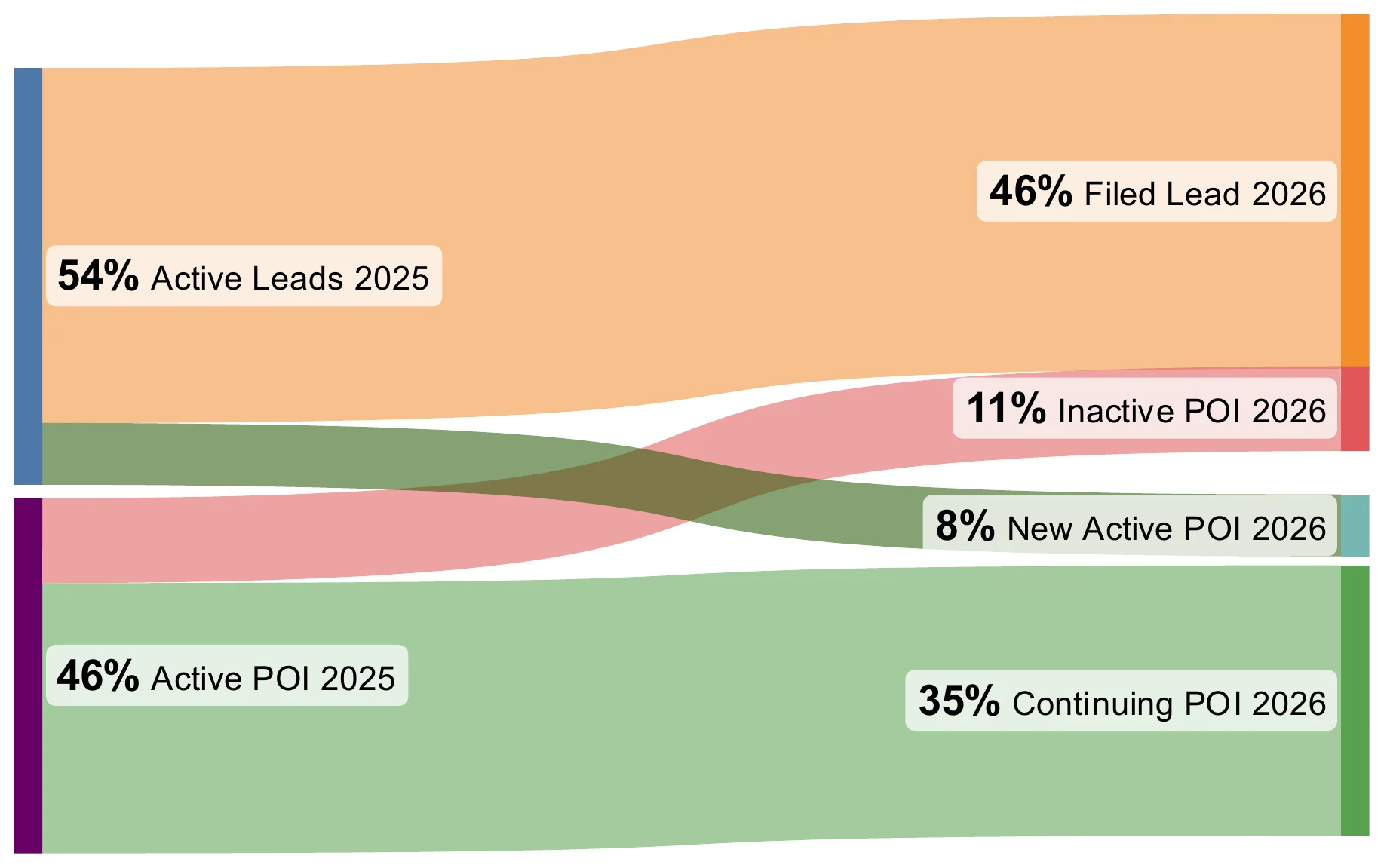
- Categorisation was heavily shaped by police processes rather than typology: 54% of the 2025 cohort were Active Leads and 46% were Persons of Interest, but within a year about 57% had cycled out of active status and only 8% progressed from Lead to Person of Interest. The author argues that behaviour, not ideation, should drive threat assessment, and that engagement with transnational online extremist ecosystems was the clearest through line across cases.
Keywords: